Every time Washington rolls out another round of economic restrictions against Havana, the media playbook writes itself. Headlines scream about compounding crises, rolling blackouts, and empty store shelves, framing each new penalty as a tightening vise on an authoritarian regime. The lazy consensus is simple: more pressure equals a faster collapse, and the embargo is just waiting for the final push to work its magic.
Except it does not work. It has not worked for six decades.
If a business strategy posted sixty consecutive years of negative returns while achieving the exact opposite of its stated objective, the board would fire the CEO before lunch. Yet foreign policy operates in an alternate dimension where repeated failure is branded as moral consistency. The truth that nobody in the beltway wants to utter is that American sanctions against Cuba are no longer a strategic weapon to promote democracy. They are a domestic political protection racket and an institutionalized alibi for systemic failure.
The Architecture of Convenient Blame
To understand why these restrictions persist, look at who actually absorbs the impact. The standard narrative claims that penalizing state enterprises starves the regime of foreign currency. On paper, that sounds airtight. In reality, modern economies are porous. When external trade closes, local elites adapt by centralizing control over whatever hard currency remains—remittances, tourism, and state-managed medical exports—while the civilian population bears the cost of scarcity.
I have spent years watching trade policy analysts confuse legislative intent with market reality. When you ban American companies from exporting agricultural goods or medical supplies directly, or make financial clearing nearly impossible through third-country banks, you do not starve the military command structure. You crush the burgeoning private sector.
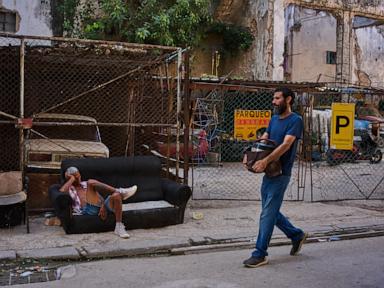
Cuba has authorized hundreds of small and medium-sized private enterprises, known locally as mipymes, over the past few years. These are restaurants, software shops, and manufacturing outfits run by young entrepreneurs trying to build an independent livelihood. When the Treasury Department tightens the screws, these private operators cannot access global supply chains, international credit cards, or U.S. cloud infrastructure. State monopolies, however, have deep-pocketed allies, illicit networks, and state-backed supply lines that easily bypass the friction. Washington's policy systematically suffocates the very demographic that could theoretically build an independent civil society.
The Economic Illusion of Total Isolation
Another widespread misconception treats the island as a closed box hermetically sealed from global commerce. That view belongs in the twentieth century. Cuba trades extensively with Spain, China, Canada, Mexico, and Vietnam.
When the United States cuts off specific financial channels, it simply hands market share to geopolitical rivals on a silver platter. Beijing and Moscow do not hesitate to step into the vacuum, trading diplomatic alignment for economic leverage. Meanwhile, American agricultural exporters watch helplessly as competitors from South America capture a lucrative food market ninety miles off the Florida coast.
The policy assumes an all-powerful embargo can choke a sovereign nation into submission. But globalization creates workarounds. Every financial restriction spawns a shadow banking route, a cryptocurrency corridor, or a state-sanctioned workaround that increases opacity. Transparency vanishes. Corruption thrives in the shadows created by trade bans. If you want to build a transparent, rules-based market economy, isolation is the worst possible accelerant.
The Domestic Politics of Stagnation
Why does this persist? The answer is geography and domestic electoral math. For decades, foreign policy toward the Caribbean has been held hostage by domestic politics in South Florida. Electoral votes in a critical swing state depend on maintaining a hardline posture that satisfies a shrinking demographic of cold warriors while alienating younger generations of Cuban Americans who prioritize family reunification, direct investment, and open borders.
Politicians know the embargo is a failure. Behind closed doors, diplomats will concede that sixty years of economic warfare have achieved nothing regarding political reform. Yet nobody wants to pay the short-term electoral price of changing course. It is safer to pass another symbolic resolution, issue another restrictive Treasury guideline, and let the population on both sides suffer the consequences of political cowardice.
The Counter-Intuitive Prescription
If Washington actually wanted to see political pluralism and economic freedom flourish, it would do the exact opposite of what it has done for half a century. It would flood the island with capital, connectivity, and competition.
Imagine a scenario where the U.S. government lifts all travel restrictions, authorizes direct correspondent banking, permits American telecommunications giants to blanket the island in high-speed fiber optics, and allows private American capital to invest directly in Cuban small businesses.
Within five years, the state's monopoly on information, employment, and daily survival would dissolve. You cannot maintain a rigid, top-down command economy when millions of citizens have direct access to foreign capital, independent revenue streams, and unhindered internet access. The communist apparatus fears American tourists with credit cards and venture capitalists offering software contracts infinitely more than it fears angry speeches at the United Nations.
Sanctions provide the regime with its favorite narrative: an external scapegoat for every internal administrative failure, every rolling blackout, and every empty pharmacy shelf. As long as the embargo remains in place, the state can blame every economic disaster on Washington's cruelty rather than its own incompetence.
Stop trying to starve a population into freedom. Open the gates, flood the market, and let the weight of the modern world crush the remnants of a failed system.