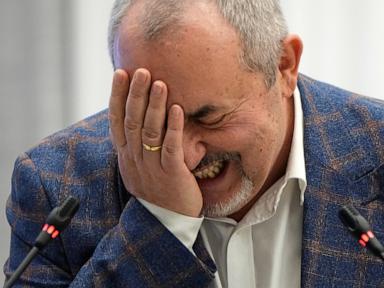
The Western media has a serious addiction to finding a "liberal Russian savior" behind every corner, and the latest fix is Boris Nadezhdin.
Following his brief detention by police in Dolgoprudny on July 13, 2026—just days after the Russian Justice Ministry slapped him with a "foreign agent" designation—the usual editorial machines began churning out predictable headlines. The narrative is always the same: a brave, anti-war liberal politician is on the cusp of mobilizing a hidden democratic revolution, only to be ruthlessly suppressed by Vladimir Putin’s police state.
It is a comforting, dramatic story. It is also completely wrong.
By treating Nadezhdin as a true, system-threatening opposition leader, commentators ignore twenty-five years of modern Russian political history. They mistake a controlled safety valve for a genuine engine of revolution. If you want to understand how power actually works in Russia, you have to stop looking at Boris Nadezhdin through the lens of Western-style democratic campaigns and start looking at him as a functional piece of the Kremlin’s own machinery.
The Systemic Illusion of "Opposition" in Russia
To understand why the mainstream analysis of Nadezhdin is fundamentally flawed, you have to understand the concept of systemic opposition (systemnaya oppozitsiya).
I have spent decades analyzing the mechanics of Eastern European political structures, watching analysts repeatedly fall for the same trap. In the Kremlin’s playbook, a completely closed political system is a dangerous one. Without a pressure release valve, public frustration builds up until it explodes.
To prevent this, the state permits, and occasionally encourages, a highly specific class of "approved" critics.
- They can criticize the execution of policies, but rarely the core regime itself.
- They are allowed onto state television to play the role of the "whipping boy" liberal. This makes the ruling party look moderate and reasonable by comparison.
- They provide a safe outlet for disgruntled citizens. By funneling their energy into petition drives and signature collections, citizens feel they are doing something, while actually engaging in a completely neutralized bureaucratic process.
For years, Nadezhdin fit this description perfectly. He was a frequent guest on state television talk shows like Mesto Vstrechi (Meeting Place) on NTV—a channel thoroughly controlled by Gazprom-Media. He was there to be argued down, mocked, and ultimately used to validate the government's narrative.
True, dangerous dissidents do not get regular airtime on prime-time Russian state TV. They get exiled, poisoned, or sent to maximum-security penal colonies.
The Foreign Agent Label is a Feature, Not a Bug
The consensus view of the July 2026 crackdown is that the Kremlin is "terrified" of Nadezhdin’s bid for the State Duma elections in September. Analysts point to his "foreign agent" designation on July 10, followed by his quick detention for allegedly displaying "extremist symbols" (specifically, linking a video featuring the late Alexei Navalny's organization), as proof that the state is desperate to stop him.
This is a fundamental misunderstanding of how Russian administrative resources operate.
The state does not act out of panic; it acts out of routine maintenance. Designating Nadezhdin a foreign agent is a highly effective, low-cost legal filter. Under Russian law updated in May 2024, "foreign agents" are barred from running for office. The subsequent arrest and court summons for displaying "extremist" symbols—which carries a potential 15-day detention—serves a dual purpose:
- Legal Disqualification: It creates an ironclad, bureaucratic reason to deny him a spot on the ballot for the Duma elections, sparing the Central Election Commission the headache of manually invalidating his collected signatures as they did during his 2024 presidential bid.
- Maintaining the Status Quo: It signals to the public exactly where the red lines are, without turning Nadezhdin into a martyr on the scale of Navalny.
Nadezhdin’s response to his designation was telling: "I will keep living and fighting... I will keep running for the State Duma and collecting signatures."
It is a noble sentiment, but pragmatically absurd. You cannot run for the State Duma if you are legally barred from doing so. By continuing to collect signatures for a campaign that is legally dead in the water, Nadezhdin is directing his supporters' time, energy, and financial resources into a dead end.
Why the "Anti-War" Label is Highly Nuanced
To the Western observer, Nadezhdin's "anti-war" stance is his defining characteristic. But his rhetoric is vastly different from the absolute moral opposition of exiled dissidents.
Nadezhdin has consistently framed his opposition to the conflict in Ukraine in pragmatic, almost patriotic terms. He does not call for immediate unilateral withdrawal, nor does he demand that Russian leaders face international tribunals. Instead, he speaks of "ending the conflict" and "restoring normal relations" because the current path is economically unsustainable and isolating for Russia.
This is not a radical revolutionary speaking; it is a moderate conservative arguing for a course correction.
By labeling him a radical Kremlin foe, Western analysts set themselves up for disappointment. If Nadezhdin were ever allowed to attain real power, his policies would not align with the idealistic expectations of Washington or Brussels. He is a product of the Russian political establishment of the late 1990s—a former Union of Right Forces lawmaker who knows exactly how to navigate the corridors of power in Moscow. He wants a more efficient, less isolated Russian state, not a dismantled one.
The Cost of the Liberal Illusion
There is an obvious downside to this contrarian view. If we accept that Nadezhdin is largely a systemic actor operating within tolerated boundaries, it paints a incredibly bleak picture of Russian politics. It suggests that there is currently no viable, legal path to political change from within the country.
But admitting a harsh truth is infinitely better than relying on a comfortable lie.
By continually hyping up figures like Nadezhdin as major threats to the regime, Western analysts and media outlets perform a disservice to the very cause of Russian democracy. They create false hope, misallocate intellectual and diplomatic attention, and fail to prepare for the reality of long-term stability within the Russian autocracy.
Stop looking at the brief detention of Boris Nadezhdin as a sign of an impending political fracture. It is the opposite: a demonstration of a highly calculated, bureaucratic state apparatus operating exactly as designed, quietly neutralizing a systemic player who stepped slightly too far outside his assigned role.