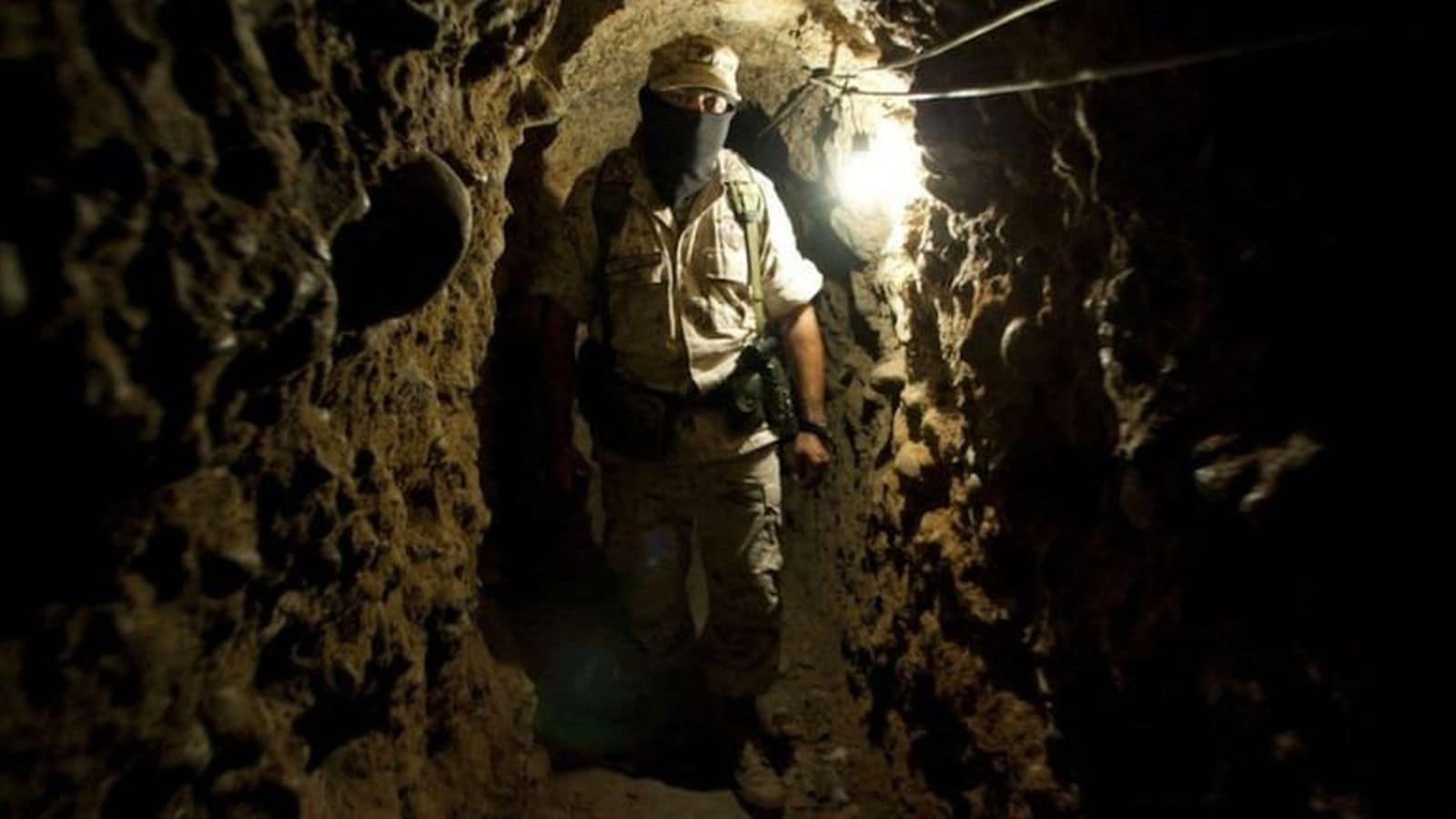
The Spectacular Illusion of the Subterranean Threat
Every time authorities discover a "sophisticated" tunnel running beneath the US-Mexico border, the media wheels out the exact same script. Stunning engineering. High-tech lighting. Rail systems. Imminent danger to national security. The narrative treats these underground passages as structural masterclasses that outsmart the combined forces of federal enforcement.
It is a comforting narrative for bureaucracy because it implies the opposition must build marvels of civil engineering just to breach the line.
It is also entirely wrong.
The obsession with border tunnels misses the fundamental economic reality of illicit supply chains. These underground passages are not a sign of hyper-competent criminal syndicates outsmarting the system. They are desperate, high-risk, low-efficiency capital expenditures forced upon traffickers by the failure of easier routes. When you look at the actual math of logistics, tunnels are a terrible business model.
The Logistics Failure of Underground Infrastructure
Let's dismantle the myth of the "sophisticated" tunnel.
To the untrained eye, a 1,000-foot trench with electricity and a ventilation pipe looks like a Bond villain’s lair. In reality, it represents a massive allocation of capital into a static asset. In logistics, whether you are moving smartphones or contraband, a static asset is a vulnerability.
Consider the basic math of a border tunnel.
- High upfront sunk costs: It requires hundreds of thousands of dollars, months of manual labor, and significant operational secrecy to dig a passage through varying soil types without attracting seismic or acoustic detection.
- Zero flexibility: A tunnel connects Point A to Point B. It cannot change direction if law enforcement sets up a permanent checkpoint at the exit.
- Binary lifespan: The moment authorities discover a tunnel, its value drops to zero. The entire investment is instantly wiped off the ledger.
I have spent years analyzing illicit supply chains and security infrastructure. The smartest operators do not build tunnels. Why would you spend six months digging through dirt when thousands of legal commercial trucks cross the ports of entry every single day?
The vast majority of contraband does not travel through dark, damp subterranean corridors. It travels in the back of air-conditioned tractor-trailers, hidden inside legitimate shipments of avocados, auto parts, and industrial machinery, passing straight through the front door.
The Deception of "Sophistication"
When a press release highlights a tunnel's "sophisticated rail system," they are usually talking about a rusty set of tracks and a modified cart. That is not advanced engineering; it is basic mining technology from the nineteenth century.
The media frames these discoveries as a security failure, demanding more subterranean sensors, ground-penetrating radar, and thicker walls. This reaction plays directly into the hands of an inflated enforcement industry. We treat the symptom—the existence of the hole—rather than the economic pressure that forced the hole to be dug in the first place.
Imagine a scenario where a retail store spends millions on advanced biometric scanners for its front doors, only for shoplifters to cut a hole through the drywall in the back alley. The solution isn't to buy more expensive drywall sensors; the solution is to realize your front door security created an artificial bottleneck that forced a crude, desperate workaround.
Tunnels are not a sign of strength. They are a sign of friction. They prove that increased enforcement at specific, localized points of the border forces traffickers to adopt slower, more expensive, and highly vulnerable transport methods.
Dismantling the Standard Border Security Assumptions
Are tunnels the primary pipeline for illicit goods?
No. Data from border seizures consistently shows that the overwhelming volume of hard contraband is intercepted at official ports of entry. Traffickers prefer the predictability and speed of legal commercial lanes. A tunnel is used when an organization lacks the corruption network or the logistical sophistication to blend into legitimate trade.
Does closing a tunnel stop the flow?
Not even close. It merely shifts the traffic to a different modality. When you seal a subterranean passage, you don't reduce the market demand. You simply force the supply chain to adjust its risk tolerance elsewhere—either by utilizing maritime routes, aerial drones, or increasing the concealment complexity within legal commercial cargo.
The Real Cost of Looking Down
The fixation on subterranean infrastructure creates a dangerous blind spot. While agencies pour resources into ground-penetrating radar and acoustic monitoring arrays along the physical border line, the real vulnerability remains the sheer volume of uninspected cargo moving through official trade corridors.
The system cannot handle 100% inspection rates without causing an economic collapse of cross-border commerce. Traffickers know this. They rely on the law of large numbers, not the depth of a trench.
The "sophisticated border tunnel" makes for great television and compelling political theater. It provides a tangible, physical enemy that can be filled with concrete and photographed. But as a strategy for disrupting illicit global supply chains, focusing on tunnels is the equivalent of trying to stop the internet by cutting a single fiber-optic cable.
The trade continues because the market clears, and the market doesn't care about a hole in the dirt.