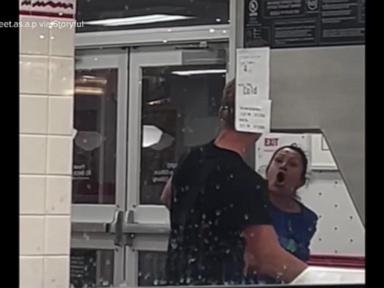
Every few weeks, the internet manufactures a civic saint out of greasy linoleum. A customer steps into a chaotic fast food joint, records a screaming match or a physical assault on a smartphone, intervenes to stop the carnage, and instantly becomes digital royalty. The headline writes itself: hero civilian subdues menace, restores order to the double-drive-thru, and reminds us that decency still exists between the fry station and the beverage fountain.
It is a comforting script. It is also a collective delusion.
When we crown a random diner for managing a public safety crisis over a lukewarm double-double, we are not celebrating community resilience. We are applauding the total privatization of municipal order. We are cheering for a broken social contract where minimum wage line cooks are left to fend off volatile outbursts while the public treats urban decay as free entertainment to be filmed vertically and uploaded for algorithmic clout.
The Myth of the Accidental Savior
Look closely at the viral footage dominating feeds after every high-profile confrontation in quick-service restaurants. What does the narrative actually reward? It rewards escalation. It rewards the bystander who pulls out a camera first and a tactical intervention second. We have transformed public spaces into colosseums where the reward structure heavily favors spectacle over actual safety de-escalation.
I have spent years analyzing urban crowd psychology and the operational vulnerabilities of high-volume retail environments. I have watched corporate safety manuals get rewritten in real-time after viral incidents turn local franchises into media circuses. The prevailing corporate wisdom dictates that employees should de-escalate, step back, and let security or law enforcement handle the chaos. But when response times stretch past twenty minutes in metropolitan centers, that corporate guidance becomes a polite suggestion to absorb a punch.
Into this vacuum steps the viral hero.
The lazy consensus among commentators is that these interventions prove the inherent goodness of humanity. That is an emotional crutch designed to obscure a terrifying reality: the professional systems meant to maintain public order have hollowed out, leaving citizens to play amateur security guard while eating animal-style fries.
Deconstructing the Bystander Industrial Complex
When a customer physically restrains an erratic individual in a crowded dining room, the internet rushes to label it civic duty. Let us look at the actual mechanics of what just happened. An untrained civilian with zero legal liability protections, zero understanding of proportional force, and zero training in behavioral crisis management has just initiated a physical altercation in a confined, high-traffic commercial zone.
What happens when the intervention goes wrong? What happens when the hero misjudges a threat, inflicts permanent injury, or triggers a stampede in a room full of families? The media cycle pivots in a heartbeat. The hero becomes the villain, the corporation faces a multi-million-dollar liability suit, and the underlying structural failure—the total absence of predictable public safety infrastructure—gets completely ignored.
We do not have a deficit of heroes. We have a surplus of systemic failures that make heroes necessary.
Consider the operational reality of modern urban fast-food chains. These locations operate on razor-thin margins with skeleton crews. Expecting a nineteen-year-old cashier to manage severe mental health crises, substance abuse episodes, or violent outbursts is an institutional failure of the highest order. Yet, instead of demanding robust municipal security investments or holding cities accountable for deteriorating street conditions, we prefer the cheap dopamine hit of a viral smartphone video starring a guy in a hoodie who happened to lift weights.
Why the Hero Narrative Protects the Status Quo
The establishment loves these viral videos. Every time a customer steps up to stop a brawl, corporate public relations departments sigh in relief. Why? Because it shifts the burden of risk entirely onto the consumer base. It frames public safety as a DIY project.
If security is a DIY project, then cities do not need to fund mental health response teams. Corporations do not need to invest in hardened store designs or private security guards. Police departments do not need to improve response triage. We can simply rely on random citizens to tackle each other between bites of a burger, filming the whole thing for TikTok engagement.
This is not community policing. This is the Hunger Games with a drive-thru window.
The Uncomfortable Alternative
If we want safer public spaces, we have to stop romanticizing chaos. That means changing how we react to public disturbances.
Stop filming. Start demanding institutional accountability. When a restaurant becomes a flashpoint for violence, the correct response is not to whip out a smartphone to capture the best angle for social media clout. The correct response is an immediate evacuation, aggressive reporting to municipal services, and persistent pressure on local leadership to fix the structural decay causing these outbursts in the first place.
We must stop rewarding the theater of confrontation. Every time we share, like, and retweet a viral intervention video with a caption about faith in humanity restored, we are telling municipal leaders that they can safely ignore the breakdown of public order because citizens will gladly step into the meat grinder for free.
The next time a viral video drops of a customer subduing a violent interloper over a fast-food order, do not look for a hero. Look at the empty space where the social contract used to be.
Stop filming the fight. Fix the city.