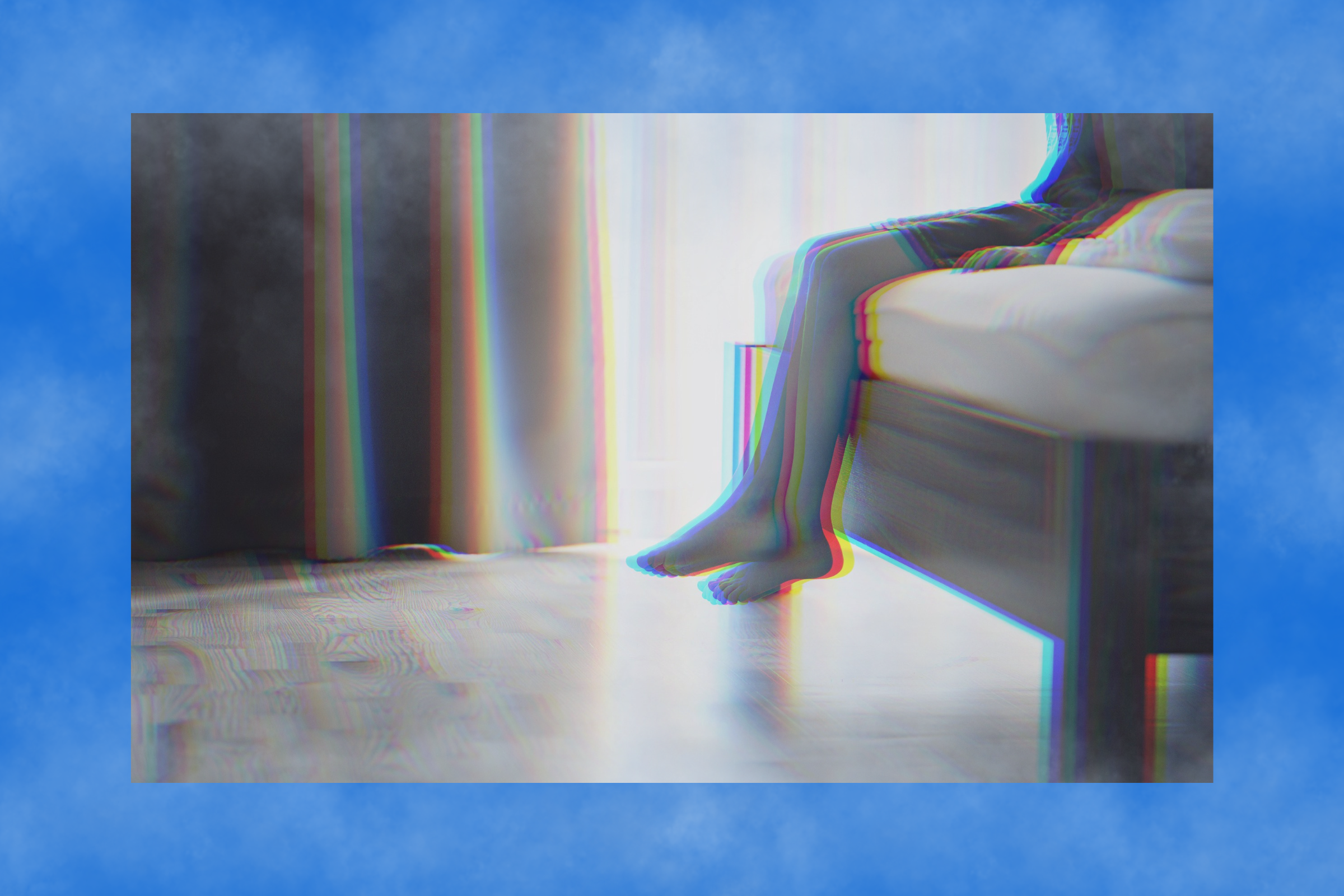
Every sleep therapist, wellness blogger, and corporate health pamphlet parrots the same tired dogma. You wake up at 3:00 AM. Your mind starts racing about an email or a mortgage payment. The standard prescription arrives like clockwork: get out of bed, go to a dim room, read a physical book, and wait until you feel sleepy again.
It is called stimulus control therapy, and it is destroying your nervous system.
For decades, sleep medicine has treated the human bed like a Pavlovian cage. The core premise sounds logical enough on paper. If you lie awake in bed tossing and turning, your brain supposedly associates that mattress with frustration rather than sleep. Therefore, you must evict yourself. You must stand in the hallway in the dark, clutching a paperback novel, punishing your body for failing to perform on command.
The mainstream sleep industry has institutionalized a panic response. They took a behavioral psychology trick from animal laboratories and applied it to exhausted humans who are already operating on fumes.
I have spent fifteen years watching high-performing professionals wreck their recovery cycles because they followed this exact rulebook. They wake up once, panic about the stimulus control timer, force themselves out of warm sheets, and spike their cortisol through the roof. Then they wonder why they stay awake for the next three hours.
Let us dismantle the orthodox view of insomnia, starting with the mechanical failure at the heart of standard sleep hygiene.
The Flaw in the Stimulus Control Trap
Proponents of stimulus control argue that staying in bed while awake conditions your brain to associate the bed with alertness. The remedy? Force yourself upright the moment sleep eludes you for twenty minutes.
This prescription ignores human biology. When you wake up in the middle of the night, your core body temperature is shifting, your cortisol might be fluctuating, and your autonomic nervous system is looking for a baseline of safety. What does your bed represent? Safety. What does walking into a cold, dark living room at 3:17 AM represent? A predator threat.
Your evolutionary hardware does not care about cognitive behavioral therapy for insomnia. When you strip away the comforting warmth of your blankets and stand on a hardwood floor, your sympathetic nervous system interprets that movement as an emergency. Blood pressure ticks upward. Adrenaline trickles into the bloodstream. You have just taken a mild nocturnal awakening and turned it into an acute stress event.
Imagine a scenario where a CEO wakes up at 2:00 AM worrying about Q3 margins. Under standard sleep rules, they throw off the duvet, march to the couch, and sit in the dark trying not to look at a screen. Their heart rate remains elevated. Their brain registers the living room as an active workspace because they spent yesterday working on that exact couch. They achieve neither rest nor relaxation. They achieve exhaustion.
The cognitive dissonance is staggering. We tell people that sleep requires absolute relaxation, yet our primary tool for treating sleeplessness is a forced march to the periphery of the home.
The Cost of Hyper-Vigilance
The real enemy of sleep is not a misplaced behavioral association. It is hyper-vigilance.
When you obsess over sleep metrics, sleep hygiene rules, and sleep latency timers, you turn a passive biological process into an extreme sport. You become a night watchman guarding your own circadian rhythm. Every time you glance at the clock to calculate whether you have hit the magic twenty-minute threshold to get out of bed, you are activating the prefrontal cortex.
Sleep is a surrender mechanism. You cannot think your way into sleep, and you certainly cannot legislate your way into it by punishing yourself with cold flooring and boring literature.
Let us look at what happens when sleep restriction protocols are deployed indiscriminately. Insomnia clinics love to restrict time in bed to build up sleep pressure. They tell a patient who is already sleeping four broken hours to spend even less time in bed. The patient complies, spends hours staring at the ceiling in a different room, and experiences profound sleep deprivation. They mistake this groggy, zombie-like compliance for progress.
It is not progress. It is attrition.
The Counter-Intuitively Quiet Bed
What if the opposite approach is closer to biological reality? What if staying in bed—while radically changing your relationship to wakefulness—yields better neurological outcomes than self-banishment?
Michael Perlis, one of the pioneers of behavioral sleep medicine, designed stimulus control decades ago for chronic, severe psychophysiological insomnia. It was never meant to be a universal decree for every person who experiences a night of restless thoughts. Yet it has trickled down into a blunt instrument applied indiscriminately to stressed humans.
Let us define what actually happens when you stay put.
If you remain in bed without fighting the wakefulness, you prevent the secondary spike in adrenaline caused by physical relocation. You keep your environment dark, warm, and secure. Instead of treating wakefulness as a crisis that requires immediate operational intervention, you treat it as neutral downtime.
The secret is not getting up. The secret is dropping the performance anxiety of sleep.
When you wake up, your heart rate might be slightly elevated. If you stay horizontal, let your muscles go slack, and focus on slow exhalations, you signal to your brain stem that there is no tiger in the bedroom. You allow parasympathetic tone to reassert itself. You might lie there awake for an hour, but that hour spent resting quietly with a heavy blanket yields significant physiological restoration compared to pacing the hallway or scrolling through a kindle device under a dim light.
Dismantling the Sleep Hygiene Checklist
The wellness industry loves a checklist because it gives people an illusion of control. Avoid caffeine after noon. Keep the room at sixty-five degrees. Black out the windows. Wear blue-light blocking glasses that make you look like an extra in a cyberpunk film.
While these variables matter at the margins, they are completely secondary to your psychological relationship with nocturnal arousal.
People obsess over the micro-habits while ignoring the macro-anxiety. They spend hundreds of dollars on mattress cooling pads and smart rings that grade their sleep like a harsh schoolteacher, only to wake up panicked because their sleep score dropped three points. That digital feedback loop is the single greatest driver of modern insomnia. You cannot optimize your way out of anxiety with a gadget that measures your anxiety in real-time.
Let us address the People Also Ask queries floating around the web regarding this topic, stripped of corporate sanitization.
Should you force yourself to stay in bed if you are angry about not sleeping? No, if you are actively enraged, thrashing, or experiencing panic symptoms, moving to another room makes sense to break the feedback loop. But frantic middle-of-the-night restlessness is rarely rage; it is low-grade cognitive hum. For normal, garden-variety nocturnal wakefulness, getting out of bed is an overreaction that treats a temporary cortisol blip like a psychiatric emergency.
How long should you stay awake before getting up? The standard internet advice is twenty minutes. That arbitrary number assumes your internal clock runs on a Swiss watch. In reality, checking the time to see if twenty minutes have passed is precisely what guarantees you will stay awake for another two hours. Throw away the clock. Stop timing your misery.
The Cost of Compliance
I have seen companies blow millions on corporate wellness programs that hand out generic sleep hygiene guides telling exhausted employees to leave their beds when they cannot sleep. It is cheap, scalable advice that requires zero clinical nuance. It allows HR departments to check a box while ignoring the structural burnout causing the insomnia in the first place.
When you tell an overworked professional to get out of bed at 4:00 AM, you are asking an already depleted organism to perform extra labor. You are adding friction to a system that desperately requires friction reduction.
The contrarian truth is simple: stop treating your bed like an adversary.
If you wake up, stay horizontal. Let the thoughts drift by without wrestling them to the canvas. Stop checking the clock. Stop measuring your rest like a stock portfolio. If your body is resting in a dark, quiet room, you are receiving passive biological recovery, even if your conscious mind is reviewing your to-do list.
The next time you snap awake in the dark, resist the urge to flee your own bedroom. Stop obeying the rigid mandates of sleep technicians who have never had to manage a complex life in the real world. Stay put. Breathe out longer than you breathe in. Let the sheets hold you.
Sometimes the best intervention is doing absolutely nothing at all.