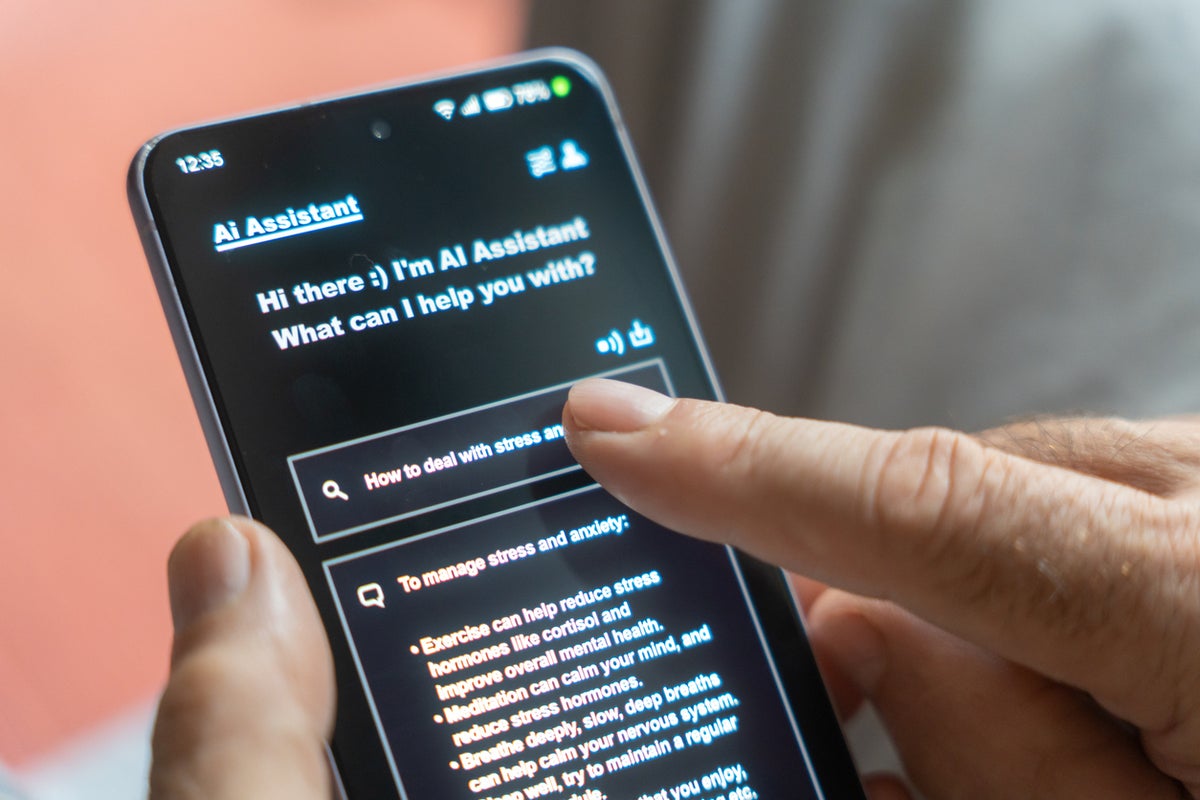
Medical paternalism is dying, and the "health officials" quoted in every hand-wringing op-ed are the ones holding the bloody knife. For months, the headlines have screamed about the "dangers" of AI chatbots providing alternative cancer treatments. They want you to believe that a Large Language Model (LLM) is a digital snake oil salesman lurking in your pocket, ready to derail life-saving chemotherapy with a recipe for apricot pits and magic crystals.
They are lying to you. Not because they are evil, but because they are terrified of losing their status as the high priests of information.
The narrative is simple: AI is hallucinating medical "misinformation" and putting patients at risk. The reality? AI is finally breaking the bottleneck of medical knowledge that has kept patients in the dark for decades. We aren't facing a crisis of bad advice; we are witnessing the democratization of the second opinion.
The Myth of the Perfect Oncologist
The common argument suggests that a human doctor is a flawless repository of current clinical data. This is a fantasy. The average medical knowledge base doubles every 73 days. It is physically impossible for a human oncologist, who spends eight hours a day in consultations and another four on insurance paperwork, to stay current with every phase II clinical trial or immunotherapy breakthrough.
When a health official warns that an AI might suggest a "non-standard" treatment, what they are actually saying is that the AI found something that isn't in the 2022 version of the institutional guidelines.
I have seen patients spend six months on a failing standard-of-care regimen because their local doctor wasn't aware of a specific molecularly targeted therapy available three states away. An LLM doesn't have "local bias." It doesn't have a preferred pharmaceutical representative. It has the entire corpus of PubMed.
The Hallucination Hypocrisy
Critiques focus heavily on "hallucinations"—the tendency of AI to confidently state falsehoods. Yes, ChatGPT might occasionally invent a citation. That is a technical hurdle being solved by Retrieval-Augmented Generation (RAG).
But let’s talk about human hallucinations. We call them "clinical intuition" or "anecdotal experience." When a doctor tells a stage IV patient "there is nothing more we can do," that is often a hallucination based on the limits of that specific doctor’s ego and local resources.
The medical establishment is terrified that you will find a legitimate, peer-reviewed alternative that they didn't mention. They label it "misinformation" to protect the workflow of the clinic, not the life of the patient. If an AI points a patient toward a legitimate off-label use of an existing drug—backed by emerging data—the system views that as a threat because it bypasses the traditional hierarchy of "The Specialist."
Why the "Alternative Treatment" Boogeyman is a Distraction
The panicked articles always lead with the worst-case scenario: a patient skipping radiation to drink alkaline water because a chatbot told them to.
This is a straw man. People seeking "alternative" cures have existed since the dawn of time. They used to find them on shady forums or through "natural health" gurus on late-night radio. AI actually improves this situation.
If you ask a sophisticated LLM about "curing cancer with juice," a well-aligned model doesn't just say "Go for it." It provides a breakdown of the nutritional benefits of juice while explicitly stating that there is zero clinical evidence for its efficacy as a primary cancer treatment. It provides context. It provides the "why" behind the "no." A busy oncologist often just says "No," which drives the patient straight into the arms of the real quacks.
Data Sovereignty: The Patient’s Only Weapon
Standard medical practice treats the patient as a passive recipient of care. You are a set of labs, a scan, and a billing code.
AI shifts the power dynamic. It allows a patient to walk into a consultation with a list of specific, technical questions about $PD-1$ inhibitors or $CAR-T$ cell therapies.
$$P(Treatment | Data) > P(Treatment | Intuition)$$
The equation for survival in the 21st century relies on maximizing the data points. Health officials hate this because it makes consultations "difficult." It turns a ten-minute check-in into a forty-minute debate. Good. It’s your life. You should be difficult.
The Competency Gap
Let’s look at the "dangerous" advice chatbots supposedly give. In several studies, researchers found that when patients asked about cancer symptoms, AI models provided answers that were more empathetic and often more detailed than human physicians.
The "danger" isn't that the AI is wrong; it's that the AI is more accessible. If a patient is scared at 3:00 AM and wants to understand the side effects of their medication, they can’t call their oncologist. They can, however, talk to a bot. That bot can explain how a specific kinase inhibitor interferes with cellular signaling pathways in a way a human hasn't bothered to explain since the initial diagnosis.
Breaking Down the Barrier of Medical Jargon
- Human Doctor: "We're seeing some progression in the metastatic lesions, so we’ll pivot to a salvage regimen."
- AI Translation: "The current medicine isn't stopping the spread as well as we hoped. We are going to try a stronger 'backup' treatment that works differently to attack the cells."
The establishment calls this "oversimplification." I call it "communication." When patients understand their disease, they have better adherence to treatment. They don't run away to Mexico for "miracle cures" when they actually comprehend what their oncologist is trying to do.
The Liability Shield
The real reason health officials are sounding the alarm? Liability and the bottom line.
If a patient discovers a better treatment via AI, and that treatment isn't covered by the hospital’s specific insurance contracts or doesn't use the hospital’s expensive equipment, the hospital loses money. By framing AI as "dangerous," they create a regulatory environment where only "approved" (read: profitable) AI tools will be allowed.
These approved tools will be neutered. They will be programmed to never suggest anything outside of the most conservative, profitable standard of care. They won't be "AI"; they will be digital brochures for the hospital's existing services.
Stop Asking for Permission to Use the Tools
The advice you’ll hear from every "expert" is to "check with your doctor before using AI."
That is lazy. Here is the unconventional reality: Your doctor is likely using AI too, or they’re falling behind. Don't ask for permission to research your own survival.
Use the LLMs. Use them to parse your pathology reports. Use them to find clinical trials on ClinicalTrials.gov that your doctor hasn't heard of. Use them to cross-reference drug interactions.
How to Actually Use AI for Cancer Research
- Feed the Raw Data: Upload your actual pathology and genomic sequencing reports. Ask the AI to explain the implications of specific mutations (e.g., $KRAS$ or $TP53$).
- Challenge the Consensus: Ask, "What are the most promising phase II trials for this specific mutation that are currently recruiting?"
- Audit the Oncologist: Take the treatment plan your doctor gave you and ask the AI, "What are the contraindications for this plan that might be specific to my comorbid conditions?"
- Empathy Check: Use it to help your family understand. Ask it to explain your diagnosis to a ten-year-old or an elderly parent.
The Risk of Doing Nothing
Every "concerned official" focuses on the risk of a patient taking the wrong action based on AI. They never mention the risk of the patient taking no action because they were stuck in a bureaucratic medical system that moves at the speed of a glacier.
In oncology, time is the only currency that matters. If an AI helps a patient shave three weeks off the time it takes to find the right specialist or the right trial, that is a categorical win.
The "misinformation" bogeyman is a tool of control. It’s the same argument used against the printing press, against the internet, and now against LLMs. They want you to stay in the waiting room, reading out-of-date magazines, waiting for the "expert" to give you a crumb of information.
The era of the passive patient is over. The "alternative" isn't a fake cure; the alternative is a patient who knows as much as the person in the white coat.
Fire your fear and hire the machine.