The earth does not merely shake; it groans.
Miles away from the frontlines, in farmhouses where windowpanes are routinely cushioned by folded cardboard to absorb the rattle of distant detonations, families pause mid-sentence. They do not drop their teacups. They do not run for basements. They simply wait. They wait for the vibration to die out in the soles of their feet, a rhythmic, mechanical heartbeat rumbling from the northern mountains, before the conversation resumes. It is a terrifyingly ordinary way to live.
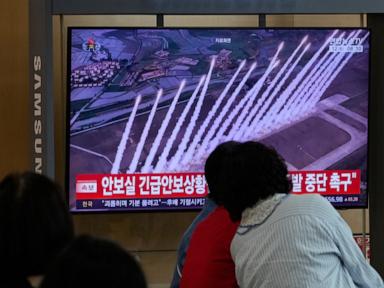
Pyongyang announced it again with the loud, brassy trumpets of state media: a live-fire drill showcasing "huge destructive power." To the desk analysts in Seoul, Washington, and Tokyo, the phrase translates into sterile data points. Yield estimates. Trajectory models. Satellite telemetry tracking scorched earth patterns in the barren proving grounds near the coast. But numbers on a spreadsheet fail to capture the human weight of an artillery shell leaving a barrel. They fail to capture the psychological architecture of a nation built under the long, cold shadow of perpetual escalation.
Consider what happens inside those concrete command bunkers across the border.
A general gives an order. Heavy steel tracks grind against granite. Hydraulics whine under immense pressure as multi-launch rocket systems elevate toward a grey sky. For the soldiers manning those batteries, performance is not a political talking point broadcast to the world; it is a matter of immediate survival. A miscalculated charge, a flawed propellant batch, or a failure to meet state-mandated quotas for operational readiness can carry catastrophic professional or personal consequences. So the rockets fire. The earth splits open. Plumes of black smoke climb into the stratosphere, proof positive for the state news agency that the deterrent remains sharp, violent, and absolute.
Then the cameras roll.
State-run television captures the slow-motion grace of death dealers launching their cargo. The framing is deliberate, crafted to project invulnerability in the face of crippling international sanctions, energy shortages, and diplomatic isolation. It is a theatrical production staged with live ammunition. Every roar of an engine and every flash of white-hot phosphorus is designed to send a very specific message across the heavily militarized demarcation line: We are still here. We are still dangerous.
Yet, behind the grand theater of live-fire demonstrations lies a quieter, more exhausting reality.
Pyongyang's conventional military apparatus is aging. Much of its heavy armor and artillery dates back to Soviet designs from the mid-20th century—machinery that requires relentless, grinding maintenance just to remain operational. When state media boasts of "huge destructive power," it is often masking the immense strain required to keep ancient hardware functioning while the country’s civilian economy limps along under the weight of severe economic isolation. Every shell fired into the sea is grain not bought, fuel not burned for heating, and industrial capacity diverted away from a population that has endured decades of chronic scarcity.
We often talk about geopolitics as a game of chess played by grandmasters in quiet rooms. It is not. It is a game played by exhausted people standing in freezing mud, listening to the wind carry the smell of cordite across a divided peninsula.
The diplomats talk of deterrence. The strategists model escalation ladders. But for the millions of ordinary citizens living within artillery range on both sides of the 38th parallel, deterrence sounds like thunder on a clear day. It is an expensive insurance policy paid for in anxiety, where every successful test launch is celebrated by one side as a triumph of sovereignty and feared by the other as a harbinger of ruin.
When the smoke clears over the testing grounds and the state anchors return to their desks to read praises of supreme leadership and technological might, the silence rushes back in. The satellites stop recording. The generals pack up their maps.
Across the fields, the farmers sweep up the fine layer of dust shaken loose from their roofs, check their livestock, and look toward the northern horizon. The drill is over. The power has been demonstrated. But the silence that follows is never truly peace; it is simply the holding of breath until the next time the earth begins to shake.