Every quarter-century, psychologists drag out the same weary cohort, wave transcripts in their faces, and gasp when their stories shift. Flashbulb memories are flawed! Details drift! People misremember where they stood when the world cracked open on September 11!
Stop the presses. Human memory behaves like a leaky bucket rather than a hard drive, and science spent twenty-five years rediscovering what any trial lawyer figured out during cross-examination in 1952.
The lazy consensus in cognitive psychology treats memory decay as a design defect. Every longitudinal study published on post-9/11 recollection relies on a fundamental category error. They confuse the structural integrity of the narrative with the emotional anchor of the event. They test whether subjects remember the exact color of the television set or the precise sequence of phone calls, and when those trivial parameters shift, they declare human recollection bankrupt.
That misses the entire point of how consciousness processes trauma.
The Archive Fallacy
Let us dismantle the core premise of a quarter-century of flashbulb memory research. Psychologists love to pit initial questionnaires filled out days after a catastrophe against interviews conducted years later. They point to the discrepancies—the shifted locations, the swapped timelines, the altered clothing details—as proof that our internal archives are corrupted.
This assumes the brain functions like a police body camera. It does not.
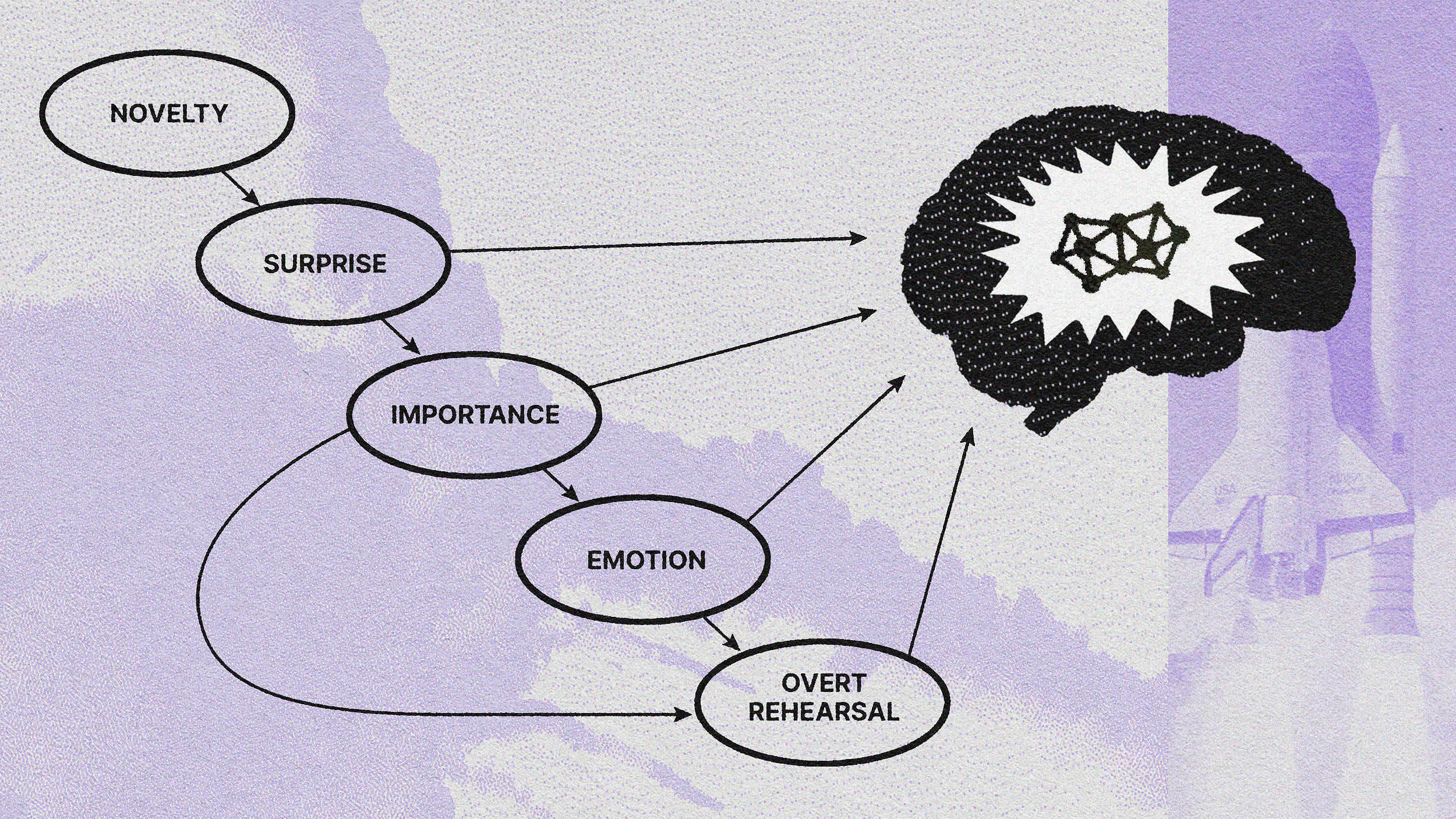
When a high-arousal event occurs, adrenaline floods the amygdala, branding the central emotional core of the experience into permanent neural circuitry. But the peripheral details? The ambient noise, the weather, the shirt your roommate wore? Those are handled by a completely different cortical network that is notoriously susceptible to narrative reconstruction over time.
When researchers measure the decay of peripheral details and claim that flashbulb memories are a myth, they are committing a basic methodological fraud. They are measuring the wrong variable.
I have watched corporate forensics teams chase identical ghosts during post-mortem analyses of catastrophic product failures. Executives swear blind that the risk warning was issued in Q2, while the Slack logs prove it happened in Q3 under entirely different circumstances. The human brain does not file metadata efficiently under pressure. It files the impact.
When you remember where you were when the Twin Towers fell, your brain is not retrieving a factual documentary. It is retrieving a cultural anchor point. The exact moment the anchor dropped matters far less than the weight of the chain attached to it.
Why Consistency Is Overrated
Consider the obsession with narrative stability. Psychologists treat any deviation in a repeated interview as an error. If a subject says in 2001 that they were standing in the kitchen, but in 2026 they remember walking through the front door with grocery bags when the bulletin broke, researchers flag that as a memory distortion.
Is it? Or is it narrative compression?
Human beings are storytelling machines. We do not store raw telemetry. We store scripts. Over twenty-five years, the brain edits the extraneous fat out of our personal histories to make them cohere with our evolving identity. The grocery bags do not change the geopolitical reality of the morning, nor do they alter the visceral gut punch of watching the second plane hit live on CNN.
Yet academic literature treats these tiny domestic shifts as catastrophic integrity failures. This is what happens when researchers spend too much time in quiet labs parsing statistical variance instead of watching how people actually survive history.
Let us look at the data without the academic hand-wringing. In repeated-measures studies tracking 9/11 recall across decades, researchers like Elizabeth Loftus and her intellectual descendants have consistently found that people's confidence in their memories remains stubbornly high even as the factual accuracy of peripheral details plummets.
The standard interpretation is that people are deluded. They are overconfident idiots suffering from metacognitive failure.
The contrarian interpretation is much sharper: confidence in flashbulb memories is not tracking the pixels of the image; it is tracking the emotional truth of the existential shift. People are not wrong about what happened to their worldview that morning. They just fudge the staging details because the staging details are irrelevant background noise.
The Weaponization of Flawed Recall
Why does this academic hand-wringing matter outside of ivory-tower journals? Because it gets weaponized.
We live in an era obsessed with absolute evidentiary purity. Courts throw out eyewitness testimony because neuroscience says memory is malleable. Journalists discredit witnesses because their timelines slip by twenty minutes. We have built a cultural neurosis around the idea that if a memory is not mathematically pristine, it is a fabrication.
This is a dangerous delusion.
If you demand forensic perfection from human recollection, you invalidate lived experience entirely. You create a legal and cultural framework where only security camera footage has validity. That hands total narrative control to institutions with permanent surveillance apparatuses while stripping individuals of their own history.
Memory drift is not a bug in the human operating system. It is a feature. It allows us to integrate trauma into our ongoing narrative without being crushed under the weight of infinite, useless metadata. Your brain discards the shirt color so it can hold onto the gravity of the shock.
Stop Trying to Fix What Isn't Broken
The longitudinal studies will continue. Five years from now, someone will publish a thirty-year follow-up on 9/11 memories, marveling with faux-innocence that people got the timeline of the second tower's collapse wrong by forty-five seconds. Pundits will write essays about the fragility of truth.
Ignore them.
Your memories of monumental cultural shifts are not supposed to read like police reports. They are psychic coordinates. They tell you where your soul was standing when the ground gave way. If the kitchen door moved five feet to the left in your mind over a quarter-century, let it. The building still fell.
Stop treating your brain like a failing hard drive. It is a meaning-making engine. It remembers what matters, discards the junk, and leaves you with the only thing that actually counts: the survivor's equilibrium.



