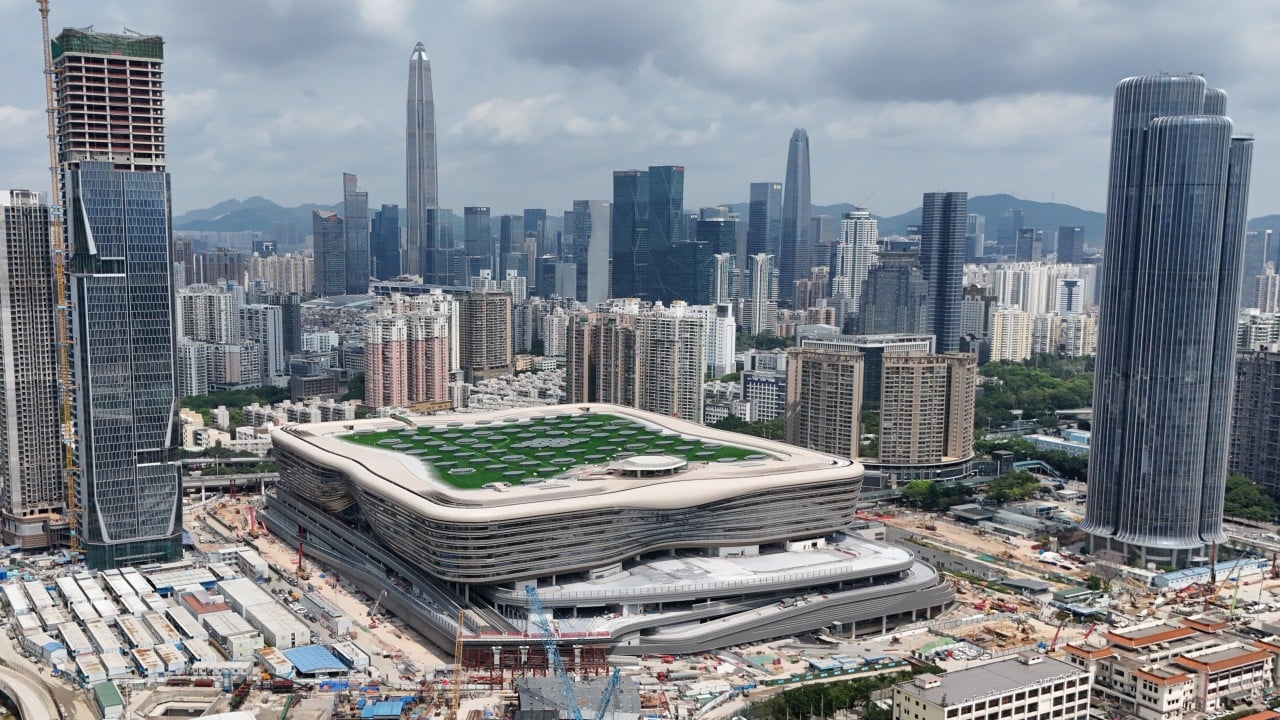
Tens of thousands of commuters shuffle through the temporary concrete corridors of Huanggang Port every single day, caught in a tedious waiting game that exposes the gap between grand infrastructure planning and ground-level reality. While regional planners speak of a highly integrated Greater Bay Area, the daily commute between Shenzhen and Hong Kong tells a different story. It is a story of missing bus parking spaces, administrative delays, and a border clearance system that still operates on outdated models.
The ongoing reconstruction of the Huanggang border crossing was supposed to modernize travel between the two cities. By replacing the aging 1980s facilities with a multi-level transport hub, authorities promised to slash transit times. Yet, during this massive transitional phase, the temporary facilities have become a major choke point. Cross-boundary coach operators, local transport providers, and passengers are bearing the brunt of poor site layout and inadequate planning.
To understand why this vital artery is clogged, one must look past the architectural renderings of the future port and examine the concrete layout of the temporary terminal operating today.
The Bus Parking Shortage Strangling Cross Border Operators
The core of the current crisis lies in the physical allocation of space at the temporary Huanggang Port. For decades, cross-boundary coaches and the beloved "Yellow Buses" have been the backbone of 24-hour transit across this specific boundary. Unlike other ports that close at midnight, Huanggang remains a lifeline for night-shift workers, business travelers, and tourists seeking round-the-clock access.
Yet, the current temporary site allocates remarkably little space for passenger pick-up and drop-off zones.
During peak hours, tour buses and cross-boundary coaches are forced to circle the surrounding roads or idle in highly congested lanes because there are not enough designated parking bays. This is not just a minor inconvenience. It is a structural failure. When a bus cannot park, passengers cannot board. The result is a cascading delay that stretches back into the urban roads of Shenzhen and onto the San Tin Highway in Hong Kong.
Transport associations have repeatedly raised alarms about this layout. Drivers are routinely fined for stopping in unauthorized zones, even though no authorized zones are vacant. The scarcity of spaces has created an artificial competition among transport companies, driving up operational costs and causing driver fatigue as they navigate tight, poorly marked temporary lanes.
Why the Co Location Model is Trapped in Administrative Limbo
A major part of the solution lies in the transition to a joint checkpoint system, commonly referred to as co-location. Under this model, passengers clear both Hong Kong and Shenzhen customs in the same building, eliminating the need to board a shuttle bus just to cross the bridge between the two checkpoints. This system has worked wonders at the Shenzhen Bay Port and the West Kowloon High-Speed Rail Station.
At Huanggang, however, the implementation of this system has been repeatedly delayed.
Passengers must still clear customs on the Shenzhen side, walk down long corridors, board a shuttle bus, ride across the Lok Ma Chau control point bridge, and disembark to clear Hong Kong customs. This double-handling of passengers is incredibly inefficient. It wastes time, burns fuel, and requires an enormous fleet of shuttle buses that must constantly park, turn, and idle in the restricted port areas.
The delay in fully adopting the joint checkpoint model stems from legal and administrative complexities. Since two different legal jurisdictions are involved, establishing a co-location boundary requires legislative approval from both Hong Kong and Beijing, alongside detailed operational agreements. While the physical structure of the new port is being built, the legal framework is moving at a snail's pace. Without a clear timeline for the implementation of the simplified clearance model, transport operators are left guessing how to invest in their fleets.
The Human Cost of Poor Transit Integration
Step onto the concrete concourse of the temporary port at midnight, and the human toll of this administrative friction becomes obvious. Elderly travelers struggle with heavy luggage up temporary ramps. Families wait in long, unshielded queues, exposed to the torrential summer rains and humid heat of Southern China.
Because the bus parking bays are located far from the main clearance hall, passengers must walk long distances outdoors. The lack of overhead canopies means that a sudden downpour turns the transfer process into a chaotic scramble.
Local commuters, who rely on this port for their daily livelihood, face unpredictable delays. A commute that should take forty-five minutes can easily stretch to two hours if a couple of tour buses block the narrow drop-off lanes. This unpredictability hurts businesses, discourages tourism, and stains the reputation of a region that prides itself on being a global technology and logistics hub.
A Broken Feedback Loop Between Two Cities
The crisis at Huanggang Port also highlights a broader governance challenge: the lack of a unified, cross-border authority to manage transport logistics. Currently, the Shenzhen port authorities manage the mainland side of the facility, while the Hong Kong Transport Department and Security Bureau handle operations on their side of the border.
This division of labor creates massive blind spots.
For instance, when Shenzhen planners designed the temporary port facilities, their primary focus was clearing land for the main construction site of the new, permanent terminal. The immediate operational needs of Hong Kong-bound coaches were treated as a secondary concern. Conversely, Hong Kong transport authorities have been slow to adjust the frequency of connecting local buses to match the erratic arrival patterns of passengers coming from the temporary mainland terminal.
Without a joint task force empowered to make real-time adjustments to parking allocations and traffic flows, the two sides remain trapped in their respective bureaucratic silos. Letters are written, meetings are held, but the physical bottlenecks on the ground remain unchanged.
Immediate Steps to Relieve the Pressure
Resolving the gridlock at Huanggang does not require waiting for the completion of the permanent super-terminal, which is still years away from being fully operational. Practical, immediate adjustments can be made to the current temporary site.
- Reallocate Underutilized Land: Authorities must immediately audit the land adjacent to the temporary port. Several plots currently used for construction equipment storage or administrative parking could be quickly paved and converted into temporary holding bays for cross-boundary coaches.
- Streamline the Shuttle Route: By creating a dedicated, barrier-free lane for the shuttle buses running between the two checkpoints, planners can drastically reduce turnaround times, meaning fewer buses will need to park at any given moment.
- Implement Smart Queueing Systems: Instead of allowing buses to enter the port area indiscriminately, a digital reservation system could hold buses in secondary staging areas nearby, releasing them to the port only when their specific parking bay is vacant.
- Accelerate the Legal Framework: Legislative bodies in both Hong Kong and Shenzhen must expedite the legal agreements required for the co-location clearance system, ensuring that the moment the physical infrastructure is ready, the bureaucracy is ready too.
The integration of the Greater Bay Area cannot be achieved solely through high-speed rail lines and mega-bridges. It is won or lost in the mundane, everyday details of bus parking, clear signage, and coordinated border crossings. Until the authorities treat the temporary bottlenecks at Huanggang Port with the urgency they deserve, the promise of a highly connected metropolis will remain just out of reach for the thousands of travelers waiting in the rain.