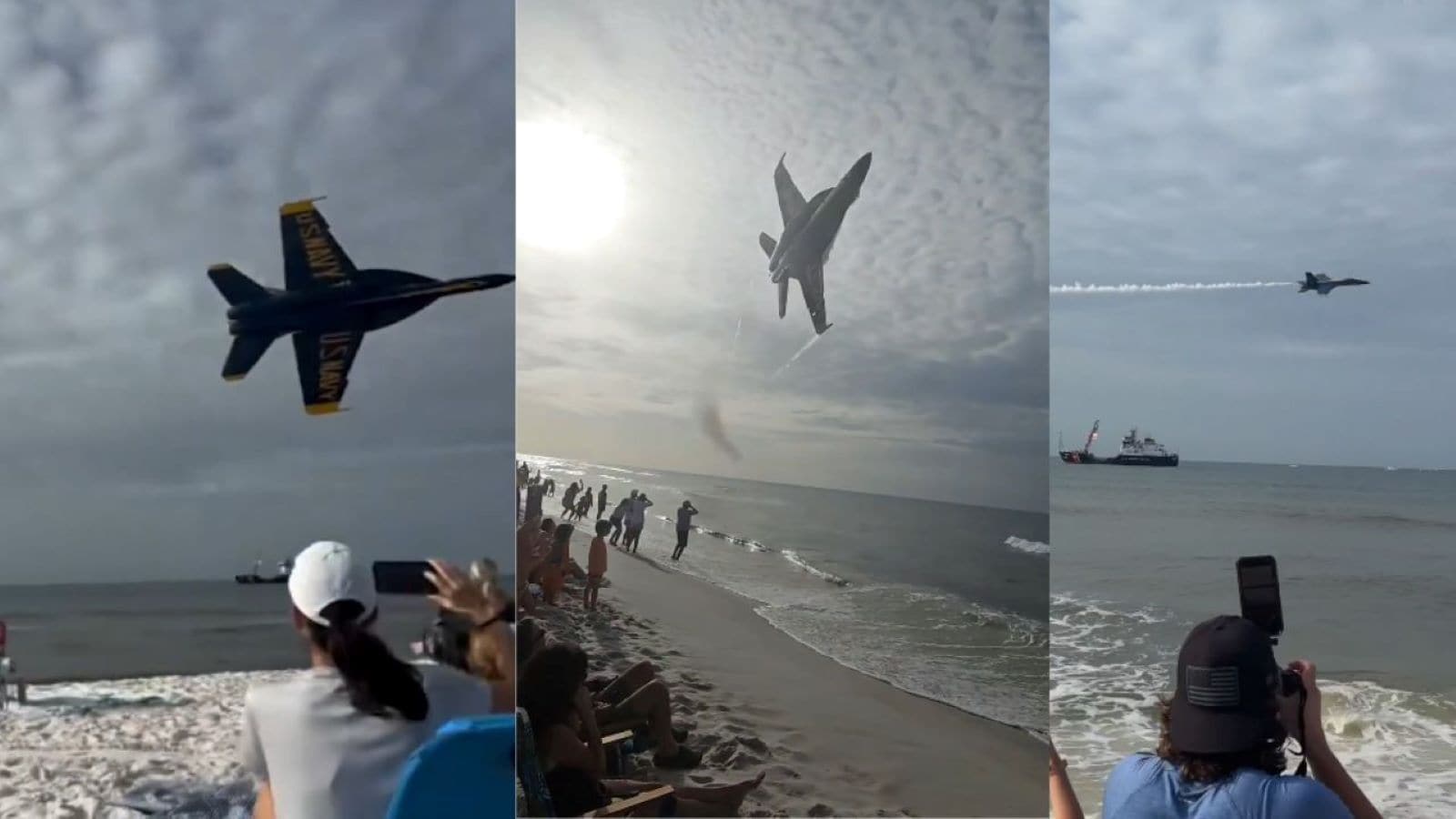
The internet is clutching its collective pearls again.
A video of a Blue Angels F/A-18 Super Hornet screaming feet above a Florida beach goes viral. Umbrellas fly. Beach chairs tumble. Sand blankets terrified sunbathers. The comment sections light up with predictable indignation: "How irresponsible!" "Think of the danger!" "Someone should be court-martialed!"
It is a masterclass in public ignorance.
What the outraged outrage-machine calls a "near-disaster" or "reckless stunt" is actually a showcase of precision aerodynamics and calculated naval doctrine. The media feeds you the panic because panic gets clicks. They paint these elite pilots as high-flying cowboys playing chicken with tourists.
They are wrong. The tourists got exactly what they came for, and the physics of the flight path prove that the danger was virtually zero. Let us dismantle the lazy outrage and explain what actually happens when 30,000 pounds of American military hardware displaces air at the edge of sound.
The Illusion of Danger vs. The Reality of Fluid Dynamics
People watch a jet buzz a beach and assume the pilot is millimeters away from a catastrophic error. This stems from a fundamental misunderstanding of how flight works at low altitudes.
To the untrained eye, a jet is a heavy rock defying gravity through sheer horsepower. To an aerospace engineer, air is not empty space; it is a fluid. When a Super Hornet flies low and fast, it interacts with the ground in a highly predictable, stabilizing phenomenon known as ground effect.
What Actually Happens in Ground Effect
When an aircraft flies within one wingspan's distance from the surface (for an F/A-18, that is under 40 feet), the air flowing under the wings is compressed against the ground.
- Induced Drag Drops: The wingtip vortices—the swirling air currents that drag an airplane back—are physically disrupted by the ground. Drag plummets.
- Lift Increases: The compressed air underneath creates a cushion of high pressure.
- The Cushion Barrier: This cushion actually makes the aircraft resist settling downward.
To put it bluntly: at ultra-low altitudes, the physics of the air itself wants to keep the jet from slamming into the sand. It takes deliberate, forced control input to drive a jet through that high-pressure cushion into the ground. The pilot is not teetering on a knife-edge of disaster; they are riding a physical mattress of compressed air.
Dismantling the "Unregulated Maverick" Myth
Let us talk about the rules of the sky. The Federal Aviation Administration (FAA) and the Department of Defense (DoD) do not operate on vibes.
+------------------------------+---------------------------------------+
| Public Myth                  | Naval Aviation Reality                |
+------------------------------+---------------------------------------+
| Pilots are hot-dogging for   | Flight profiles are pre-planned to    |
| social media clout.          | the literal inch and second.          |
+------------------------------+---------------------------------------+
| The low pass was a surprise  | The "show center" and flight lines    |
| safety violation.            | are heavily surveyed, approved zones. |
+------------------------------+---------------------------------------+
| A gust of wind could have    | Military jets fly at speeds where     |
| caused a beach crash.        | ambient wind gusts have nominal sway. |
+------------------------------+---------------------------------------+
Every single maneuver executed by the Blue Angels is governed by NATOPS (Naval Air Training and Operating Procedures Standardization). The pilots who make it to this squadron are not nineteen-year-old recruits looking for a thrill. They are seasoned fleet officers, often graduates of the United States Navy Fighter Weapons School (TOPGUN), with thousands of flight hours.
When Blue Angel No. 5 or No. 6 executes a "low transition" or a high-speed sneak pass, they are executing a maneuver they have practiced hundreds of times in identical conditions. The altitude is monitored by radar altimeters calibrated to the exact atmospheric pressure of that beach, that morning.
The idea that a pilot simply "got a little too close" because they were feeling flashy is a fantasy born of Hollywood movies. If a pilot deviates from the strict flight profile by even a couple of feet, they are grounded. Period.
You Wanted the Show, Now Accept the Wake Turbulence
The real culprit of the viral beach chaos is not pilot error. It is basic meteorology and fluid mechanics.
When a heavy object moves through a fluid at 400 knots, it leaves a footprint. This is known as wake turbulence, specifically wingtip vortices.
Wingtip Vortices: Circular patterns of spinning air deflected behind the wing as it generates lift. The heavier and slower the aircraft, the stronger the vortex. When moving fast at ultra-low altitude, these vortices hit the ground and roll outward like horizontal tornadoes.
When the Super Hornet screamed over the shoreline, the jet itself was already gone by the time the air hit the beachgoers. What sent the umbrellas flying was the downward and outward wash of air seeking to fill the vacuum left behind the fast-moving airframe.
If you set up your beach towel directly under the designated flight path of an active airshow, complaining about flying sand is like standing in the front row of a splash zone at Seaworld and getting mad that your shirt got wet.
The organizers published the flight box. The local authorities cleared the water. The spectators chose to crowd the boundary line because they wanted the adrenaline rush of a lifetime.
To demand the thrill of a low-altitude military pass while simultaneously demanding a sterile, windless environment is a level of cognitive dissonance only the modern internet could produce.
Why We Must Keep Flying Low
There is a growing chorus of risk-averse critics calling for higher minimum altitudes for airshows. They want to push the flight lines miles out over the ocean, reducing these magnificent displays of human engineering and piloting skill to distant, silent specks on the horizon.
This would destroy the entire utility of the squadron.
The Blue Angels exist as a premier recruiting tool for the Navy and Marine Corps. Their job is to inspire, to awe, and to project power. You do not inspire the next generation of aerospace engineers or naval aviators by hiding the aircraft behind a safety curtain of bureaucratic paranoia.
You do it by letting people feel the thrust of two General Electric F414-GE-400 engines. You do it by letting the rumble of the sound barrier being pushed vibrate in their chests.
The risks are managed down to a fraction of a percent through rigorous training, mechanical redundancy, and strict regulatory oversight. Eliminating all perceived risk also eliminates the human connection to these flying marvels.
The next time a video pops up of a jet blowing chairs across a beach, do not write a hand-wringing post about safety regulations. Marvel at the fact that human beings have mastered fluid dynamics so thoroughly that we can safely pilot a 15-ton metal bird feet above the earth at half the speed of sound, using nothing but physics as our safety net.
Stop complaining about the sand in your eyes and look up.