Nepal sits on a mountain of water and ambition. Every monsoon season, relentless downpours slam the southern slopes of the Himalayas, feeding a dense network of glacial-fed rivers that roar down steep elevation drops. For decades, planners and foreign investors looked at these churning torrents through a singular lens: clean energy waiting to be harnessed. Government ministries and international lenders imagined a future where the country exported billions of dollars in electricity to energy-hungry neighbors like India and Bangladesh.
That vision is now fracturing beneath tonnes of mud, boulders, and pulverized concrete.
Recent catastrophic floods across Nepal have exposed a fatal miscalculation in the engineering and financing of Himalayan hydropower. This is not merely a story about unusually heavy seasonal rainfall or standard climate change talking points. This is a structural crisis born from building high-capacity industrial infrastructure in one of the most tectonically volatile and rapidly warming regions on earth. When rivers swell with liquefied mountainsides, concrete dams designed to hold water instead trap debris flows that turn entire valleys into executioners.
The financial exposure is staggering, and the regional energy markets banking on these megawatts are beginning to panic.
The Mechanics of a High Altitude Disaster
To understand why traditional dam engineering fails in the Himalayas, one must look at the unique geology of the terrain. The mountain range is young, steep, and constantly rising. Tectonic plates grind against each other beneath the surface, making earthquakes a regular occurrence. These seismic shifts shatter the bedrock, leaving massive volumes of loose rock and soil clinging to steep slopes.
When extreme precipitation hits, it triggers cascading geotechnical failures. Landslides dump millions of cubic meters of debris directly into river channels. This creates temporary natural dams known as landslide-dammed lakes. Eventually, the water pressure overwhelms these unstable barriers, sending a catastrophic wall of water, mud, and boulders downstream.
Engineers call this phenomenon a debris flow or hyper-concentrated flood, but those clinical terms fail to capture the violence.
Standard hydroelectric projects are designed to manage water. They have spillways calculated for maximum expected water discharge and desanding basins to catch normal river silt. They are fundamentally unequipped to handle a slurry that is seventy percent solid rock and debris by weight. When a debris flow hits a run-of-the-river project, the impact resembles a train derailment moving at highway speeds.
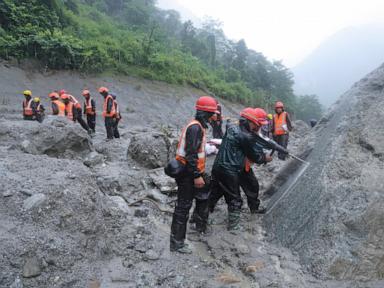
Intake gates are instantly jammed with boulders the size of delivery trucks. Penstock pipes are sheared away from mountain anchors like dry twigs. Powerhouses sitting near the riverbanks are buried under meters of gravel and grey sludge.
During recent flood events in watersheds like the Melamchi and the Arun, multi-million dollar structures were rendered useless in a matter of hours. The water did not just flow over the dams; it obliterated them from the inside out.
The Mirage of Run-of-the-River Energy
For years, developers favored run-of-the-river designs over massive storage reservoirs because they were marketed as environmentally friendly. By avoiding huge artificial lakes, these projects claimed to minimize the displacement of local communities and preserve the downstream river ecosystem. They do not flood vast river valleys, and they allow water to pass through turbines continuously without creating massive stagnant reservoirs.
Yet this design choice contains an inherent vulnerability.
Because run-of-the-river plants lack significant storage capacity, they rely on the immediate, continuous flow of the river to generate power. They have virtually no buffer against extreme hydrological shocks. When the monsoon brings clear water, they print money. When the monsoon brings a debris-laden flash flood, they must shut down operations immediately to protect their turbines from being sandblasted into scrap metal.
Climate change is turning these extreme shutdowns from rare anomalies into routine operational hazards.
Atmospheric warming is accelerating the melting of Himalayan glaciers and creating thousands of fragile glacial lakes high above the valleys. These lakes are held back by terminal moraines, which are essentially loose walls of ice and rock dumped by retreating glaciers. As meltwater accumulates, these natural barriers weaken.
When a moraine breaches, it triggers a Glacial Lake Outburst Flood or GLOF. A GLOF can release millions of cubic meters of water in minutes, transforming a manageable river into a raging torrent of destruction before anyone downstream has time to sound an alarm.
Hydropower operators are thus caught in a dangerous trap. They need the high-volume flows of the summer months to meet generation targets, but those exact same flows carry the debris capable of destroying their capital investments.
Economic Dominoes Across Borders
The consequences of this infrastructure vulnerability extend far beyond the borders of Nepal. Regional geopolitics are deeply entangled in these mountain rivers. India has invested heavily in developing Nepal's water resources through bilateral agreements and direct corporate investments by major energy firms.
The strategy was straightforward. India needed clean energy to meet its aggressive decarbonization targets, and Nepal possessed the ideal topography to supply it. Long-term power purchase agreements were signed, and transmission lines were drawn across the plains to funnel megawatts south.
Now, financiers in financial capitals are recalculating their risk assessments.
When a major hydropower plant goes offline for six months due to flood damage, the financial losses cascade through the system. Insurance premiums for Himalayan energy projects are skyrocketing, with underwriters demanding massive deductibles or refusing coverage altogether for high-risk zones. Debt servicing becomes impossible when generation drops to zero while reconstruction costs climb into the tens of millions of dollars.
For Nepal, the economic blow is existential. The energy sector represents one of the few viable pathways for the nation to reduce its trade deficit and build a modern export economy. When power plants are repeatedly knocked out of commission, the anticipated national revenue stream dries up, leaving the government holding the bag on sovereign loans used to build access roads and transmission grids.
Local communities bear the heaviest human cost. Construction booms bring temporary jobs, but they also draw migrant workers into vulnerable river valleys. When a midnight flood sweeps through a camp near a project site, lives are lost long before the political leaders in the capital issue statements of concern.
Blind Spots in Environmental Impact Assessments
Part of the blame lies in flawed regulatory processes. Environmental and Social Impact Assessments for these projects have historically treated climate change and extreme weather as static variables rather than dynamic, escalating threats.
Consultants often rely on historical hydrological data spanning the last thirty or forty years to calculate flood risk. In a rapidly warming climate, historical data is worse than useless; it is actively misleading. Past patterns do not reflect a reality where glaciers are destabilizing at unprecedented rates and monsoon rainfall patterns are shifting from steady seasonal drops to violent, concentrated cloudbursts.
Furthermore, sediment management plans are routinely underestimated. Rivers originating in the Himalayas carry some of the highest sediment loads on the planet under normal conditions. During extreme weather events, sediment volumes multiply exponentially.
Developers often build settling basins designed to catch sand and gravel, but they fail to account for massive bedload movement—the heavy rocks and boulders rolling along the river bottom during floods. When these boulders enter the system, they bypass settling basins entirely and smash directly into the mechanical heart of the plant.
Transparency during the planning phase is another casualty of rapid industrial development. Local populations living downstream are rarely informed about the upstream risks of glacial lake outbursts or the structural limitations of the dams hovering above their villages. Early warning systems are sparse, underfunded, and poorly integrated with local communication networks.
When disaster strikes, sirens often fail to sound, and evacuation routes lead directly into hazard zones.
Rethinking High Mountain Engineering
If the hydropower sector in the Himalayas is to survive this century, the entire paradigm of how engineers interact with these mountains must change. The era of treating rivers as passive industrial inputs is over.
Some forward-thinking engineers are advocating for a shift toward sediment-bypass tunnels that allow hyper-concentrated flows and heavy bedloads to route around the power generation infrastructure rather than through it. These massive diversion tunnels require enormous upfront capital expenditure, making them unappealing to short-term investors looking for quick returns, but they represent the only viable defense against total asset destruction.
Others argue for relocating critical infrastructure far higher up or embedding powerhouses deep inside solid rock caverns rather than placing them exposed on vulnerable riverbanks. While underground construction is expensive and technically challenging, it offers a layer of physical protection against surface landslides and direct flood impacts.
Upstream, early warning systems require massive modernization. Satellites and automated sensor networks must be deployed across high-altitude glacial lakes to detect sudden water level drops or moraine breaches in real time. This data must feed directly into automated dam management systems that can open spillways and drain reservoirs safely before a wall of water arrives.
Yet even the best engineering cannot outrun a collapsing ecosystem.
The fundamental tension remains unresolved. You cannot tame a mountain range that is actively unraveling due to global temperature spikes. Every cubic meter of concrete poured into a Himalayan gorge is a bet against a geological clock that is ticking faster every year. As the monsoon seasons grow more erratic and the glaciers continue their retreat, the real question is not whether another project will fail, but whether investors will finally admit that some places on earth are simply too volatile to conquer.