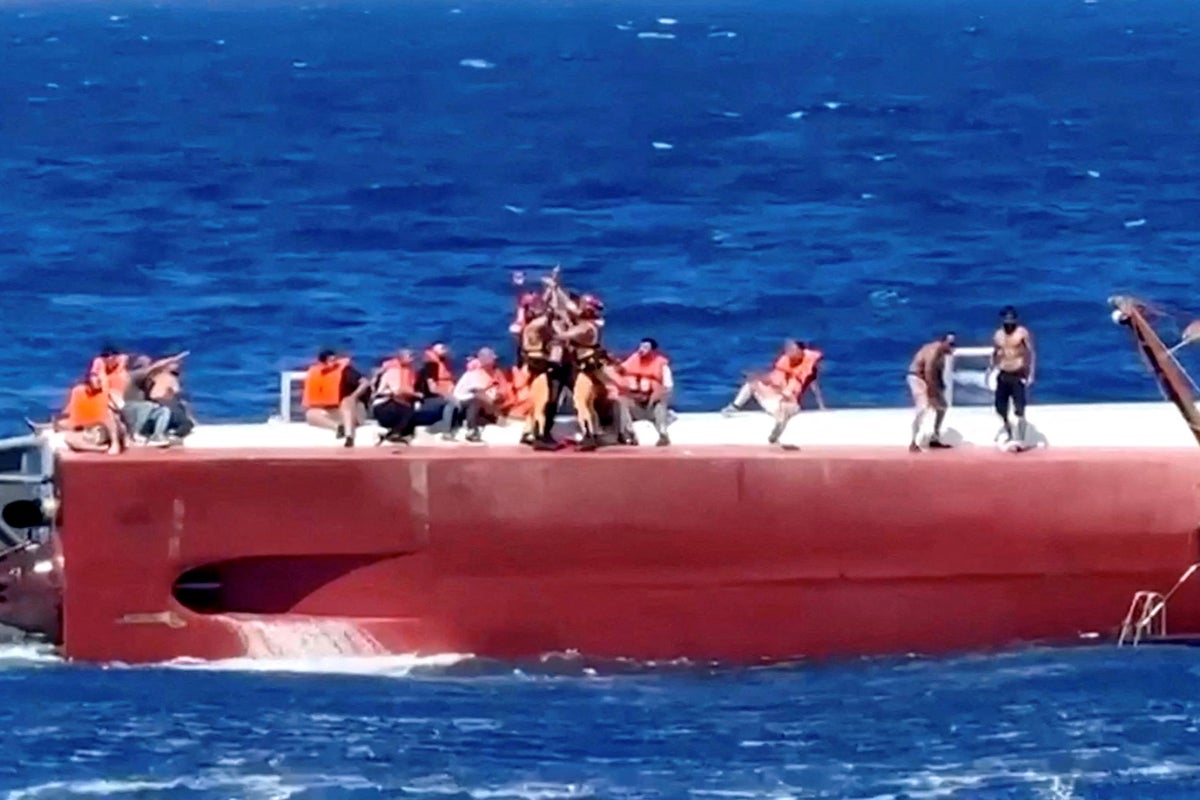
A routine afternoon crossing turned into a nightmare when the passenger ferry Filojet left the port of Kyrenia in northern Cyprus. Minutes later, the catamaran-style vessel was fighting for its life against the Mediterranean. At least eight people are dead, and nearly twenty remain missing.
Most early reports focus solely on the capsize itself, ignoring the terrifying chain of events that unfolded below deck long before the ship flipped. When passengers heard loud thumps and felt the vessel slamming violently against the water, the crew offered dangerous reassurance. They claimed it was just a loose gasket causing a minor leak.
It wasn't.
The Reality Inside the Sinking Hull
Survivors have come forward with harrowing accounts that dismantle the official narrative of a sudden, unavoidable accident. As the ship began taking on water roughly four nautical miles off the coast, panic spread faster than the flooding.
The captain reportedly tried to turn the vessel back toward Kyrenia. That maneuver proved fatal. The violent tilting sent a human wave crashing toward the exits, where crush barriers formed organically out of sheer terror.
According to passengers like Serkan Kunduraci, who escaped by smashing a window, doors were jammed or shut as people scrambled for life jackets. Those trapped in the rear compartments stood little chance as bodies piled up in the dark.
Accountability and the Search for Answers
Turkish Cypriot authorities have already detained the captain and seven crew members. Prime Minister Unal Ustel promised that even the slightest negligence will face prosecution, calling it the worst maritime disaster in the region's history.
Yet, pointing fingers at the crew misses the broader systemic failures plaguing these regional shuttle routes. These ferries run daily links between northern Cyprus and mainland Turkey, often carrying hundreds of passengers under oversight structures that escape international scrutiny due to the region's unrecognized status.
Rescue operations have been severely hampered by the depth of the water where the ship finally settled—over 500 meters down. Specialized divers brought in from Turkey are working around the clock, but hope is fading for the missing.
Families now wait outside the port in Kyrenia, clutching phones for updates that rarely come. The tragedy highlights a brutal truth about modern maritime transport: complacency kills long before the hull ever breaches.


