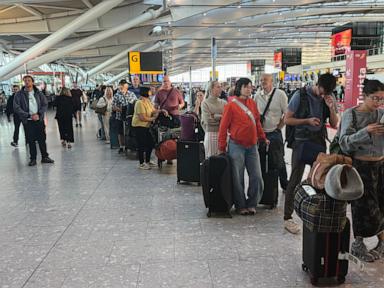
A single millisecond. That is all it took to paralyze the skies above the United Kingdom, strand tens of thousands of travelers across Europe, and lay bare the alarming brittleness of our modern infrastructure.
When National Air Traffic Services (NATS) experienced a catastrophic system failure that forced widespread flight cancellations and severe delays, the immediate narrative centered on a software glitch. Officials pointed to a minute timing discrepancy within automated flight processing data—a microscopic computational hiccup. But blaming a millisecond error misses the forest for the trees. Software does not fail in a vacuum. Code degrades, legacy systems strain under modern demands, and administrative complacency creates an environment where a minor data anomaly can cascade into a national crisis. Building on this topic, you can also read: The Cost of Convenience Architectural Blind Spots in State Cloud Infrastructure.
Having spent decades watching critical systems operate at the edge of failure, this outcome felt less like a freak accident and more like an inevitability waiting for a trigger.
The Anatomy of a Single Error
Modern aviation management relies on staggering volumes of real-time data processed at blinding speeds. Flight plans arrive from dozens of international authorities, each formatted with slight variations, requiring immediate validation, parsing, and integration into a central tracking display. Analysts at ZDNet have shared their thoughts on this situation.
During the NATS incident, a specific flight plan contained conflicting data points regarding a waypoint outside UK airspace. Under normal operational design, safety systems should isolate the anomaly, flag it for human review, and allow the remaining traffic flow to continue unimpeded. Instead, the core processing engine choked.
The software encountered an unexpected state, failed to gracefully recover, and triggered a safety freeze to prevent controllers from receiving corrupted flight path data. In aviation, safety protocols dictate that when in doubt, the system must shut down or lock out to prevent disaster. The software did what it was programmed to do under catastrophic failure conditions: it stopped.
Yet, the reliance on a centralized, monolithic architecture means that a local parsing error can infect the entire operational picture. Controllers suddenly found themselves staring at blank screens or frozen flight strips, forced to handle high-altitude traffic using manual backup procedures designed for an era of piston engines rather than congested jet corridors.
Legacy Foundations and Modern Pressures
The underlying vulnerability stretches back decades. Critical air traffic management infrastructure is notoriously slow to modernize. Upgrading safety-critical code requires years of rigorous testing, regulatory certification, and multi-million-pound investments that institutions often defer until forced by circumstance.
Air traffic controllers manage an increasingly dense airspace. Post-pandemic travel surges have pushed flight volumes back toward historic highs, while airspace capacity remains constrained by environmental routes, military restrictions, and staffing shortages. When you squeeze more traffic through a narrower operational funnel, the margin for error shrinks to near zero.
A hypothetical example illustrates the compounding nature of this stress. Imagine a multi-lane highway operating at 120 percent capacity during rush hour. If a single vehicle stalls in the middle lane, traffic does not merely slow down in that lane; a ripple effect reverberates backward, locking up off-ramps, parallel streets, and intersections miles away. The NATS software glitch was the stalled vehicle. The centralized system architecture was the highway lacking an emergency shoulder.
The Human Element in Automated Cockpits
Public discourse often treats automation as an infallible shield against human error. We assume that computers make fewer mistakes, so handing over the reins to algorithms creates a safer environment.
This perspective ignores a fundamental truth of complex socio-technical systems: automation changes the nature of human work rather than eliminating it. When automation functions smoothly, human operators transition from active participants to passive monitors. But human beings are notoriously bad at prolonged vigilance. Asking a trained controller to sit and watch a green screen for hours waiting for a rare exception degrades their ability to react when things go sideways.
Worse still, when the automated layers fail, operators are thrust back into active control roles without warning. They must rapidly mentally reconstruct the spatial geometry of the airspace, calculate speeds and vectors manually, and communicate instructions over crowded radio frequencies.
The software glitch exposed the illusion of total control. By outsourcing complex sorting and filtering tasks to opaque codebases, institutions lose institutional memory. When the code breaks, the people tasked with fixing it often understand the underlying math far less than the engineers who retired a decade prior.
Regulatory Blind Spots and Accountability
Following the disruption, public inquiries and parliamentary committees demanded answers. Executive leadership testified about resilience measures, backup data centers, and swift software patches deployed within hours of the outage.
Yet, accountability remains elusive. When a proprietary system developed by third-party contractors fails, pinpointing responsibility becomes a bureaucratic labyrinth. Was the failure caused by poor specification writing from the regulatory body, inadequate testing by the vendor, or an unforeseen edge case in the operational environment?
In most cases, the answer is all three. Public-private partnerships in critical infrastructure often suffer from misaligned incentives. Vendors compete on cost during the procurement phase, which can lead to leaner development teams and compressed testing cycles. Once deployed, the system becomes too big to fail and too complex to easily replace, locking the operator into a long-term maintenance cycle with the original supplier.
The Path Forward Requires Radical Redundancy
Fixing this vulnerability requires more than patching a line of code or adjusting a timing tolerance threshold. Software will always contain bugs. Data will always arrive corrupted. The goal cannot be absolute perfection; the goal must be structural resilience.
True resilience demands distributed architectures where a failure in one region or one subsystem cannot cascade across an entire national grid. It requires investing in human-centric interface design that keeps controllers engaged and capable of seamless manual takeovers. Most importantly, it requires treating software infrastructure with the same rigorous, conservative engineering standards applied to physical steel and concrete.
Until aviation authorities and technology providers abandon the myth of seamless automation, we will remain one millisecond away from the next ground stop. The skies are too crowded, and the stakes are too high, to rely on code that breaks under the weight of its own complexity.