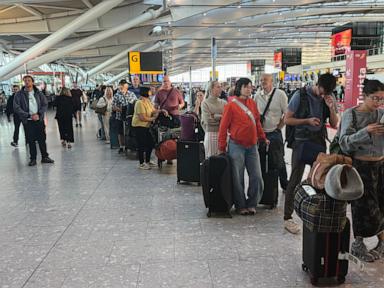
Modern aviation is not managed by human reflexes; it is governed by distributed state machines executing millions of non-blocking I/O operations per second. When a global air traffic control or airline reservation grid collapses, public post-mortems routinely invoke nebulous concepts like software glitches or technical anomalies. These terms obscure the underlying systemic vulnerabilities. A software failure that brings down a critical infrastructure network in a fraction of a millisecond is rarely a random coding error. It is the predictable consequence of architectural tight-coupling, unhandled exception paths in synchronous state validation, and a failure to design for graceful degradation under high transaction concurrency.
To deconstruct how a single instruction or race condition can cascade into hundreds of thousands of grounded passengers, one must analyze the structural mechanics of real-time scheduling systems. This investigation maps the operational failure points, the structural dependencies that turn minor code anomalies into catastrophic outages, and the structural economic trade-offs inherent in mission-critical software engineering.
The Triad of Infrastructure Vulnerability
Critical transport and flight scheduling systems rely on three tightly interwoven operational layers: state synchronization, message passing, and deterministic timekeeping. When an exception occurs at the intersection of these layers, the failure mechanism follows a rigid trajectory.
[State Synchronization] ---> [Message Passing Layer] ---> [Deterministic Timekeeping]
         |                              |                             |
  (Distributed Locking)         (Event Streaming)             (Global Clock Sync)
         |                              |                             |
         +------------------------------+-----------------------------+
                                        |
                          Cascading Microsecond Collapse
1. Distributed State Synchronization and Locking
Flight operations depend on a single source of truth regarding aircraft tail numbers, crew legality limits, gate assignments, and airspace slots. To maintain consistency across geographically distributed data centers, systems utilize distributed consensus protocols and locking mechanisms.
When a software error corrupts a locking primitive—such as a dangling mutex or an unreleased read-write lock in an in-memory database—dependent threads do not merely crash; they block. In a high-throughput transaction environment processing thousands of seat reservations and flight plan updates per second, a blocked worker thread pool saturates instantly.
The downstream effect is queue starvation. Because incoming API requests outpace execution capacity, connection pools exhaust their socket allocations. The system stops responding to health checks, triggering automated orchestration engines to cycle container instances. If those instances attempt to recover state from a corrupted persistent store, the boot sequence loops infinitely, transforming a localized code exception into a regional outage.
2. Message Passing and Event-Driven Cascade Failures
Modern reservation and operations platforms are built on asynchronous event-driven architectures. Microservices communicate via message brokers, emitting events like FlightPlanSubmitted or CrewAssigned.
Under normal operating parameters, this decouples services and absorbs traffic spikes. However, when a faulty parsing update is deployed, it often introduces a poison pill message—a payload that triggers an unhandled exception every time it is processed by a consumer service.
The propagation dynamics of a poison pill follow a brutal mathematical certainty:
- The consumer service encounters the exception and fails.
- The message broker, configured for reliability, retries delivery.
- The consumer service crashes repeatedly, driving CPU utilization to maximum thresholds.
- Dead-letter queues fill up or fail to catch the malformed payload, causing upstream producers to block waiting for acknowledgement windows to clear.
This creates a self-inflicted denial-of-service attack. The infrastructure collapses under the weight of its own automated retry logic.
3. Timekeeping and Deterministic Scheduling Dependencies
Flight scheduling is an exercise in temporal precision. Every gate departure, sector crossing, and crew duty-time calculation depends on microsecond-accurate timestamps. Software systems running distributed algorithms rely on synchronized clocks to sequence transactions.
When a software defect introduces a race condition or a clock-skew assumption error, the sequencing logic breaks. Transactions that must occur sequentially are processed concurrently. The database engine resolves this by throwing serialization failures or deadlocks.
If the application code lacks robust circuit breakers to shed load during deadlock spikes, the transaction failure rate approaches one hundred percent. The system enters a livelock state where CPU cycles are consumed entirely by rolling back failed transactions rather than processing valid operational data.
The Cost Function of High-Availability Software
The fundamental economic tension in aviation software engineering is the trade-off between strict transactional consistency (ACID) and high availability (BASE). Business stakeholders demand zero downtime, while regulatory frameworks demand absolute data correctness.
When engineers attempt to bridge this gap using complex distributed transactions across legacy monoliths and modern cloud services, the attack surface for catastrophic failure expands exponentially.
[System Complexity] ---> [Increased State Space] ---> [Hidden Race Conditions] ---> [Catastrophic Outage]
The Illusion of Redundancy
Redundancy is frequently confused with resilience. Deploying active-active data centers across multiple cloud regions protects against hardware failures, data center fires, and fiber cuts. It offers zero protection against systemic software logic flaws.
If a buggy software patch is pushed simultaneously to primary and secondary production clusters, both environments execute the defective instruction set in lockstep. The secondary failover system does not rescue the primary; it mirrors its failure within milliseconds. True fault tolerance requires heterogeneous execution paths—running distinct codebases or validation logic compiled by different teams or tools—a practice rarely adopted due to prohibitive development costs.
The Technical Debt of Legacy Integration
Airlines and air navigation service providers rarely build greenfield systems. They wrap decades-old mainframe logic in modern REST APIs and microservices.
This creates a brittle hybrid architecture where microsecond-level cloud components must interface with batch-oriented legacy databases designed decades ago. A minor data type mismatch or precision truncation in a modern API payload, when passed down to a legacy scheduling engine, can corrupt internal memory structures. The resulting segmentation fault or memory leak manifests globally, defying local debugging efforts.
Strategic Remediation Framework
Preventing microsecond-level system collapses requires shifting engineering priorities from reactive recovery to defensive architecture. Organizations managing critical infrastructure must implement four non-negotiable operational controls.
1. Circuit Breakers and Graceful Degradation
Systems must be architected to fail downward rather than fail entirely. If a real-time crew-matching algorithm encounters an exception, the system must automatically fall back to cached static rosters or manual override modes rather than halting reservation check-ins. Refusing to process new transactions while keeping core operational visibility active limits the blast radius of a software defect.
2. Immutable Infrastructure and Canary Deployments
Zero-downtime rolling updates are insufficient for mission-critical software. Deployments must utilize strict canary phases where code changes are routed through a fractional percentage of live traffic while monitoring error budgets and thread pool saturation metrics. If anomalies appear within the first minute of execution, automated rollback scripts must revert the deployment state before the message broker fills its queues.
3. Chaos Engineering and Failure Mode Injection
Waiting for production environments to expose architectural weaknesses is an obsolete operational strategy. Engineering teams must routinely inject artificial network latency, corrupt message payloads, and simulate clock skews in staging environments that mirror production complexity. Testing the system under synthetic failure conditions verifies whether circuit breakers trip correctly and recovery runbooks execute without human intervention.
4. Deterministic State Verification
To eliminate race conditions, state transitions must be modeled as append-only event logs rather than mutable database updates. By guaranteeing that history is immutable and state can be replayed deterministically from a known point, recovery from a software crash shifts from manual database restoration to automated event stream replay.
Operational Outlook
As air traffic density increases and automation expands, the margin for software error shrinks toward zero. The vulnerability of global transit networks is no longer physical hardware wear; it is the compounding complexity of distributed software logic.
Organizations that treat software reliability as an operational afterthought rather than a core engineering discipline will continue to experience systemic paralysis. Resilience is achieved only when systems are explicitly designed to assume that every component will fail, every message will be malformed, and every clock will drift.