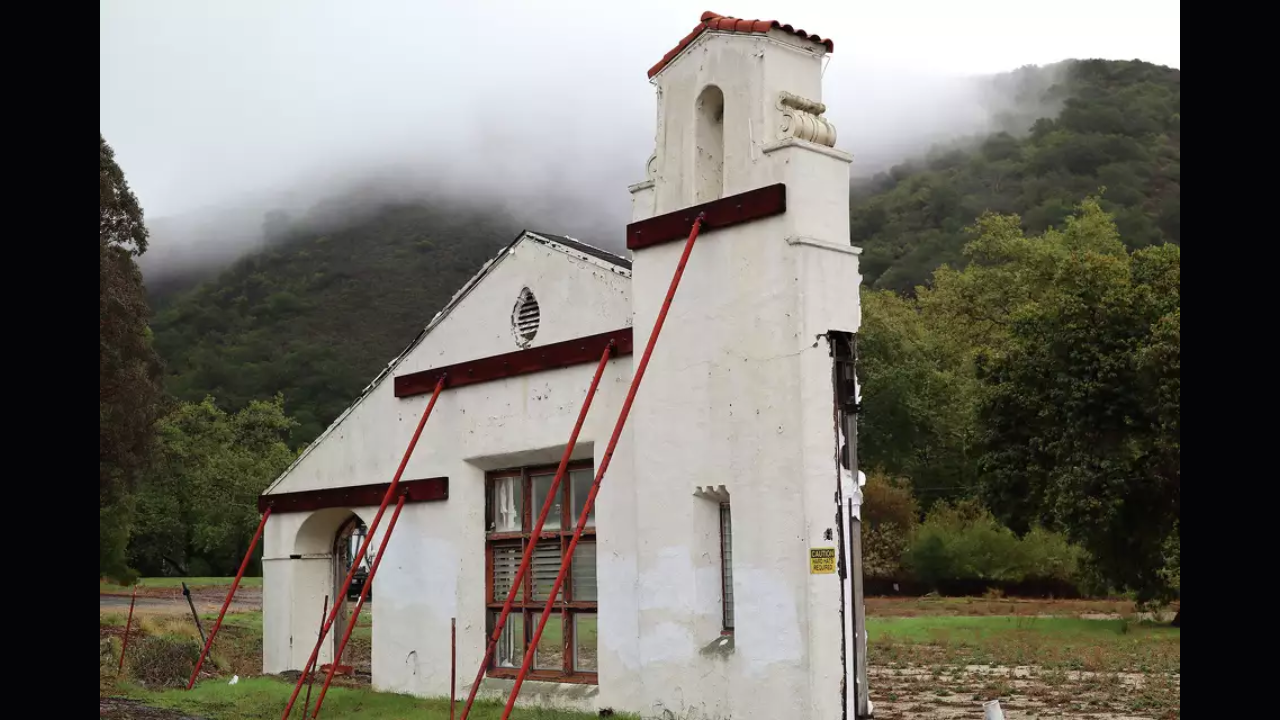
Every history buff with a Wikipedia tab open loves to crow about December 12, 1925. That is the day Arthur Heineman unlocked the doors of the Milestone Mo-Tel in San Luis Obispo, California, charging a paltry one dollar and twenty-five cents a night. Pop historians love to frame this as the dawn of democratic travel, the moment the open road became accessible to the working stiff who could not afford the grand, stuffy railway hotels of the Gilded Age.
It is a comforting, utterly lazy narrative.
It completely ignores the economic rot that the motel format injected into American infrastructure. We romanticize the roadside shack because it smells like nostalgia, petroleum, and cheap coffee. We treat the death of the Milestone in 1991 as a tragic casualty of corporate highway bypasses.
The closure of the Milestone Motel was not a tragedy. It was a market correction fifty years too late.
The motel format was never a stroke of populist genius. It was a desperate band-aid for an architectural failure, and treating it as the golden standard of travel hospitality has crippled how we build, move, and experience geography today.
The Architectural Lie of the Motor Lodge
Let us look at the mechanics of what Heineman actually built. He did not invent freedom. He invented a low-density parking lot with a bed attached.
Before the motel, American travelers stayed in downtown hotels or roadside inns that integrated into local commerce. They parked their horses or early automobiles in central garages and walked into town. They spent money at local bakeries, tailors, and theaters. The urban core functioned as an ecosystem.
The motel changed that by decoupling accommodation from community. By lining rooms up in a U-shape around a central asphalt basin, the motel did two things:
- It prioritized the automobile over the human being.
- It created a hermetically sealed environment designed to isolate the traveler from the very place they were visiting.
You did not stay in San Luis Obispo; you stayed in a concrete box next to your Dodge. You drove in, locked your door, ate a stale pastry from a cellophane wrapper, and drove out without ever interacting with the local economy beyond handing a teenager twenty-five cents.
I have watched real estate developers replicate this exact mental error for decades, pouring capital into sprawling, auto-centric lodging models while wondering why guest satisfaction plummets. We took a transactional necessity—sleeping while moving from point A to point B—and tried to elevate it into a lifestyle choice.
The Myth of the Cheap Stay
People look at the $1.25 price tag from 1925 and weep for modern inflation. Let us run the actual numbers. Adjusted for inflation, that $1.25 is roughly twenty-two dollars today.
Try finding a hotel room for twenty-two dollars that does not double as a crime scene. You cannot. Why? Because the original motel model was financially unsustainable from day one. It only worked in 1925 because land was dirt cheap, environmental regulations were nonexistent, and labor costs were suppressed by a lack of basic worker protections.
When people ask, "Why can’t we have affordable roadside motels anymore?", they are asking a fundamentally flawed question. The premise assumes that motels were cheap because of efficient design. They were cheap because they externalized their true costs onto the public infrastructure.
Motels required massive tracts of land immediately adjacent to arterial highways. As Eisenhower’s interstate system expanded in the 1950s, these independent motels multiplied like kudzu, chewing up millions of acres of prime land for asphalt parking footprints that sat empty twenty hours a day.
They were massive capital sinks disguised as budget options. When the interstate system bypassed towns in the 1970s and 1980s, these motels did not die because big corporate chains were mean. They died because their business model relied entirely on a captive audience driving past a specific strip of tarmac at sixty miles per hour. Once the tarmac moved, the business model evaporated. Good riddance.
The Franchise Takeover Was Inevitable
When Holiday Inn and Motel 6 swept across the landscape in the mid-century, purists cried foul. They claimed corporate homogenization killed the quirky charm of the independent roadside motor lodge.
This is historical revisionism of the highest order.
The independent motel was never charming; it was wildly inconsistent. One night you got a clean bed and hot water; the next night you got bedbugs, flickering neon lights that hummed like a hornet's nest, and a dead battery because the outdoor parking layout left your car exposed to every element and opportunist.
Corporate standardization did not ruin the motel. Standardization saved the traveler from the Russian roulette of roadside sanitation.
Yet, even the big chains fell into the trap of the motel architecture. They built outwards instead of upwards. They traded urban density for suburban sprawl. By the time the Milestone Motel finally shuttered its rusted locks for good in 1991, it was a flea-bitten relic operating as a weekly rent-by-need flophouse. It had completed its natural evolutionary arc from mediocre innovation to urban blight.
The Real Future of Transit Lodging
If you want to understand how travel accommodations should work today, look at what is replacing the dying highway motels: adaptive reuse urban lofts, modular micro-hotels integrated into transit hubs, and decentralized rentals that fold back into existing neighborhood fabrics.
We no longer need a sprawling U-shaped compound on the edge of town next to a grease-trap diner. We need high-density, low-impact spaces where the traveler steps off a train or electric vehicle directly into the pulsing center of a community, rather than hiding behind a curtain of tailpipe exhaust.
Stop romanticizing the 1925 motor lodge. Stop pretending that slapping a neon sign on a row of concrete boxes was a masterclass in hospitality design.
It was a temporary fix for a century-old transit transition. The road is not a place to live, and the box next to your car was never a home.
Park the nostalgia. Tear up the asphalt. Build for people, not tailpipes.