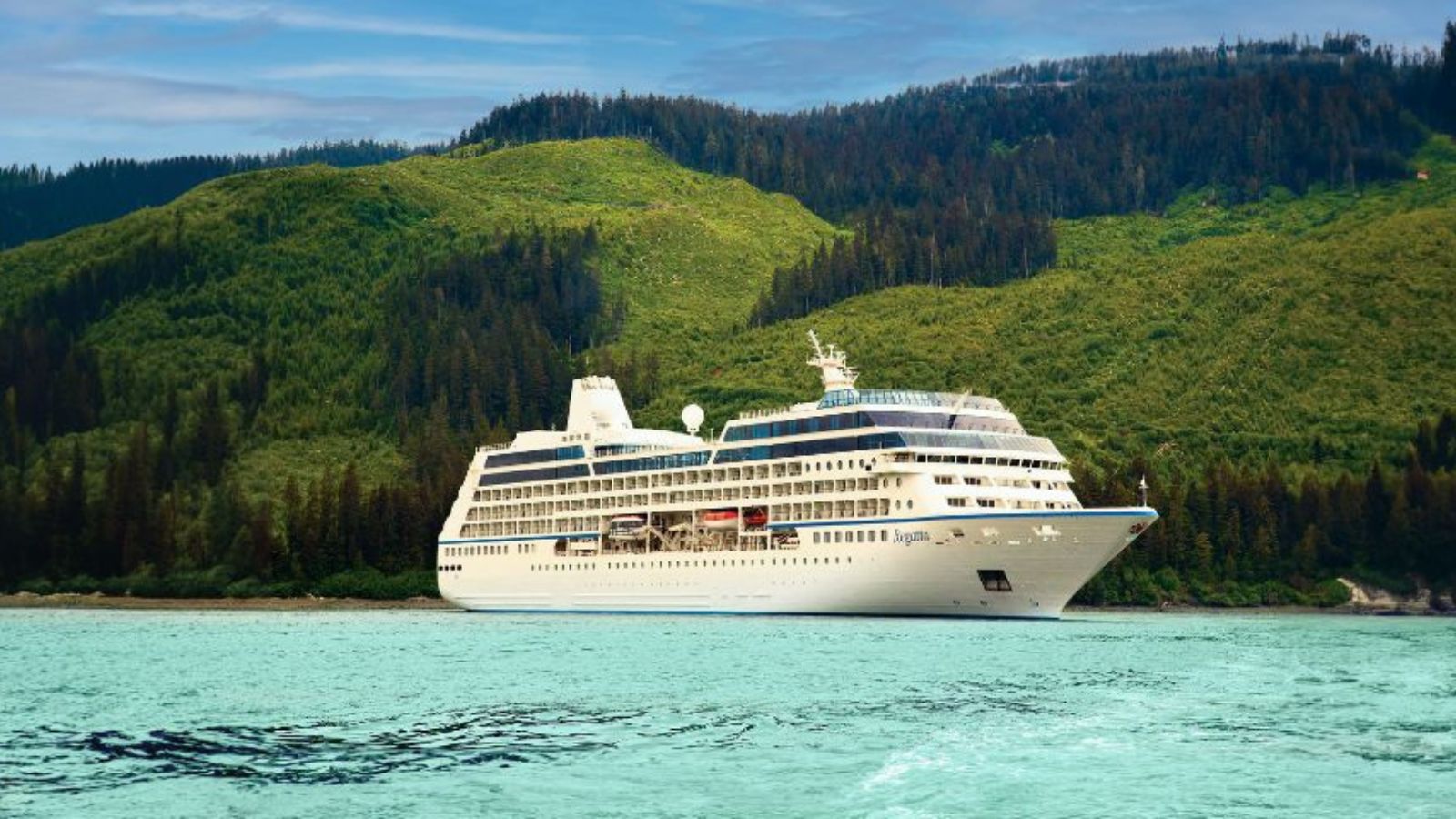
The world of ultra-long maritime tourism just shifted its axis. When the Regatta pulled away from Rome under the banner of Explorations by Norwegian, it carried more than seven hundred passengers. It carried an entirely new benchmark for extreme vacationing. Spanning 371 days, 62 countries, and over 220 ports, this continuous voyage shatters the previous high-water mark set by Royal Caribbean’s 274-night itinerary. For anyone tracking the hyper-expansion of the high-end travel market, this launch is not just a longer holiday. It is a structural test of how much isolation, luxury, and capital a human being can pack into a floating steel hull for over a full year.
Let us look at the raw mechanics of the operation. Fares for the full 371-day journey start at roughly $71,450 USD and scale past $180,000 USD for premier staterooms. These figures buy a ticket across six continents, routing through the Norwegian fjords for the northern lights, dropping down into African ports like Cape Town and Zanzibar, stretching across Asian transit points from Hiroshima to Colombo, and navigating both Alaska and the Amazon. This is not a standard cruise circuit. It is an intricate, multi-year logistical puzzle compressed into twelve months, executed by a boutique-sized vessel small enough to slip into ports that mega-liners cannot touch. You might also find this connected article interesting: Why UK Flight Cancellations Keep Happening Even After Systems Restart.
The Logistics of Living Off the Grid
Operating a vessel at sea for a year requires a quiet industrial miracle. Most commercial ships run on standard two-to-three-week provisioning cycles. When you scale that timeline to 371 days without a permanent home base, the supply chain management becomes staggering. Fresh produce, dry goods, specialized medical supplies, and fuel must be strategically pre-arranged across dozens of international jurisdictions with varying import laws and customs regulations.
Consider waste management. A ship housing hundreds of guests and crew members generates massive quantities of refuse daily. Navigating strict environmental regulations in protected zones like the Amazon basin or Antarctic margins means onboard incinerators, wastewater treatment plants, and recycling protocols must operate at peak efficiency without fail. One mechanical breakdown in a remote sector of the South Pacific can cascade into a massive logistical headache. As discussed in latest coverage by The Points Guy, the effects are worth noting.
Then there is the psychological component. Vacation burnout is a recognized phenomenon, typically setting in around day fourteen of a standard holiday. When passengers sign up for a year-long continuous cruise, the ship stops being a resort and transforms into a small town. Social friction, medical emergencies, and cabin fever are inevitable variables. Cruise operators handle this by embedding modular ticketing structures—allowing segments of travelers to join or leave at various regional hubs—which naturally cycles the demographic onboard and prevents the social ecosystem from stagnating.
The Economics of Permanent Voyage
Why are operators pushing the boundaries of duration? The answer lies in guaranteed yield and changing demographic trends among retirees and remote wealth holders. Traditional cruise lines rely on high passenger turnover, spending significant marketing capital to fill cabins week after week. A continuous year-long booking eliminates empty-cabin risk for an entire suite inventory in a single transaction.
The target demographic has also shifted. Wealthy travelers are increasingly trading stationary real estate portfolios for mobile luxury assets. Instead of maintaining multiple properties across different continents, buyers are opting for turnkey living where housekeeping, international transport, fine dining, and entertainment are bundled into a single predictable invoice.
Yet, financial exposure remains high for the consumer. Beyond the base ticket price, incidentals on a voyage of this length can accumulate rapidly. Even with premium packages covering Wi-Fi, gratuities, and select excursions, unexpected medical evacuations or specialized personal services out-of-pocket can inflate the final tally.
The Shift in Global Itinerary Design
Traditional world cruises often follow predictable warm-weather loops, hugging equatorial lines or standard Caribbean and Mediterranean paths. The Regatta itinerary breaks this mold by chasing seasonal phenomena deliberately. By timing arrivals to match cherry blossom season in Japan, the midnight sun in the Arctic, and dry-season navigation windows in South America, the voyage forces the vessel into diverse climatic extremes.
This operational agility demands structural resilience from the ship itself. The Regatta, formerly sailing under Oceania Cruises, was selected specifically because its mid-size blueprint bridges the gap between ocean endurance and port accessibility. Larger ships carry more amenities, but they are barred from shallow rivers, tight urban harbors, and remote island anchorages. For an itinerary built on geographic breadth rather than sea-day volume, shallow draft capability is worth more than a dozen onboard waterparks.
As the Regatta cuts deeper into its multi-month schedule, the maritime industry is watching closely. If consumer demand remains high and logistical hurdles are cleared without major incident, expect competitors to stretch their own timelines even further. The era of the multi-year voyage has officially arrived, turning the open ocean into a permanent residential zip code for those willing to pay the fare