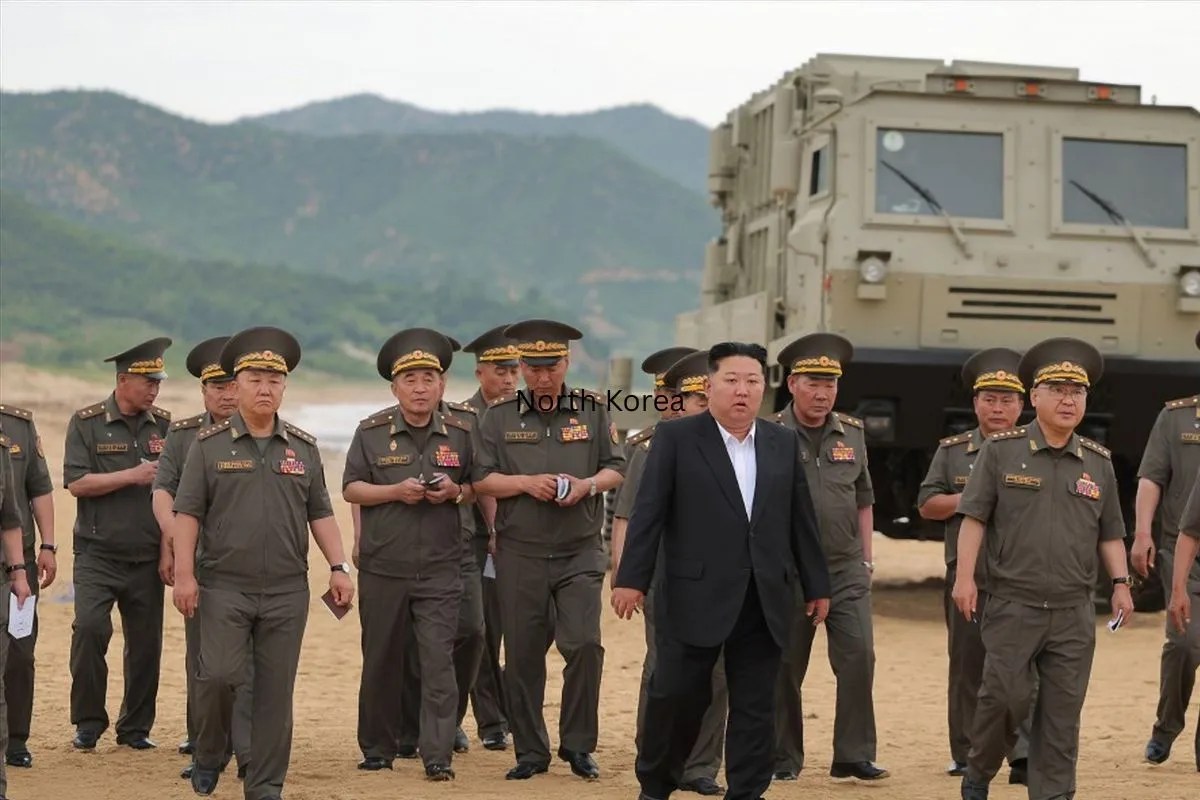
Strategic weapon tests conducted by the Democratic Peoples Republic of Korea create immediate verification challenges for regional intelligence architectures. When state media reported a flight distance of one thousand kilometers for a recent intermediate-range system, overlapping assessments from Seoul and Tokyo revealed a persistent telemetry gap. This analysis deconstructs the structural variables driving tracking discrepancies, the underlying logistical mechanics of solid-fuel systems, and the defense planning constraints imposed on allied forces in Northeast Asia.
The Telemetry Divergence Vector
The core friction point in evaluating modern missile tests involves tracking discrepancies between launching and observing states. Ground-based radar networks, sea-based Aegis platforms, and satellite infrared sensors capture distinct phases of a ballistic trajectory.
- The Tracking Horizon: Radar visibility depends on line-of-sight geometry and the radar horizon. Low-altitude maneuvers or depressed trajectories reduce early detection windows.
- The Data Interpretation Lag: Telemetry correlation requires cross-referencing Doppler data with historical signature libraries, creating evaluation delays during active flight phases.
- The Claim Verification Gap: State-released figures frequently incorporate payload separation events or specialized trajectory profiles designed to maximize apogee or distance calculations, differing from standard ballistic tracking models used by neighboring defense ministries.
These factors explain why Tokyo and Seoul often report conservative distance or altitude metrics compared to domestic announcements from Pyongyang. The discrepancy is not merely a political talking point; it represents fundamental limitations in real-time sensor fusion during high-velocity atmospheric re-entry phases.
The Operational Mechanics of Solid-Fuel Mobility
The transition from liquid-fueled systems to solid-propellant architectures alters the strategic calculus of preemptive detection. Liquid-fueled rockets require extensive pre-launch fueling operations, which extend the window for satellite reconnaissance to identify preparation signatures.
- Reduced Preparation Timelines: Solid-fuel motors are stored pre-mated, eliminating cryogenic fueling windows and compressing the sensor-to-shooter timeline.
- Enhanced Transportability: Canisterized missiles mounted on Transporter-Erector-Launchers utilize road networks and hardened underground facilities, complicating continuous overhead tracking.
- Logistical Resilience: Decentralized supply chains reduce vulnerability to targeted disruption prior to the ignition sequence.
This technological shift compresses warning times for regional defense command centers, forcing reliance on automated early-warning algorithms rather than manual intelligence oversight.
Alliance Defense Coordination and Interception Constraints
For regional military planners, the primary operational challenge centers on reaction geometry rather than absolute impact points. The integration of hypersonic glide bodies or maneuverable reentry vehicles introduces complex hydrodynamic lift forces during terminal descent, complicating interceptor trajectory calculations.
- Engagement Window Compression: Shorter flight profiles to regional targets leave minimal time for battery activation, target acquisition, and interceptor launch coordination.
- Trajectory Uncertainty: Mid-course maneuvers challenge traditional hit-to-kill intercept algorithms designed for predictable ballistic arcs.
- Alliance Integration Thresholds: Effective defense requires synchronization between United States forces, Japanese Self-Defense Forces, and South Korean commands, where data-sharing latency can degrade interception probabilities.
Strategic Outlook
Intelligence frameworks must treat reported flight metrics as components of a broader deterrence signal rather than isolated technical achievements. Future analytical models should prioritize pre-launch mobilization indicators over terminal impact claims to maintain an accurate assessment of regional stability.


