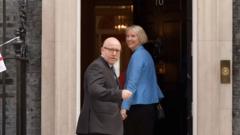
A quiet, heavy drizzle hung over Westminster on July 15, 2026. It felt fitting. Outside 10 Downing Street, a familiar parade of black ministerial cars began pulling up, depositing politicians who looked less like a triumphant governing class and more like passengers on a ship preparing to change captains mid-voyage.
This was Keir Starmer's final Cabinet meeting.
For the last two years, this group of people sat around the famous green baize table trying to steer a country through economic stagnation and systemic exhaustion. Today, they arrived to say their quiet, polite goodbyes before the keys are handed over to Andy Burnham on Monday.
If you are looking for a dramatic, cinematic showdown, you won't find it here. The arrivals were businesslike. Understated. A bit solemn. But beneath the calm exterior lies a monumental shift in British politics that most commentators are misinterpreting.
The Sunset of the Starmer Era
As ministers like David Lammy, Yvette Cooper, and Ed Miliband walked through that famous black door, the mood was decidedly reflective.
Some tried to deflect the gravity of the day. Journalists shouting from behind the press barriers didn’t just ask about the transition of power; they asked about England's crucial World Cup semi-final match against Argentina. It was a classic British distraction. But inside the Cabinet Room, the focus was squarely on legacy and loose ends.
Two years is a remarkably short time in Downing Street. When Starmer won his historic landslide in July 2024, he held the largest parliamentary majority since Tony Blair. The expectations were sky-high. He promised a government of quiet competence, a restoration of trust, and a series of national "missions" to rebuild public services.
Instead, his tenure was plagued by unforced errors.
Early scandals over freebies and donor gifts chipped away at his moral authority. Then came the highly controversial appointment of Peter Mandelson as the UK's ambassador to the United States—a move that alienated a huge swath of his own party. When local elections in May delivered a bruising blow to Labour, Starmer read the room. He realized he had become a liability, not an asset, and chose to step aside.
Why His Two Years Still Matter
It's easy to look at a two-year premiership and dismiss it as a failure. That is a mistake.
While the public and the press focus on the drama of his departure, Starmer’s government quietly pushed through significant structural changes that will shape British life for a generation. Honestly, we are only just beginning to see the real-world impact of what his administration set in motion.
- Workers' Rights: The minimum wage was increased significantly.
- Tenant Protections: Landlords lost the right to arbitrarily evict renters without cause, shifting the power dynamic in the UK's notoriously brutal housing market.
- The Hillsborough Law: This legislation finally forced a duty of candor on public officials, making it a crime to cover up state failures after major tragedies.
These aren't just minor policy tweaks; they are deep, systemic reforms. Starmer wasn't a charismatic showman, but he was a former Director of Public Prosecutions who viewed the state as a machine to be repaired rather than a stage for personal ambition. He pulled the boring, technical levers that actually run the country.
The Burnham Era Begins
As the final Cabinet meeting wrapped up, the focus shifted entirely to the future. Andy Burnham, the former Mayor of Greater Manchester, is stepping into the vacuum.
Burnham’s transition represents a fascinating ideological pivot for the Labour Party. While Starmer was the consummate Westminster insider—legalistic, cautious, and intensely bureaucratic—Burnham has spent years building a power base outside of London. He branded himself as the champion of the "Northern Soul," representing those who feel ignored by the Westminster bubble.
During the leadership campaign, Burnham gathered nominations from 80% of the parliamentary Labour Party, making his ascent less of a contest and more of a coronation.
But Burnham is inheriting a incredibly difficult hand. The public services Starmer tried to reform are still creaking under the weight of historic underfunding. The NHS is undergoing a dizzying amount of structural reorganization that has left staff exhausted and patients frustrated. The economy remains sluggish.
Burnham’s biggest challenge will be moving from regional advocate to national executive. Telling London what it’s doing wrong is easy. Running the country from Whitehall is an entirely different beast.
What Happens Now
The political machinery of the UK moves fast. We don't have months of transition; the handover is rapid, clinical, and total.
If you want to understand how the next few days will unfold, here is the timeline to watch:
- Friday, July 17: Andy Burnham will be officially announced as the new leader of the Labour Party.
- Monday, July 20: Keir Starmer will travel to Buckingham Palace to formally offer his resignation to King Charles III. Immediately after, the King will invite Burnham to form a government, and the new Prime Minister will walk through the doors of 10 Downing Street to begin his premiership.
- Next Week: Watch for Burnham’s first major cabinet appointments. The big question is whether he will keep heavyweights like Yvette Cooper and David Lammy in their current roles, or if he will bring in his own loyalists from the regions to reshape the government's inner circle.
Starmer’s final walk out of Downing Street next week marks the end of a brief, turbulent, but deeply consequential chapter in modern British history. He proved that a landslide victory is no shield against the harsh realities of governing, but he also left a blueprint of legislative reforms that his successor would be foolish to ignore.
For a closer look at the historic transition of power and the final moments of Keir Starmer's premiership, watch this compilation of ministers arriving for the final meeting. This footage captures the quiet gravity of Westminster as a major political chapter closes and the Burnham era begins.