We are witnessing a dangerous game of chicken in the Persian Gulf, and the propaganda machine is running at full throttle.
Iran's Islamic Revolutionary Guard Corps (IRGC) claims it has struck multiple US military bases across Jordan, Bahrain, and Kuwait. State media even released dramatic footage of a ballistic missile with "GAME OVER USA" painted in red on its side.
But if you look past the cinematic launches and the fiery press releases, you see a much more complicated, heavily contested reality. Tehran wants the world to believe it just crippled American air defenses and command centers across the Middle East. The Pentagon, meanwhile, is keeping quiet, letting its regional allies do the talking.
Let's cut through the noise and look at what actually happened, what the videos show, and what this escalation means for the region.
The Three-Phase Operation Iran Wants You to Believe
According to Iranian state-affiliated outlets like the Nour and Tasnim news agencies, the IRGC executed a highly coordinated, three-phase offensive dubbed "eye-for-an-eye". Tehran claims the operation directly retaliated against a series of heavy US Central Command (CENTCOM) airstrikes that targeted Iranian coastal radars, air defenses, and missile sites along the Strait of Hormuz.
Here is how the IRGC broken down its claimed strikes:
- Phase 1 (Jordan): Iran claims it targeted the Prince Hassan Airbase with a swarm of drones and missiles. The IRGC claims it set fire to several fuel depots and ammunition storage facilities.
- Phase 2 (Bahrain): The focus shifted to the Sheikh Isa Airbase and US Fifth Fleet assets in the Juffair area. Tehran claims its aerospace forces hit helicopter maintenance hangars, a P-8 maritime patrol aircraft hangar, and a drone command-and-control center.
- Phase 3 (Kuwait): The IRGC claims it "completely destroyed" Patriot air defense systems and fuel tanks at the Ali Al-Salem Airbase, alongside a strategic FPS radar system at the Ahmed Al-Jaber Airbase.
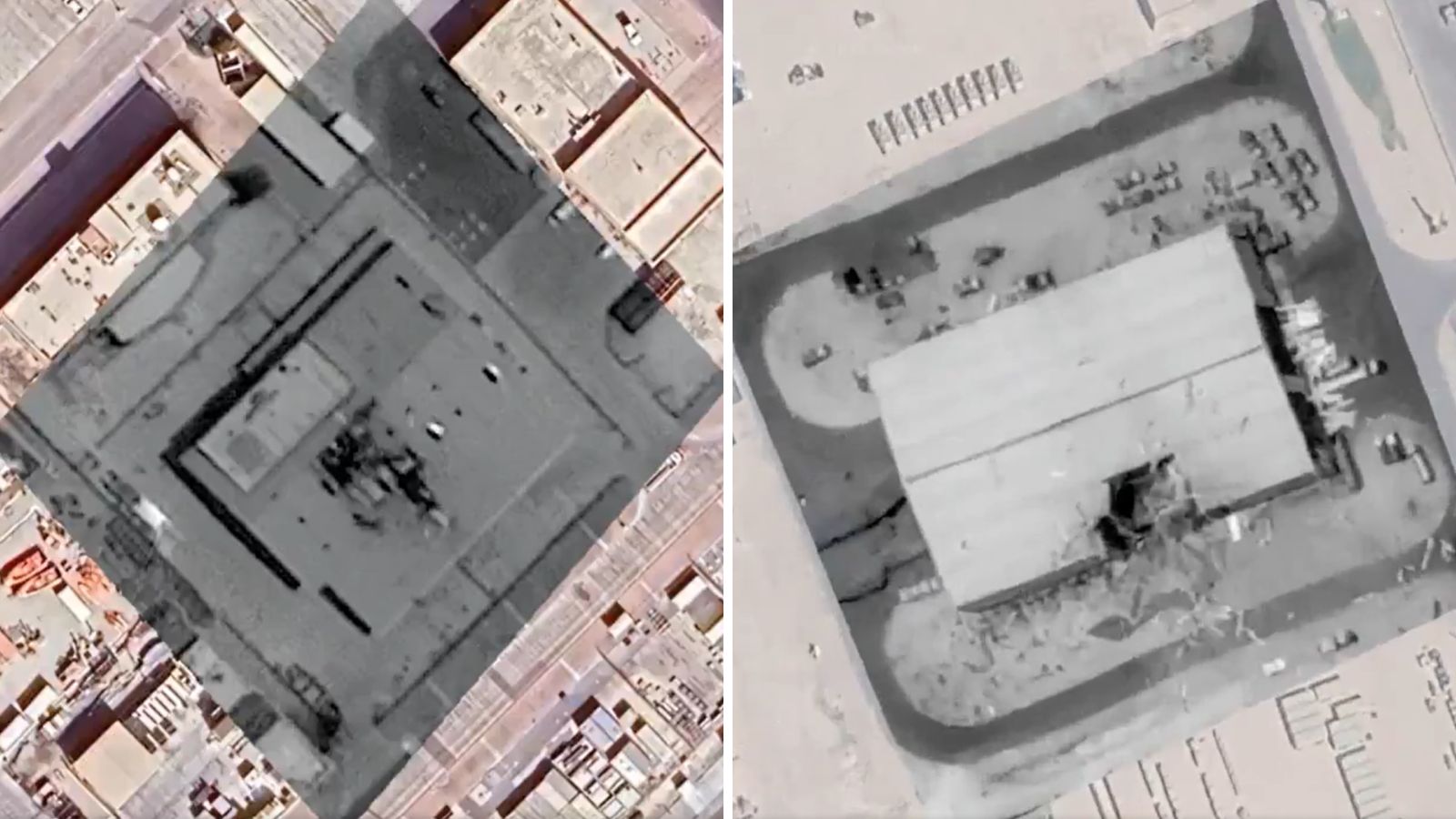
To back these claims, Iranian state media released satellite images showing what they assert is structural damage at Bahrain's drone center and Qatar's Al Udeid Air Base.
What the Ground Reality Actually Looks Like
It's easy to look at a satellite photo or a missile launch video and assume a base has been leveled. But defense analysts and local governments paint a very different picture.
First, Jordan has flatly denied that Prince Hassan Airbase was hit. Jordanian military officials confirmed they intercepted at least four Iranian missiles that entered their airspace. They made it clear that Jordan will not allow itself to become an active battlefield.
Second, while sirens wailed in Bahrain and Kuwait, local air defenses were heavily engaged. Kuwait's Defense Ministry reported intercepting a cruise missile, three ballistic missiles, and ten drones, with only minor injuries reported from falling debris.
Reported Targets vs. Official Local Status:
- Jordan (Prince Hassan Airbase): Iran claims fuel depots destroyed. Jordan reports all incoming missiles intercepted.
- Bahrain (Sheikh Isa / Juffair): Iran claims drone command center damaged. Bahrain reports sirens activated, air defenses engaged, no confirmed casualties.
- Kuwait (Ali Al-Salem / Ahmed Al-Jaber): Iran claims Patriot systems destroyed. Kuwait reports successful intercepts of cruise/ballistic missiles and drones.
The gap between Iran's claims of "complete destruction" and the local reports of successful interceptions is massive. In modern missile warfare, hitting a target is only half the battle; getting past integrated air defense networks like the Patriot and regional naval defense systems is another story entirely.
The Broader Context of the Blockade
This isn't an isolated flare-up. The regional security environment deteriorated rapidly after the US military reimposed a strict blockade on Iranian ports. Washington's goal is to stop Iran from choking off commercial shipping through the Strait of Hormuz, a vital artery for global oil and gas supplies.
The friction reached a boiling point when the IRGC Navy attempted to stop two commercial vessels in the strait, accusing them of turning off their tracking systems and sailing through a mined route. When the US and its allies intervened, it sparked a multi-day cycle of heavy US airstrikes across southern Iranian port cities like Bandar Abbas, Bushehr, and Chabahar.
Iran’s missile barrage on neighboring Gulf states is an attempt to change the calculus. By targeting US assets hosted in Jordan, Bahrain, and Kuwait, Tehran is signaling that if its economic lifelines are cut by a naval blockade, no country hosting American forces will remain safe.
What Happens Next
We are in a volatile period where a single miscalculation could trigger a wider regional conflict. If you are tracking this situation, keep your eyes on how the US responds to the video leaks and claims. The White House has warned it will "hit them very hard," but a full-scale ground escalation is something both sides have historically tried to avoid.
Watch the commercial shipping insurance rates and regional airspace closures over the next 48 hours. Those metrics will tell you the true severity of the threat far better than any state-sponsored propaganda video ever could. Stay tuned as more independently verified satellite data emerges to confirm the true extent of the damage.
:max_bytes(150000):strip_icc():focal(749x0:751x2)/auschwitz-2-691cb034ee9e43cfa45a0969012c6337.jpg)