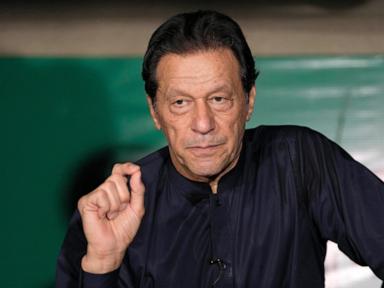
The political architecture of Pakistan is currently straining under the weight of a medical bulletin. When the Supreme Court ordered that imprisoned former prime minister Imran Khan be transferred from Rawalpindi's Adiala Jail to Islamabad's private Shifa International Hospital for urgent evaluation, it did not merely trigger a procedural healthcare adjustment. It detonated a constitutional standoff.
For months, the health of the 73-year-old former cricket star turned populist politician has remained a dark theater of conflicting narratives. His legal team and relatives painted a picture of rapid physical decline, citing severe eye complications and isolation. Meanwhile, state authorities insisted that institutional care within the prison system was entirely adequate, pointing to dozens of specialist check-ups to prove their point. If you found value in this post, you should look at: this related article.
The Anatomy of a Judicial Intervention
The Supreme Court bench, led by Justice Shahid Waheed, broke months of administrative paralysis by invoking fundamental rights to mandate the transfer. The directive required state machinery to move Khan out of his cell and into a controlled clinical environment under the supervision of a specially constituted medical board, which includes his personal physician.
Yet, the state apparatus reacted with institutional whiplash. Initial statements from parliamentary officials promised swift compliance "in letter and spirit". Within twenty-four hours, the federal government reversed course, filing an urgent review petition to recall the order. Law Minister Azam Tarar argued that singling out a high-profile prisoner for private healthcare establishes a dangerous legal precedent, creating a bifurcated standard where elite convicts receive preferential treatment denied to ordinary inmates. For another perspective on this story, see the latest update from BBC News.
This sudden legal pivot exposes a deeper institutional paranoia. Pakistan's ruling coalition operates under the shadow of a deeply polarized electorate. Allowing a high-profile adversary to leave a state-run facility for private care opens the floodgates to public scrutiny regarding prison conditions. It transforms a routine medical transfer into a massive symbolic victory for the opposition Pakistan Tehreek-e-Insaf (PTI) party.
Behind Closed Prison Walls
To understand why a hospital transfer provokes such intense friction, one must examine the reality of Adiala Jail. Khan has spent years behind bars facing a battery of charges that international bodies and human rights organizations frequently characterize as politically engineered. Access to his legal counsel and family has faced severe, arbitrary clampdowns, officially justified by intelligence warnings regarding security threats.
Earlier this year, the quiet emergence of a serious ophthalmological condition—specifically right central retinal vein occlusion—brought simmering tensions to a boil. While jail authorities maintained that institutional interventions successfully restored his vision to near-normal parameters, his supporters refused to accept state-sanctioned medical reports at face value. Rumors of psychological distress, erratic blood pressure readings, and prolonged solitary confinement turned every medical update into a flashpoint for street protests.
When the apex court mandated that Khan be allowed weekly family meetings and phone access to his sons during his hospital stay, it dismantled the communication blackout that state authorities had painstakingly maintained. For an administration trying to suppress political momentum, granting an imprisoned leader a public platform—even a hospital room—carries immense electoral risk.
The Broader Precedent
The federal government's objection regarding equal treatment under prison rules holds a theoretical validity that resonates with legal purists. Pakistan's overcrowded penitentiaries routinely house thousands of detainees who lack access to basic sanitation, let alone private specialist clinics. Critics of the state note, however, that invoking egalitarian principles only when dealing with a primary political rival rings hollow.
If the state applied equal concern to the due process rights and health standards of ordinary prisoners, the judicial system would look entirely different. The sudden surge of institutional anxiety over equity appears less like a defense of judicial uniformity and more like a tactical defense mechanism against political exposure.
The coming weeks will test the limits of judicial authority against executive resistance. As the legal teams prepare for subsequent hearings, the physical location of the former prime minister remains a barometer for the nation's fragile stability. A hospital room in Islamabad is temporarily holding the focal point of Pakistan's entire political struggle.