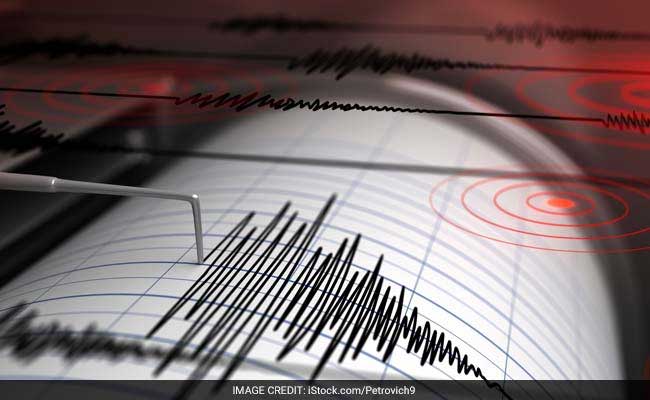
The afternoon air in the southern Peruvian Andes was routine, until it wasn't. At precisely one o'clock, the earth beneath the Parinacochas province decided to move.
Consider what happens when a magnitude 6.7 earthquake tears through the high mountain crust. Plates collide. Stone screams. For the residents in towns like Upahuacho and Coracora, time compressed into a violent, rolling shudder that shook roof tiles loose and sent dust billowing into the thin, bright air.
Earthquakes are not strangers here. Peru sits squarely on the Pacific Ring of Fire, a volatile horseshoe of tectonic friction where the Nazca plate grinds relentlessly beneath the South American plate. This subduction zone is an ancient, grinding engine. It builds the breathtaking heights of the Andes, but it pays for those mountains in sudden, terrifying installments.
Seismologists at the U.S. Geological Survey pinned the epicenter roughly 38 kilometers northwest of Upahuacho, at a depth of roughly 66 to 108 kilometers depending on the instrumentation. That depth matters. It acts as a subterranean cushion, absorbing the raw, blunt force before it can completely obliterate the surface.
Even so, the tremor stretched far.
People felt the rolling motion hundreds of kilometers away. In the historic streets of Cusco, in Arequipa, and even in the distant capital of Lima, office workers and shopkeepers stepped onto sidewalks, looking up at swaying power lines with that familiar, cold dread. Memory is a heavy burden in a country that remembers the 2007 catastrophe in Ica, where a 7.9 magnitude rupture claimed hundreds of lives and reshaped communities. Every modern shake revives those ghosts.
Panic always arrives first. In Coracora, two people sustained injuries while scrambling out of crumbling doorways, rushing into open plazas to escape falling masonry. Official assessments from Civil Defense quickly trickled in, noting localized structural scars: two dozen homes cracked open, half a dozen rural health centers damaged, and school walls compromised across Ayacucho and Cusco.
Yet, as the dust settled over the rugged ravines, the worst-case scenario failed to materialize. No catastrophic collapses. No tsunami warnings issued by the Peruvian Navy, given the inland continental depth of the quake. Just a bruised landscape and a population left catching its breath, checking on neighbors, and sweeping up shattered adobe.
The mountains remain standing. The fault lines remain locked, ticking quietly until the next inevitable adjustment. For now, the high Andes return to their stillness, watched over by a sky that gives no warning.