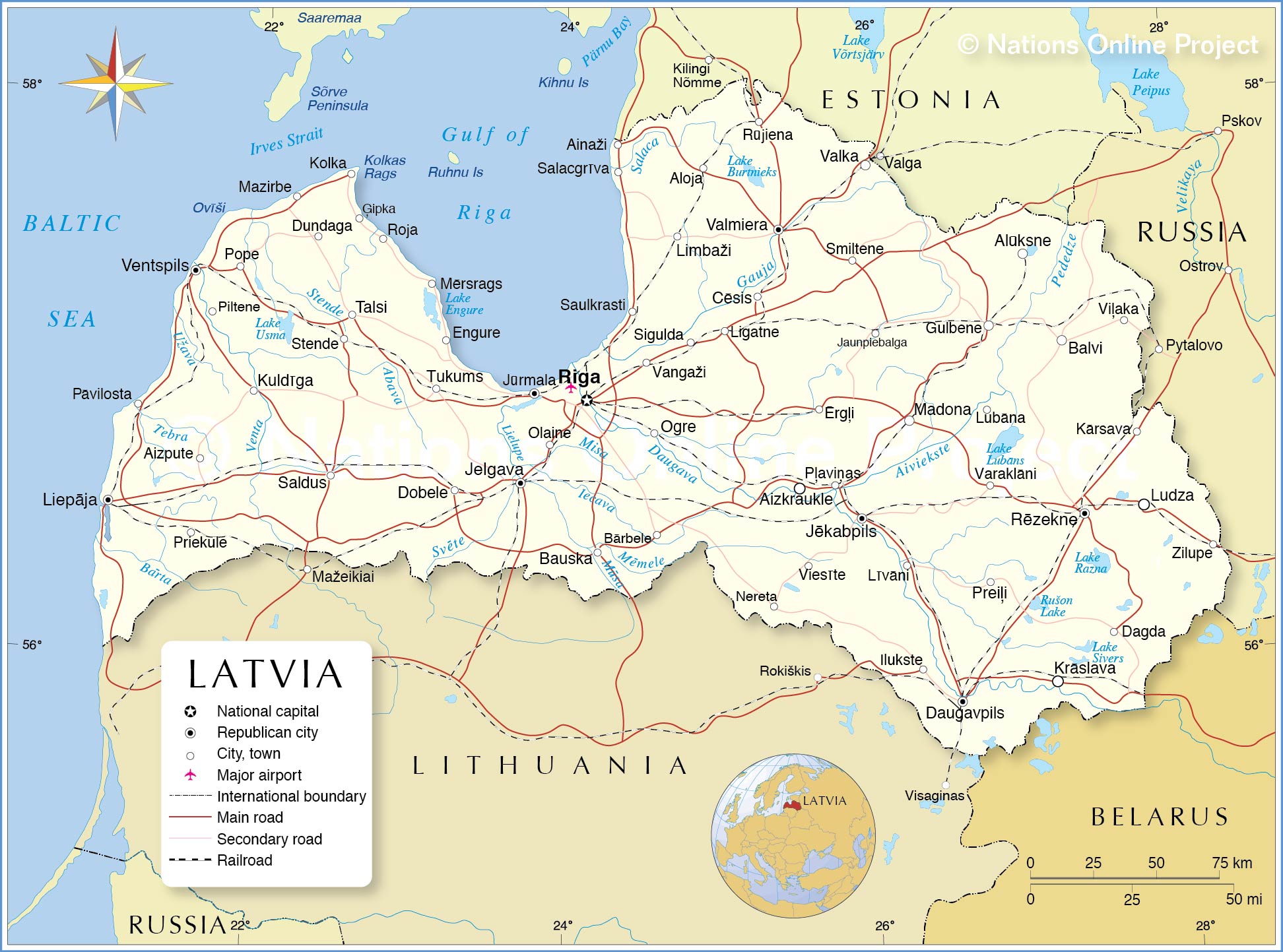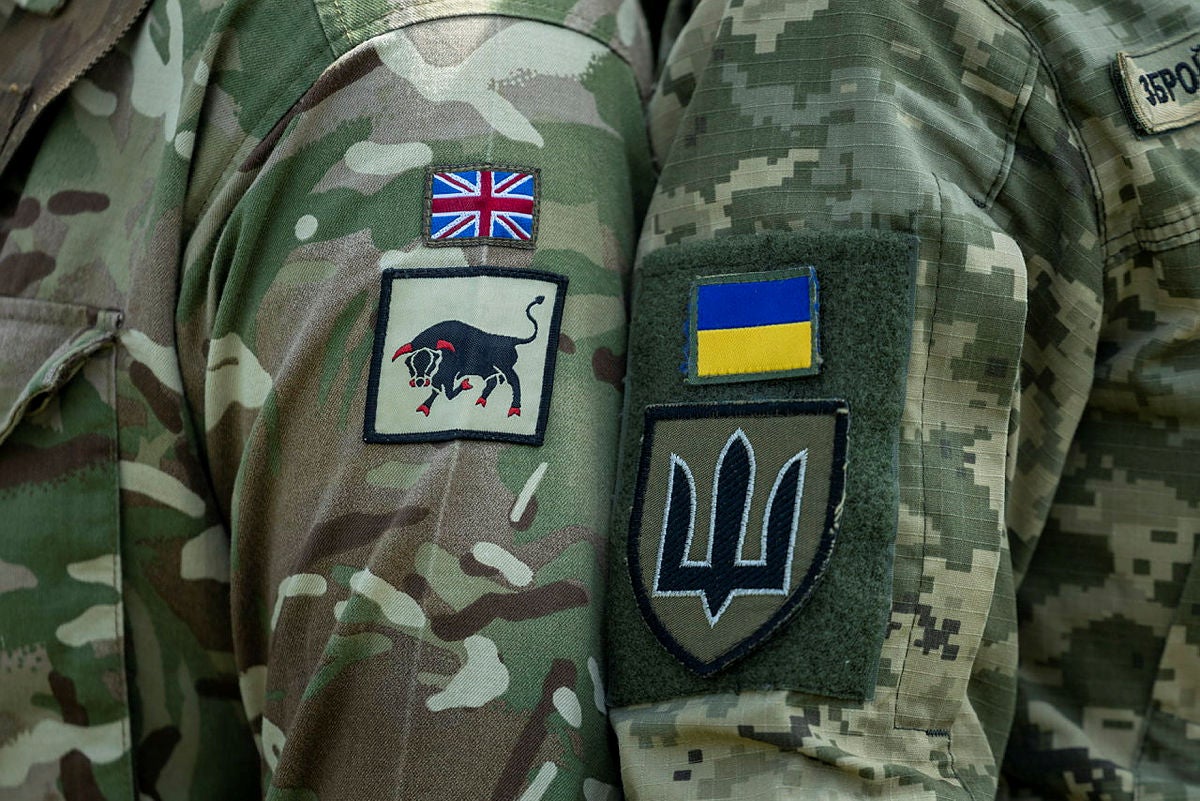
The death of 23-year-old Ayrton Redfearn in the eastern Donetsk region exposes a grim reality about the changing nature of the Ukraine war. A former Royal Air Force Regiment Gunner from Devon, Redfearn was killed on May 9 while serving with a specialized military unit for experienced overseas veterans attached to the Ukrainian Armed Forces. His death, confirmed by the UK Foreign, Commonwealth and Development Office, highlights a structural shift in how Western volunteers are used on the front lines. The early days of chaotic, idealistic international legions have been replaced by highly professionalized, specialized detached units tasked with holding the line against grinding Russian advances.
This professionalization of the volunteer corps has altered the risk calculus for Western governments and families alike. Redfearn, known by his call sign Musso, was no amateur. He was an experienced Senior Aircraftman who transitioned into a specialized unit, ultimately being promoted to team leader. Just days before his death, he had saved a comrade's life, earning a bravery award he would never live to receive. His trajectory reflects how the conflict now relies heavily on seasoned Western veterans to execute high-stakes operations, even as Western governments maintain a policy of official discouragement.
The Evolution of the Foreign Volunteer Footprint
When the conflict erupted, the International Legion of Ukraine served as a magnet for volunteers worldwide, drawing over 20,000 individuals from dozens of countries. Many lacked combat experience. The results were often catastrophic, characterized by poor communication and high casualty rates among idealistic recruits.
Today, the framework is vastly different. The Ukrainian military has quietly classified the exact number of foreign personnel while restructuring how they deploy these forces. Western fighters are no longer treated as a broad, monolithic legion. Instead, experienced veterans like Redfearn are funneled into smaller, highly specialized detachments where their previous national military training can be utilized directly.
This integration serves a dual purpose. It injects vital combat experience into depleted Ukrainian units and ensures that sophisticated Western equipment is handled by personnel who already understand its technical mechanics. However, this relies on a continuous supply of skilled Western personnel willing to operate in high-attrition sectors like Donetsk, where artillery and drone warfare dominate.
The Friction Between Official Policy and Frontline Reality
A profound disconnect remains between the actions of individual veterans and the official stance of their home governments. The British government maintains a strict travel advisory warning citizens against traveling to Ukraine, explicitly noting the high risk of death, capture, and mistreatment by Russian forces.
Despite these warnings, British nationals continue to enlist. This creates a complex diplomatic dilemma for London. While the UK provides billions in military hardware and intelligence to Kyiv, it must officially distance itself from its citizens fighting on the ground. When a British national is killed or captured, the government's response is confined to offering consular support to the family, avoiding any actions that could imply direct state involvement or validation of the fighter's presence.
This gray area is actively exploited by opposing forces. Russian state media and officials routinely label all foreign volunteers as mercenaries, stripped of Geneva Convention protections. For a specialized soldier operating in Donetsk, capture carries severe risks of exploitation and harsh treatment, a reality that families back home face with compounding anxiety.
The Human Cost of Specialized Attrition
The strategic utility of foreign specialized units comes at a steep human cost that leaves families to bear the burden of geopolitical realities. Redfearn’s mother recounted living in constant dread of a knock on the door, a fear realized when British police arrived to deliver the news of his death.
"This fear became reality on the evening of 11 May and the world of myself, and Ayrton's 10-year-old brother, then fell apart."
- Natasha, mother of Ayrton Redfearn
The psychological strain on families is magnified by the isolation of the conflict. While regular armed forces have built-in support structures for the families of the fallen, the relatives of foreign volunteers must navigate their grief within a complex web of legal ambiguities and muted official acknowledgments.
The Institutional Vacuum Facing Veterans
For many young Western veterans, the transition from domestic military service to civilian life leaves an institutional vacuum. Redfearn joined the Air Cadets at 12 and enlisted in the RAF at 17. His entire formative youth was structured around military discipline, camaraderie, and purpose.
When such individuals leave their national militaries, the civilian world often lacks the intensity and clear moral clarity they crave. Ukraine offers a visible front line where their hard-earned skills are deeply valued. Comrades noted that Redfearn was exceptionally happy in Ukraine, surrounded by peers from around the world who shared a singular, focused objective.
This sense of purpose, however, exists within a conflict that has evolved into a war of industrial attrition. The specialized operations that foreign teams excel at—reconnaissance, precision strikes, and tactical medical evacuations—are increasingly vulnerable to dense artillery blankets and ubiquitous drone surveillance. The professionalization of volunteer units has undoubtedly made them more lethal, but it has not made them any less vulnerable to the indifferent mathematics of modern trench warfare.