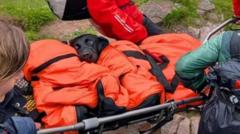
Imagine hiking up the highest peak in the UK, enjoying the crisp mountain air, when your dog suddenly loses the ability to walk. Her eyes glaze over. She starts twitching, completely unresponsive to your voice. This exact nightmare became reality on Ben Nevis when a beloved pet had to be carried down the mountain on a stretcher by the Lochaber Mountain Rescue Team. The suspected culprit wasn't a snake bite, a broken paw, or heat exhaustion. It was discarded cannabis left behind by careless hikers.
This isn't an isolated freak accident. It's a skyrocketing trend that veterinarians and mountain rescue volunteers are seeing across popular trails globally. As cannabis legalization spreads and consumption rises, the remnants of human recreation are poisoning domestic animals in environments you'd least expect.
When you head into the wilderness, you worry about steep drops, sudden weather shifts, or sharp rocks. You don't expect a stash of toxic waste sitting right off the path. Understanding how this happens, why it disables dogs so severely, and how to protect your four-legged hiking partner can save a life.
The Reality of the Ben Nevis Rescue
Mountain rescue teams volunteer their time to save human lives in extreme conditions. They navigate treacherous ridges, freezing winds, and vertical rock faces. They don't expect to act as an ambulance service for a heavily sedated hound, but that's exactly what happened when a dog showed severe signs of poisoning high up the slopes of Ben Nevis.
The dog became completely incapacitated during the trek. Unable to stand or walk, the animal presented a massive logistical challenge for its owners. Carrying a heavy, limp animal down thousands of feet of steep, rocky terrain safely is practically impossible for an average hiker. The Lochaber Mountain Rescue Team stepped in, securing the dog to a specialized stretcher and hauling it down the mountain to receive emergency veterinary care.
The team later shared that the symptoms pointed squarely at THC ingestion. Hikers often dump edible wrappers, joint roaches, or even human waste contaminated with the substance right off the trails. Dogs, driven by their intense sense of smell, find these items irresistible. What a human discards as trash, a dog perceives as a fascinating snack.
Why Cannabis Hits Dogs Like a Hammer
Many people assume that because cannabis is relatively safe for humans, it affects dogs the same way. That assumption is flat-out wrong and incredibly dangerous. The biology of a dog makes them wildly sensitive to cannabinoids, specifically delta-9-tetrahydrocannabinol, or THC.
Dogs possess a significantly higher number of cannabinoid receptors in their brains compared to humans. This means the psychoactive effects of THC are amplified exponentially in canines. What gives a human a mild buzz can completely overwhelm a dog's neurological system, causing profound disorientation and physical distress.
To make matters worse, dogs are small. A single discarded edible or a piece of high-strength cannabis concentrate contains a dose designed for an adult human weighing anywhere from 130 to 200 pounds. When a 30-pound spaniel or a 50-pound retriever consumes that same amount, they ingest a massive overdose.
The onset of symptoms can take anywhere from thirty minutes to several hours depending on whether the dog ate dried plant matter or a concentrated food product. Once the THC enters their system, their bodies struggle to process it. The liver metabolizes it slowly, meaning a severe toxicity episode can drag on for days, leaving the animal in a state of prolonged terror and physical dysfunction.
Spotting the Signs of THC Toxicity on the Trail
When you're miles away from civilization, you need to recognize the signs of poisoning immediately. You can't afford to mistake neurological failure for simple exhaustion from a long hike. THC toxicity presents with a distinct cluster of symptoms that every dog owner must memorize.
The most telling sign is ataxia, which is a fancy term for a complete loss of coordination. The dog will sway from side to side, stumble like a drunkard, or find themselves completely unable to place their paws accurately. Their legs might look stiff, or they might simply collapse and refuse to stand up.
Watch their eyes closely. A poisoned dog often exhibits a glazed, unfocused stare. Their pupils will dilate massively, giving them a panicked expression. You might also notice hyperesthesia, a condition where the dog is startled by the slightest touch, sound, or flash of light. They might whine, cry, or tremble violently even though they seem sleepy or lethargic.
Urinary incontinence is another classic indicator. If your dog is leaking urine while lying down or walking, combined with stumbling, you're almost certainly dealing with a poisoning case. In severe instances, their heart rate will drop dangerously low, their body temperature will plummet, and they can even slip into a coma.
The Dirty Truth About Trail Pollution
We like to think of mountain trails as pristine sanctuaries. The reality is far uglier. Popular routes like Ben Nevis, Mount Snowdon, or trails across North American national parks face severe litter problems.
The issue isn't just people dropping baggies of weed. A major source of canine THC poisoning on trails comes from the consumption of human feces. Hikers who use the bathroom in the woods without burying their waste properly leave behind highly concentrated traces of metabolized THC.
Because dogs are naturally drawn to coprophagia, which is the act of eating feces, they seek out these hidden spots just off the main trail. A dog sniffing in the bushes for a few seconds can easily consume enough toxic material to trigger a medical emergency before the owner even realizes they found something.
This creates a hidden minefield for pets. You might think your dog is just sniffing the heather or exploring a patch of ferns, but they're actually rummaging through the toxic leftovers of a previous hiker's weekend.
The Emergency Protocol for a Poisoned Pet
If you suspect your dog ate cannabis while on a hike, your clock is ticking. You must act decisively to minimize the damage and get your dog to safety without putting yourself or rescue teams at unnecessary risk.
Assess the Situation Immediately
Stop hiking upward. The moment you notice coordination issues or strange behavior, turn around. Every foot of elevation you gain makes an eventual evacuation harder. Check your dog’s mouth for any remaining debris and clear it out safely.
Keep Them Warm and Calm
THC toxicity causes a dog's body temperature to drop, a condition known as hypothermia. This is especially dangerous on cold, windy mountain peaks. Wrap your dog in extra layers, a fleece jacket, or an emergency space blanket. Keep them close to your own body to share warmth. Minimize loud noises and bright lights, as their sensory system is overloaded.
Do Not Induce Vomiting Without Expert Guidance
Many owners try to force their dogs to vomit by using hydrogen peroxide on the trail. This can be incredibly dangerous if the dog is already showing neurological symptoms. If a dog is lethargic or loses their gag reflex, they can easily inhale the vomit into their lungs, causing aspiration pneumonia, which is often fatal. Only induce vomiting if the ingestion happened minutes ago and the dog is completely alert.
Carry Your Dog If Possible
If your dog is small or medium-sized, fashion a carry system. You can use a large backpack, a makeshift sling made from a sturdy jacket, or an emergency dog rescue harness. Walking a coordinated-impaired dog down a steep trail can cause severe orthopedic injuries or lead to a catastrophic fall over a ledge.
Contact Veterinary Services Early
Don't wait until you get back to your car to find a clinic. Use whatever cell service you have to call the nearest emergency vet. Tell them exactly what you suspect. This allows the clinic to prepare intravenous fluids, activated charcoal, and monitoring equipment before you arrive.
Practical Steps to Prevent a Mountain Emergency
You don't have to leave your dog at home, but you do need to alter how you hike in areas heavily trafficked by tourists. Relying on your dog's good behavior isn't enough when temptation is hidden under a leaf.
Train a rock-solid leave-it command. This command shouldn't be optional. It needs to be a non-negotiable rule that your dog obeys instantly, even when they've found the most delicious-smelling piece of trash on earth. Practice this at home with high-value distractions before testing it on a mountain.
Consider using a basket muzzle during high-risk portions of a hike. Many owners view muzzles as a punishment or a sign of an aggressive dog, but a lightweight, well-ventilated basket muzzle is an incredible safety tool. It allows your dog to pant, drink water, and breathe normally while physically preventing them from vacuuming up discarded food, human waste, or drugs along the path.
Keep your dog on a standard leash in busy areas or zones near trail shelters and summits. Off-leash dogs can easily dart into the brush, consume something toxic, and return to your side without you ever seeing the intake. A six-foot leash keeps your dog within your immediate sphere of influence, allowing you to monitor exactly what their nose is touching.
Pack an emergency kit specifically for your dog. This should include a lightweight rescue sling designed to carry your dog's specific weight. If an accident happens, having a way to strap your pet to your back safely means you can walk out under your own power instead of tying up vital emergency services that might be needed for a life-or-death human rescue elsewhere on the mountain. Keep your wits about you, watch the trail ahead, and don't let a careless person's trash ruin your companion's life.