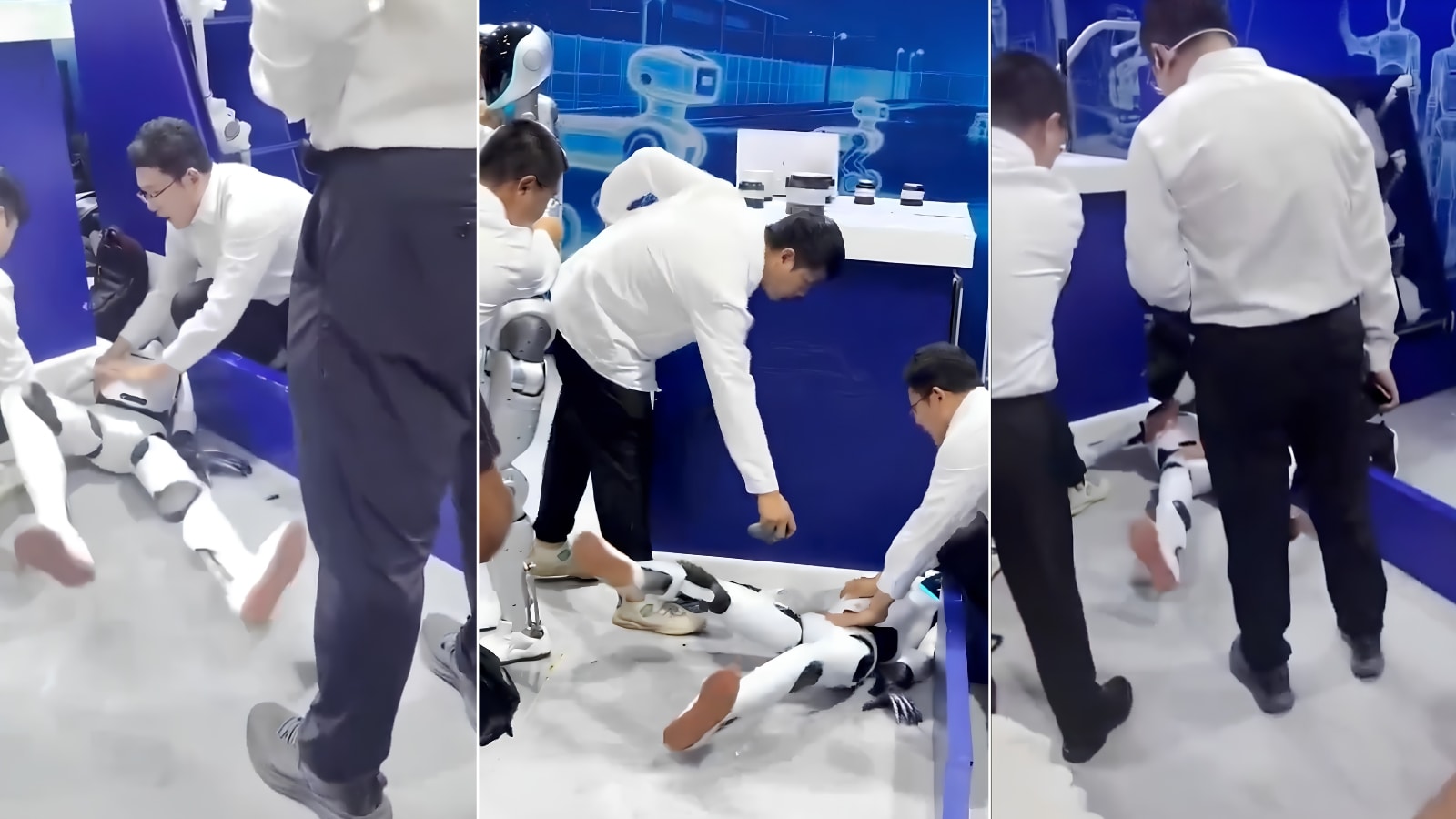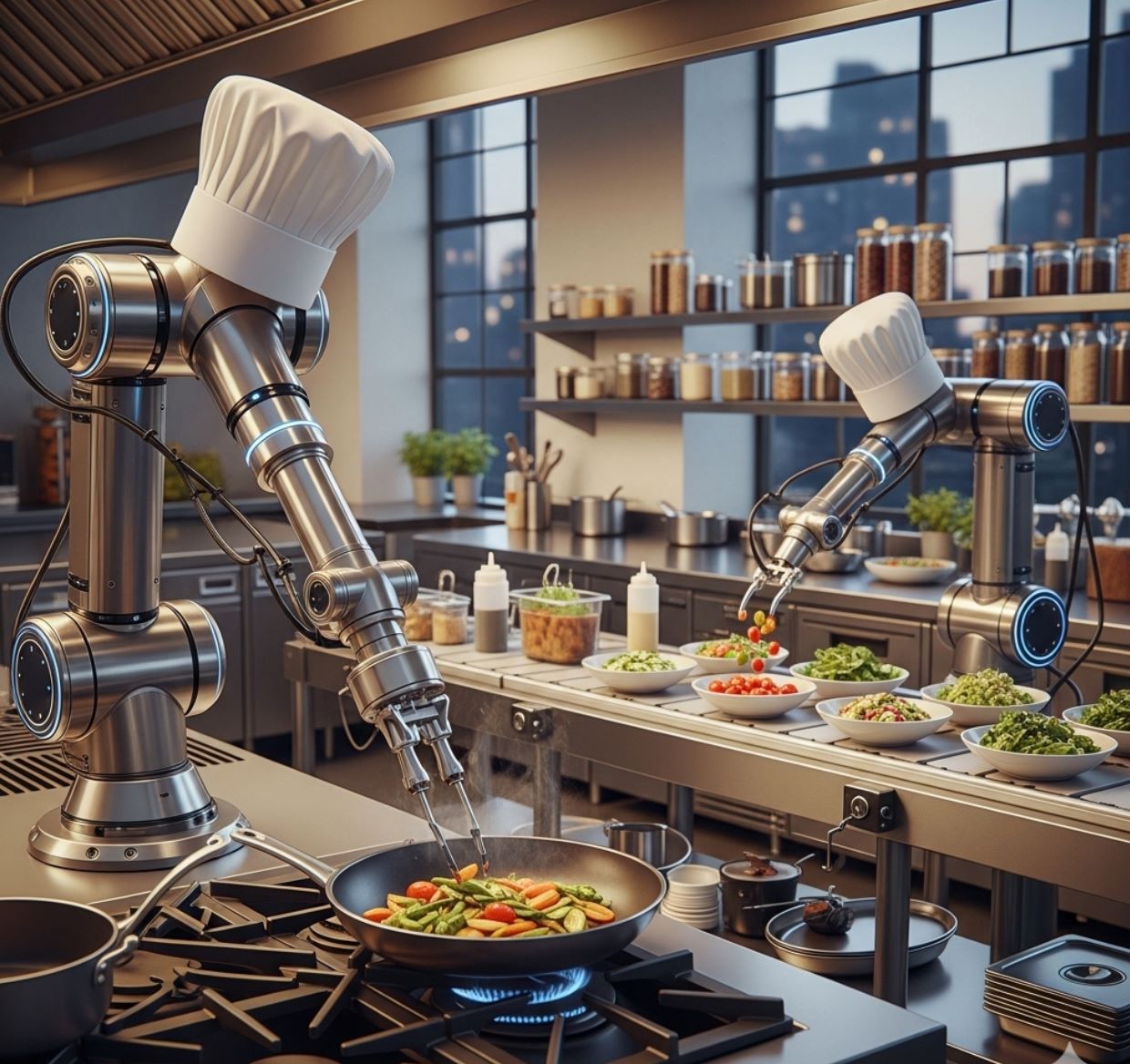
Food service operations operate under rigid thermodynamic and financial constraints that traditional venture capital approaches consistently miscalculate. When technology magnates attempt to reconstruct commercial kitchens through full robotic integration, they encounter a friction point defined by variability, spatial limits, and labor unit economics. The popular narrative assumes that scaling food production mirrors software distribution. Physical ingredients, however, do not behave like lines of code; they spoil, vary in consistency, and demand physical manipulation across three-dimensional spaces that defy standardized assembly lines.
The Cost Function of Culinary Labor and Capital Expenditure
To understand why automated kitchen ventures struggle to achieve sustainable margins, one must examine the unit economic equation of a standard restaurant. Total operating expenses comprise food cost, real estate occupancy, utilities, and labor. Labor historically accounts for roughly 30 percent of gross revenue, acting as a flexible buffer during demand troughs. For a deeper dive into this area, we suggest: this related article.
Introducing heavy automation alters this equation by shifting variable labor costs into fixed capital expenditures. A robotic assembly cell or automated dispensing rail requires upfront capital investment alongside specialized maintenance contracts.
- Capital Depreciation: Industrial hardware deployed in grease and moisture-heavy environments degrades rapidly, shortening replacement cycles.
- Maintenance Overhead: Software bugs require remote patches; mechanical jams require specialized field technicians on retainer, substituting hourly minimum-wage labor with high-cost engineering support.
- Throughput Ceilings: Machines excel at repetitive tasks under predictable conditions but experience dramatic latency spikes when processing heterogeneous inputs or handling custom modifications.
The financial model breaks down when peak-hour throughput is constrained by mechanical cycle times. If an automated unit takes four minutes to assemble a complex bowl while a human line cook does it in ninety seconds, the peak revenue capacity of the storefront drops by more than half, neutralizing the labor savings. For further background on this topic, detailed reporting can be read on The Next Web.
The Three Operational Realities Defying Software Scaling
Software logic operates on binary states and predictable data structures. Commercial kitchens operate in continuous streams of physical entropy. Three distinct operational realities explain why complete kitchen automation remains elusive despite heavy capital injections.
First, ingredient variance defeats rigid mechanical tolerances. Lettuce leaves vary in surface area and moisture content; cheese clumps under fluctuating ambient temperatures; proteins shrink irregularly during thermal processing. Software systems relying on computer vision and optical sensors frequently misjudge these physical states, triggering error halts that require manual human intervention.
Second, spatial optimization in urban real estate works against dedicated machinery. High-rent metropolitan storefronts demand dense footprint utilization. Dedicated robotic infrastructure requires protective casings, safety perimeters, and specialized clearance zones that reduce the productive area available for inventory storage and final presentation.
Third, customer customization introduces exponential complexity. Modern consumers demand bespoke modifications, substituting ingredients, adjusting portion sizes, and requesting allergen-safe separations. In a human-operated kitchen, a line cook processes these instructions through cognitive pattern matching. In an automated framework, every customization requires either pre-packaged modular SKU variants or complex robotic end-effectors capable of dynamic tool switching, driving up equipment complexity and failure rates.
The Mechanics of Partial Augmentation Versus Full Replacement
Rather than pursuing total replacement of human staff, successful operational integrations focus on narrow point solutions. This distinction separates marketing spectacles from sustainable unit economics. Automating specific high-variance, low-cognition tasks yields positive return on investment because the machine operates within bounded parameters.
- Thermal Monitoring: Sensors tracking internal oil degradation or oven temperatures prevent food waste and maintain safety compliance without requiring continuous human attention.
- Inventory Predictive Analytics: Back-office software correlating point-of-sale data with local weather and historical foot traffic minimizes over-ordering, addressing shrinkage before ingredients enter the kitchen workflow.
- Dispensing Automation: Automated drop systems for precise liquid or granular measurements eliminate waste on high-cost ingredients like proprietary sauces or specialty spices.
When automation attempts to bridge the gap between back-of-house food prep and front-of-house customer interaction, it encounters the limits of hospitality psychology. Diners respond to subtle environmental cues, pacing, and human adaptability that algorithms cannot replicate. The friction is not merely mechanical; it is experiential.
Strategic Allocation of Capital in Food Technology
Investors allocating capital toward culinary automation must pivot away from grandiose claims of fully autonomous ghost kitchens. The path to profitability lies in modular augmentation. Technology platforms should target invisible inefficiencies—inventory reconciliation, energy management, and supply chain traceability—while leaving tactile food assembly to human operators who absorb environmental variability with minimal latency. Capital efficiency is achieved when software enhances human intuition rather than attempting to render it obsolete.