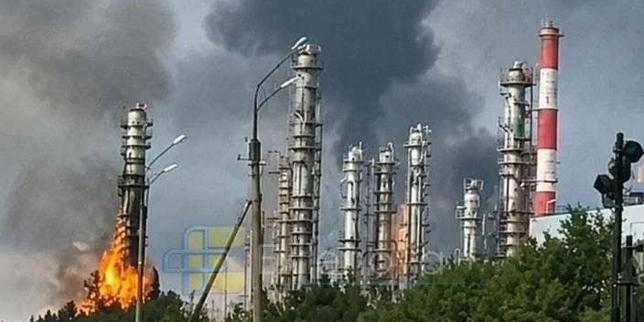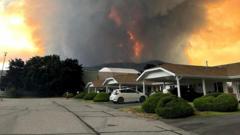
The air tasted like pennies. That is the first thing you notice when a wall of fire decides to swallow your zip code. Not smoke, exactly, but something older. Something metallic and ancient, scraped off the bones of the earth and forced down your throat until your lungs forget how to expand.
Drive out Highway 63 away from Fort McMurray, or watch the modern footage flicker across a phone screen while the wind howls outside an evacuation center, and you see it. The exodus. Tail lights bleeding into a stubborn, bruised twilight. Thousands of people who packed a photo album, three days of socks, and a dog into the backseat, all while pretending to themselves that they would be back by Tuesday.
They weren't back by Tuesday.
Consider what happens next: the physical highway clears, but the mental map stays frozen in amber. For days, families sit on folding cots in school gymnasiums three hundred miles away, staring at pixelated drone feeds on low-battery smartphones. They zoom in on a corner of a roof. They look for the red brick chimney. They try to figure out if the maple tree in the front yard is still a living thing or a charred skeleton standing guard over a cellar of ash.
Total incinerated destruction.
Those four words sound bureaucratic when printed in a dispatch. They sound clean. They sound like insurance adjustments and municipal zoning reports. But they are a lie of omission. Destruction is never total because it leaves behind the most agonizing thing imaginable: the questions.
Do the front steps still exist? Did the box of Christmas ornaments in the back of the garage melt into a single, colorful puddle of plastic, or did the wind shift twenty feet to the left and spare the garage while eating the kitchen alive?
I know that waiting. I know the specific flavor of nausea that comes from watching a weather vane spin on a news broadcast, praying the wind blows away from your street. You feel ridiculous for caring about a toaster or a collection of chipped mugs when human lives are intact. You tell yourself to be grateful. You repeat the mantra: At least we got out. At least the kids are breathing.
Yet, human beings are creatures of geography. We anchor our identities to physical coordinates. When those coordinates are reduced to charcoal, the brain briefly forgets how to locate the self.
Emergency management officials call these events interface fires, a clinical term for where urban concrete crashes into wild timber. It sounds safe. It sounds like a line item on a budget spreadsheet. But step past the jargon. An interface fire is a collision between human history and a force of nature that has been practicing its craft for millions of years.
When the evacuation order drops, time splits in two. There is Before, when your refrigerator was full of groceries you fully expected to eat, and After, when your entire past fits into a single Subaru trunk.
Fire does not negotiate. It does not care about your mortgage rate, your anniversary, or the height of the tomatoes you just planted in the garden boxes. It moves with a terrifying, rhythmic roar—often described by survivors as sounding like a freight train barreling through a living room. And then, silence.
The silence is worse than the roar.
In the aftermath, evacuees grapple with a peculiar brand of displacement. You are safe, technically. You have a cot, a donated blanket, and a paper cup of lukewarm coffee poured by a volunteer who cannot quite meet your eyes because your grief is too heavy for small talk. But you are unmoored.
Neighbors scatter across three different provinces. Group chats ping with fuzzy satellite photos sent by firefighters who risked their lives to slip past the blockade. Is that 42 Elm? someone asks at two in the morning. Someone else replies, I think the chimney is standing. Hard to tell.
Hope is a cruel architect. It builds fragile little castles out of shadows and poor resolution.
We are living through an era where these orange skies are becoming an unwelcome seasonal tradition. Climate shifts, bone-dry timber, and rising temperatures turn entire regions into tinderboxes. We build our homes larger, we push deeper into the boreal forest because we crave the quiet, and then nature reminds us who actually holds the deed.
Still, beneath the statistics of hectares burned and structures lost lies the stubborn resilience of people who refuse to let a disaster have the last word. Communities reorganize in parking lots. Strangers hand out juice boxes and keys to spare apartments. Insurance adjusters become makeshift therapists, listening to weeping homeowners recount the loss of a handmade quilt passed down through three generations—an item with zero market value and infinite emotional weight.
The road to rebuilding is not paved with drywall and lumber. It is paved with the slow, tedious work of letting go of the phantom house that still exists in your muscle memory. You reach for a light switch on a wall that is no longer there. You look out a window that now frames nothing but sky.
The smoke eventually clears. The emergency orders lift. The highway opens back up for the crawl home. And as the tires roll past the charred fence posts and the skeletons of neighborhood pines, the real work begins—not of replacing what was lost, but of learning how to live in the empty space it left behind.