The coffee in the corner bistro of Vilnius was still hot, but the man drinking it had stopped tasting it hours ago. He was watching the street, not for a physical threat, but for a glitch. A severed fiber-optic cable beneath the Baltic Sea. A sudden, unexplained GPS blackout grounding civilian airliners over Poland. A whisper on a Telegram channel claiming that the water supply in a border town had just turned bitter.
This is not a war of trench lines and artillery shells. Not yet.
Across Europe, millions sleep beneath a low-frequency hum of anxiety, mistaking the absence of open combat for peace. It is an expensive mistake. For years, the Western playbook has relied on containment, on defensive walls, on a polite insistence that international law will eventually shame an aggressor into retreat. That strategy assumes an opponent who shares your dictionary. But when your opponent views restraint not as a virtue, but as a bleeding throat, containment becomes a slow suicide.
To understand the modern gray zone, you have to look past the official communiqués from Brussels and listen to the hum of the servers in St. Petersburg, the anonymous cargo ships loitering near critical underwater infrastructure, and the calculated leaks designed to fracture public resolve in Berlin and Paris.
The Kremlin does not want to conquer Europe all at once. It wants to exhaust it.
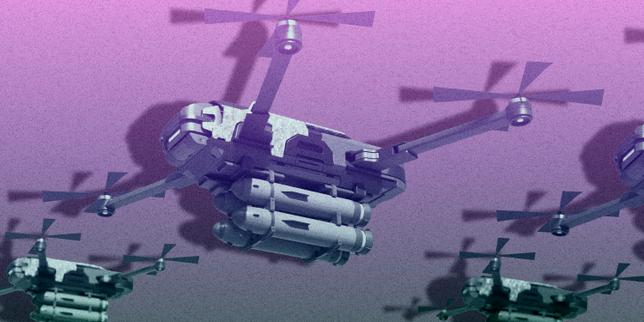
Consider the anatomy of a shadow campaign. A drone drifts across a NATO frontier, staying just long enough to trigger a flurry of emergency meetings, scrambling jets, and panicked headlines. No shots are fired. No territory changes hands. Yet, the cost is immense: fuel burned, radar operators driven to exhaustion, and, most importantly, a subtle erosion of public trust. Every time a European leader stands at a microphone to preach calm while scrambling to plug a leak, the underlying message sinks in: They are vulnerable. We are relentless.
For too long, the response has been reactive. We patch the cable after it breaks. We sanction the shell company after the money has already vanished. We issue sternly worded condemnations that read like obituary notices for our own leverage.
The asymmetry is staggering. A democracy is heavy. It requires consensus, transparency, and public backing. It must answer to voters who care about the price of bread and the warmth of their radiators. An autocracy is light. It can weaponize migration, orchestrate cyber attacks against hospitals, and finance fringe political movements with the stroke of a pen, entirely insulated from domestic dissent.
Fighting this requires a profound, unsettling psychological shift.
It requires mirroring the discomfort.
Walk through the corridors of power in Western capitals, and you can feel the institutional terror of escalation. The fear is palpable, written in the cautious phrasing of diplomats and the endless risk assessments drafted by cautious bureaucrats. Escalation management has become an art form, a way to pat ourselves on the back while slowly losing the initiative.
But what happens when the fear is returned to sender?
Imagine a strategy that refuses to let the Kremlin sleep easy. Not through reckless provocation, but through systematic, unpredictable deterrence. Imagine an approach where the vulnerability is no longer a one-way street. When hostile intelligence assets probe European infrastructure, the response cannot merely be defensive counter-intelligence. It must carry a cost so direct, so palpable, that the calculus in Moscow shifts from opportunistic aggression to self-preservation.
This is what it means to dismantle the illusion of sanctuary.
For decades, Russian elites have treated Europe as their playground and their safety deposit box. They bought luxury real estate on the Riviera, sent their children to elite universities in London, and parked their fortunes in Swiss accounts, all while treating the continent's security architecture with contempt. They built an architecture of impunity.
Shattering that architecture does not require matching every hybrid tactic with an identical copy. It requires a willingness to make the cost of aggression intolerable to the decision-makers inside the fortress walls. When oligarchic assets are not just frozen, but systematically dismantled to repair the damage inflicted by cyber warfare, the message changes. When clandestine operatives find their own networks exposed with brutal, humiliating precision, the baseline shifts.
The truth is terrifying, but it is also liberating.
There is no middle ground where we can purchase safety through polite neutrality. The gray zone is a slaughterhouse for hesitation. Every hesitation is logged, measured, and exploited by a regime that reads caution as cowardice.
The barista in Vilnius wipes down the counter. Outside, the rain begins to fall, washing over a continent that is slowly waking up to a harsh reality. The border is not a line on a map. It is everywhere. And until the cost of tearing at the seams of our societies becomes too heavy for the Kremlin to bear, the quiet war will continue to rage in the dark.
The only way to stop the terror is to make sure the authors of it finally understand what it feels like to wait for the storm.