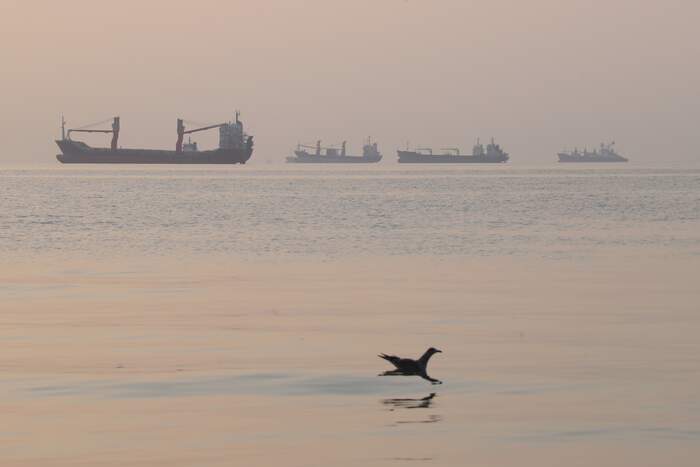
Military strikes against Iranian targets in the Strait of Hormuz rarely resolve maritime crises; instead, they reprice global shipping risk in real time and force commercial operators to trade transit speed against survival. Standard breaking-news reports on these strikes typically stop at the tactical event—a strike occurred, an official spoke, and the next move remains uncertain. That framing treats a complex multi-actor system as a single headline. Understanding what actually happens after strikes in the Strait of Hormuz requires separating kinetic military signaling from maritime economics, insurance underwriting, and naval enforcement mechanics.
Why Standard Breaking News Misreads Chokepoint Strikes
A typical dispatch built around an official statement and an open-ended question about "what comes next" relies on three flawed assumptions: If you enjoyed this article, you should read: this related article.
- Linear Escalation: It assumes each strike moves along a neat ladder from warning shot to full-scale war, overlooking pauses, maritime interdictions, and parallel economic pressure.
- Symmetric Incentives: It treats state militaries and commercial shipping firms as if they optimize for the same outcome, when navies optimize for deterrence or containment and shipowners optimize for crew safety, hull preservation, and voyage profitability.
- Instantaneous Price Clarity: It treats uncertainty as a temporary information gap rather than a structural pricing input that immediately alters freight rates and war-risk premiums.
To analyze the aftermath rigorously, it helps to separate known operational mechanics—how chokepoints constrain vessel movement, how war-risk insurance reacts to hull and cargo threats, and how naval blockades or escorts alter routing—from educated hypotheses about political leadership decisions, diplomatic concessions, or whether a specific strike represents a permanent shift in posture.
The Three Pillars of Chokepoint Escalation
When strikes hit targets in or around the Strait of Hormuz, the strategic dynamics play out across three interacting pillars: kinetic deterrence, maritime interdiction, and economic chokepoint leverage. For another look on this story, see the latest coverage from The New York Times.
Kinetic Deterrence and Asymmetric Retaliation
Air and naval strikes against coastal installations, islands, or vessels aim to degrade an adversary's ability to project force into narrow shipping lanes or impose a cost for prior attacks. In confined waters like the Persian Gulf and Gulf of Oman, however, geography favors asymmetric responses. Coastal batteries, unmanned aerial vehicles, anti-ship missiles, naval mines, and fast-attack craft can threaten commercial traffic or regional infrastructure without matching an expeditionary fleet hull-for-hull.
A strike can degrade specific launch sites or vessels while leaving mobile or dispersed assets intact. Consequently, "what comes next" is rarely a single dramatic counter-strike; more often, it is a shift in the mode of harassment—from direct confrontation to drone surveillance, vessel boarding or seizure, projectile incidents, or threats against nearby energy terminals.
Maritime Interdiction and Convoy Dynamics
Strikes in the strait intersect directly with naval enforcement, whether that takes the form of port blockades, vessel redirections, or escorted transits. Interdiction operates by raising transaction and physical risk for targeted shipping while creating friction for legitimate commerce.
When a blockading or patrolling force turns back or disables vessels, the targeted state faces a sharp dilemma. Sending unescorted or convoyed vessels into an enforced zone tests the blockader's willingness to use lethal force against merchant hulls, whereas holding vessels back concedes economic pressure without a kinetic fight. Conversely, naval escorts reduce attack probability for protected ships but concentrate high-value assets in predictable corridors, increasing the stakes of any miscalculation.
Energy, Fertilizer, and Trade Bottlenecks
The Strait of Hormuz matters globally because high-volume energy and agricultural inputs pass through a narrow waterway with limited overland or pipeline bypass capacity. Crude oil, liquefied natural gas, and key fertilizer feedstocks such as urea and ammonia rely heavily on Gulf export terminals.
Disruption does not require a total physical seal of the waterway to move global markets. Even partial slowdowns, offshore ship-to-ship transfers, rerouting, or elevated attack risk tighten effective supply, lift benchmark crude and shipping rates, and raise input costs for power generation, manufacturing, and agriculture.
The Cost Function of Maritime Risk
For commercial shipping executives, insurers, and commodity buyers, military strikes translate into a concrete cost function rather than an abstract geopolitical story. Every voyage through or near a contested chokepoint is governed by five main cost variables:
- Hull War-Risk Premiums: Insurers price coverage as a percentage of vessel value based on recent attack frequency, severity, and geographic exclusion zones. A jump from low single-digit percentages to high single- or double-digit percentages on a high-value tanker turns insurance from a routine line item into a major voyage expense.
- Cargo War-Risk and Value Exposure: High-value crude, LNG, or refined products carried aboard a vessel can rival or exceed the hull's insured value, multiplying total risk exposure when both hull and cargo require specialized war cover.
- Freight Rate and Charter Adjustments: Spot tanker and vessel rates spike when available tonnage shrinks, crews demand hazard pay, or owners require higher daily hire to compensate for operational danger.
- Rerouting and Transit Time Penalties: Where alternative routes exist—such as pipeline diversions or longer maritime detours—operators face added fuel burn, canal or port fees, longer vessel turnaround times, and tighter fleet availability.
- Demurrage, Delay, and Inventory Holding Costs: Anchoring outside a chokepoint waiting for intelligence, naval clearance, or insurance quotes ties up capital and delays downstream refinery or industrial schedules.
Consider a practical illustration without inventing numbers: suppose a large crude carrier faces a sharp spike in war-risk insurance after strikes near the strait. Even if the physical channel remains navigable, the charterer and shipowner must decide whether the cargo margin can absorb multi-million-dollar insurance and freight premiums, whether to pause loading pending confirmation of naval protection, or whether to shift volumes toward alternative supply routes. If the added voyage cost exceeds the arbitrage value of the Gulf barrel relative to alternative crudes, commercial traffic contracts even before a single ship is hit.
Cause-and-Effect Chains Breaking News Misses
Headline coverage often treats an event and its consequence as isolated occurrences. In practice, strikes in the Strait of Hormuz trigger second- and third-order feedback loops:
- Verification Lag Creates Market Whiplash: Rumors, unverified explosions, or conflicting official claims cause rapid initial price swings. Markets only distinguish noise from structural supply risk when corroboration arrives through AIS tracking anomalies, official military statements, confirmed hull damage, or insurer repricing.
- Economic Squeeze Fuels Asymmetric Pushback: Tighter maritime enforcement or sanctions pressure on oil exports and imports strains state revenues and domestic supply. That pressure can increase the incentive for the targeted actor to raise costs on regional shipping or energy infrastructure to break the economic vise.
- Regional Spillover Alters Coalition Math: Threats or strikes involving Gulf energy infrastructure or neighboring states change the calculus for regional governments and external partners. Some actors may push for rapid de-escalation or containment to protect domestic infrastructure and trade, while others advocate sustained military pressure.
- High Shipping Costs Pass Through to Downstream Prices: Elevated freight and insurance bills do not stay confined to marine balance sheets. They feed into landed energy costs, industrial feedstocks, and agricultural input prices, pressuring central banks and importers far from the Persian Gulf.
Tactical Decision Framework After a Strike
Analysts, supply-chain leaders, and risk managers tracking a strike in the Strait of Hormuz can replace guesswork with a disciplined four-step evaluation sequence:
- Audit Source Credibility and Physical Confirmation: Separate unverified social media reports and rhetoric from confirmed incidents. Look for corroboration from recognized maritime security authorities, vessel-tracking disruptions, satellite or verified imagery, and consistent official statements.
- Map the Targeted Node to Operational Capability: Identify whether the strike hit fixed coastal infrastructure, naval vessels, islands, logistics hubs, or maritime transit lanes. Distinguish temporary disruption of a launch or transshipment point from permanent degradation of harassment or interdiction capacity.
- Track Leading Commercial Indicators Over Headlines: Watch war-risk insurance quotes, spot charter rates, tanker loitering behavior near entry and exit approaches, and naval escort or interdiction announcements. Commercial pricing reveals how practitioners weigh actual probability against official bravado.
- Stress-Test Exposure Across Time Horizons: Evaluate short-term liquidity and voyage exposure over days to weeks alongside structural supply exposure over months. Check contract force-majeure clauses, alternative sourcing options, and inventory buffers before an acute spike locks in unfavorable spot terms.
Limitations of This Framework
No analytical model eliminates geopolitical surprise. State leaders sometimes act against narrow economic self-interest due to domestic political survival, miscalculation, or alliance commitments. Furthermore, opaque reporting in conflict zones means initial intelligence on damage or intent can be incomplete or deliberately misleading. Treating probability assessments as fixed predictions rather than live hypotheses that update with new evidence is the fastest way to get caught off guard.
Strategic Play for Navigating Chokepoint Escalation
Do not wait for diplomatic clarity or a definitive official narrative before adjusting risk controls. Build a two-track operating posture immediately after a strike in the Strait of Hormuz: lock in contractual and routing flexibility (pre-approved alternate suppliers, clear war-risk cost allocation in charter and supply agreements, and realistic buffer stock for energy and chemical inputs) while tying tactical execution—such as voyage release, hedging, or rerouting—to confirmed maritime insurance and interdiction signals rather than unverified headlines. Organizations that pair disciplined verification with pre-negotiated commercial optionality absorb shocks at far lower cost than those forced to improvise after freight rates and premiums have already repriced.