Structural Realities of Inter-State Escalation
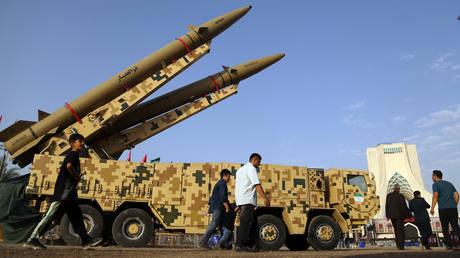
When secondary state actors permit foreign military infrastructure on their sovereign soil, they alter their domestic risk profile. This transaction is rarely evaluated through a transparent cost-benefit model. Tehran’s recent warnings regarding nations facilitating United States military operations highlight a specific operational dynamic in modern strategic conflict: the friction points between host-nation sovereignty and great-power projection.
To understand why secondary states accept this vulnerability, we must examine the security guarantees they receive in exchange. Conversely, the logic applied by opposing powers treats the hosting state not as a neutral observer, but as an active logistics node. This creates a predictable friction cycle that can be broken down into three distinct mechanics: proximity risk, deterrence asymmetry, and logistical dependency.
The Three Pillars of Logistics Vulnerability
Proximity Risk and Spatial Compression
Modern strike packages rely on localized staging nodes to compress response times and extend combat radius. When a host nation provides airspace, fueling stations, or maintenance facilities, it integrates itself into the adversary's operational kill chain.
From a tactical perspective, the distinction between a primary combatant and a logistics enabler dissolves. The kinetic energy of retaliation follows the path of least operational resistance. Because striking primary superpower assets often carries prohibitive escalation costs, secondary nodes absorb the retaliatory pressure. This spatial compression means that geographic proximity to a conflict zone correlates directly with the probability of becoming a target, regardless of the host nation's official diplomatic stance of neutrality.
Deterrence Asymmetry
Small and medium powers frequently enter security partnerships with global hegemons to deter local rivals. However, this creates an asymmetric deterrence balance. The host nation borrows the superpower's shield, but in doing so, it also inherits the superpower's global adversaries.
The core vulnerability lies in the divergence of interests. A global superpower can absorb localized friction or distant skirmishes without existential threat. A secondary host nation, by contrast, absorbs direct kinetic impact on its immediate territory. When diplomatic communication channels break down, the deterrent umbrella often fails to protect the supporting infrastructure from targeted disruption or pre-emptive signaling actions.
Logistical Dependency and Sunk Costs
Once military infrastructure is embedded within a nation's borders, disengaging from the operational network introduces severe friction. Supply chains, joint intelligence frameworks, and standardized hardware create long-term lock-in effects.
The economic and operational costs of expelling foreign forces or denying access frequently outweigh the acute security risks of remaining a staging ground. Leaders in host nations calculate that compliance maintains economic stability and institutional backing, treating the threat of retaliatory strikes as a deferred cost rather than an immediate certainty.
The Mechanics of Strategic Signaling
Threats issued by targeted states toward host nations are rarely empty rhetoric; they function as a form of coercive diplomacy designed to fracture alliances from the periphery. By raising the cost of participation for supporting states, the signaling state attempts to induce policy friction within the opposing coalition.
When a government in Tehran or any similarly positioned capital designates a host nation as a legitimate target, the intended audience is dual-layered. The primary message targets the domestic population and leadership of the host nation, forcing a re-evaluation of their alliance commitments. The secondary message targets the superpower, demonstrating that its forward-operating posture carries systemic vulnerabilities that cannot be entirely mitigated by defensive shields.
This dynamic exploits the democratic or bureaucratic vulnerabilities of supporting states. Public anxiety over foreign entanglements, economic disruption, and security threats can rapidly translate into political pressure on ruling administrations. Consequently, the battleground extends beyond physical infrastructure into the political stability of the coalition itself.
Risk Mitigation and the Limits of Defense
States hosting foreign military assets typically attempt to mitigate increased targeting risks through three primary vectors: air defense integration, diplomatic disclaimers, and operational compartmentalization.
Air defense systems can intercept incoming projectiles, but absolute security is mathematically impossible against saturated or asymmetric strikes. The cost curve heavily favors the attacker; intercepting relatively inexpensive munitions with advanced counter-systems drains economic resources over prolonged timelines.
Diplomatic disclaimers—such as public declarations that host facilities are not being used for offensive missions—rarely alter the adversary's calculus. In a high-stakes strategic environment, adversaries evaluate capabilities rather than stated intentions. If a runway or a radar installation can be used to project power against them, it is treated as an active threat vector regardless of peacetime restrictions.
Operational compartmentalization offers marginal improvements by hiding specific missions, but modern surveillance capabilities make total opacity difficult to maintain. Satellites, signals intelligence, and open-source intelligence networks continuously map the utilization rates of forward bases, stripping away the protective cover of diplomatic ambiguity.
Strategic Adaptation
The calculus governing host-nation vulnerability ultimately depends on the elasticity of the alliance. As long as the perceived benefits of alignment—ranging from financial aid to security guarantees—exceed the calculated risk of kinetic retaliation, secondary states will continue to absorb foreign military assets.
To alter this trajectory, secondary states must diversify their diplomatic channels and build independent crisis-management frameworks that reduce their reliance on single-power security umbrellas. Without structural decoupling from great-power competition, nations that trade territorial sovereignty for localized protection will remain exposed to the cascading consequences of distant escalations.