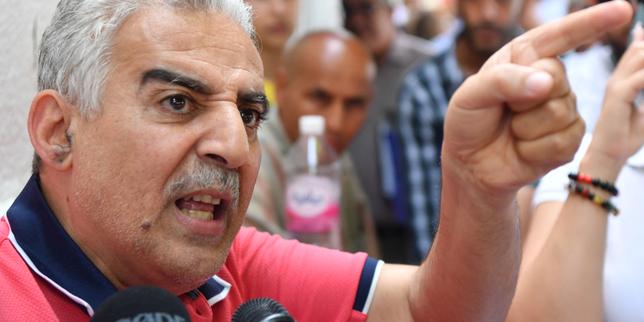
Tunisian journalism just took another heavy blow. The Tunis Court of Appeal confirmed a one-year prison sentence against veteran independent journalist Zied El Heni. There's no sugarcoating it. The decision shows that holding an independent opinion in Tunisia has become a high-risk gamble.
The ruling isn't just about one man. It reflects a systematic squeeze on civic space that has been tightening for years. If you're trying to understand why press freedom advocates are sounding the alarm across North Africa, this case is the perfect, frustrating example.
The Shockwave of the Appeal Confirmation
On Friday, June 26, 2026, the correctional chamber of the Tunis Court of Appeal upheld the initial May 7 verdict against El Heni. The independent reporter, well known for founding the Tunisian Press news outlet and co-founding the National Union of Tunisian Journalists (SNJT), remains behind bars.
The speed and rigidity of the judicial process surprised no one, but it deeply disappointed the crowd of journalists and rights defenders who gathered in solidarity outside the courtroom on Rue Bab Benat.
The state didn't rely on the actual press code to lock him up. Instead, prosecutors bypassed Decree-Law 115—the specific text meant to regulate media and journalism infractions—and pulled a lever from the standard criminal system.
The Bizarre Mechanism Used to Silence Criticisms
The legal weapon of choice here is Article 86 of the Tunisian Telecommunications Code. This specific law dictates up to two years of jail time for anyone who "knowingly harms others or disturbs their peace through public telecommunications networks."
What exactly did El Heni do to "disturb the peace" of the state? He spoke up for his colleagues.
During a law faculty conference in Tunis, El Heni openly criticized the judiciary. He lambasted the judges who had wrongfully handed down prison sentences to other media professionals, notably calling those magistrates "criminals" for stripping journalists of their freedom. He specifically pointed to the case of journalist Khalifa Guesmi, who was later completely exonerated after serving significant time.
Because El Heni posted these criticisms on social media, the state bypassed the press code entirely. They treated his political commentary as a common cyber-crime. It's a technical loophole that turns every Facebook post or YouTube clip into a potential prison ticket.
Why This Tactics Bypasses Basic Press Protections
Using the Telecommunications Code instead of Decree-Law 115 isn't an accident. It's a deliberate strategy.
| Legal Framework | Primary Purpose | Maximum Penalty for Opinion |
|---|---|---|
| Decree-Law 115 (Press Code) | Regulates media, protects journalistic intent | Fines, civil remedies, rarely direct imprisonment |
| Article 86 (Telecommunications Code) | Regulates public networks, targets harassment | Up to 2 years of hard prison time |
According to El Heni’s legal team, including prominent attorney Samir Dilou, the prosecution didn't even wait for a formal, individual complaint from the aggrieved judges. The state machinery initiated the case based on verbal instructions alone. Before his conviction, El Heni managed to pass a message from Mornaguia prison stating that this marked the tenth time in his long career he faced a trial simply for expressing an opinion.
A Context of Broadening State Control
You can't look at El Heni's case in a vacuum. Ever since President Kais Saied enacted a sweeping power grab in the summer of 2021, freezing parliament and taking over the judiciary, the legal landscape has shifted dramatically.
Dozens of journalists, political opponents, and civil society leaders have faced the exact same pressure. For instance, commentator Sonia Dahmani recently received a two-year sentence for speaking out about prison conditions. Media professionals find themselves walking an impossible tightrope where a single critical radio snippet or social media commentary results in pretrial detention.
Even before this current crisis, El Heni was a target. In 2024, he received a six-month suspended prison sentence after using a radio show to demand the firing of a former trade minister. The message from the top is clear: sit down, stop investigating, and don't question official actions.
What This Means for the Future of North African Media
International watchdogs aren't staying silent, though their leverage seems smaller than ever. The Committee to Protect Journalists (CPJ) and Amnesty International have repeatedly demanded El Heni's immediate, unconditional release. They argue that weaponizing ordinary criminal statutes to punish editorial stances violates Tunisia's international human rights obligations.
For local reporters, the reality is stark. Self-censorship is growing. When a household name like Zied El Heni can be whisked away to Mornaguia prison without a formal civil complaint, younger reporters naturally think twice before digging into state corruption or judicial overreach.
If you want to support what's left of independent media in the region, the next steps don't involve passive reading. Rights groups are actively organizing petitions and international legal observers to monitor the separate, secondary legal procedures still pending against El Heni. Sharing verified updates from local syndicates like the SNJT and keeping the spotlight on the misuse of telecommunication laws is the only way to stop these loopholes from becoming permanent tools of state censorship.