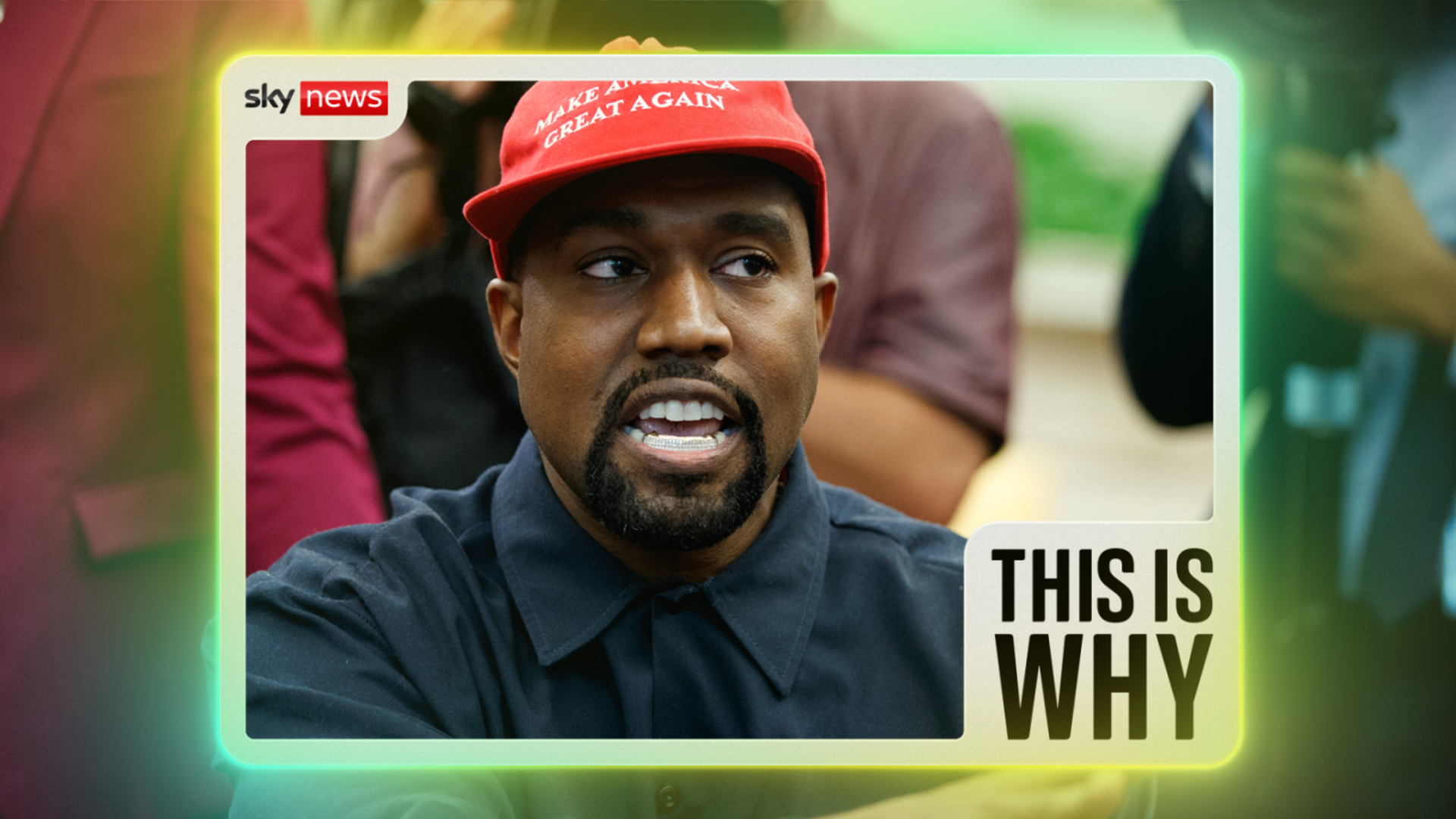
The industry consensus is that Kanye West is "uncancelable." Pundits point to his streaming numbers, his ability to dominate the 24-hour news cycle through sheer erraticism, and the religious fervor of his remaining fanbase as evidence of an eternal flame. They argue his "genius" creates a permanent shield, ensuring he remains a central pillar of the monoculture.
They are wrong.
What we are witnessing isn't the endurance of a legend. It is the long, expensive decay of a legacy brand that has outrun its supply chain. The "always famous" narrative is a comfort blanket for fans and a lazy headline for journalists. In reality, the Ye brand is currently operating on a massive deficit of cultural capital, and the math of his continued relevance doesn't add up.
The Myth of the Uncancelable Artist
The lazy argument for Ye’s permanence relies on a misunderstanding of how fame scales in the digital age. Most observers look at Spotify's monthly listener counts—which spiked during the Vultures era—and claim victory. They mistake consumption for influence.
I have watched major brands navigate these waters for two decades. There is a fundamental difference between a legacy asset and a growth asset. Ye has become a legacy asset in a state of liquidation. People listen to the new music because of the dopamine hit of the old music. They track his movements because of the wreckage, not the construction.
When Adidas severed ties, the narrative was that Ye would simply "build his own ecosystem." Two years later, that ecosystem is a ghost town of unfulfilled pre-orders and half-baked apps. Fame without infrastructure is just noise. Fame without a distribution partner is a street performer with a megaphone. The industry likes to pretend he is an outlier who broke the rules, but the rules are currently breaking him.
The Attention Tax and the Law of Diminishing Outrage
Every time Ye triggers a news cycle through a controversial statement or a bizarre public appearance, he pays an Attention Tax.
In the My Beautiful Dark Twisted Fantasy era, his outbursts were high-margin. He traded a small amount of social friction for a massive increase in artistic prestige. Today, the margins have flipped. He has to commit increasingly desperate acts of public theater just to maintain a baseline level of relevance. This is the "Shock Cycle" death spiral.
- The Threshold of Boredom: The general public is no longer shocked; they are exhausted. When the "outrage" becomes predictable, it loses its market value.
- The Talent Gap: The music no longer justifies the headache. Critics used to say, "He's a nightmare, but the drums are incredible." Now, the drums are mixed by committee and the verses are often unfinished or "mumble" demos.
- The Infrastructure Collapse: Without the machinery of GAP, Adidas, or a major label (Universal/Def Jam), the "fame" cannot be monetized at scale. You cannot fund a global lifestyle on $20 hoodies sold through a Shopify store that crashes twice a week.
The Misunderstood Logic of "Independent Success"
People ask: "If he's failing, why was Vultures 1 number one on the charts?"
The answer is simple: The Billboard charts are a lagging indicator of past glory, not a leading indicator of future health. Achieving a number one album in the current streaming environment requires a concentrated burst from a dedicated core. It does not prove broad cultural resonance.
In the business world, we call this Harvesting the Base. You stop trying to acquire new customers and instead squeeze every possible cent out of the loyalists who will never leave. This is a viable strategy for a mid-tier legacy rock band. For a man whose entire brand is built on being the "future" and the "voice of a generation," it is a death sentence.
If you look at the demographic data of his current "stans," you see a narrowing funnel. He is losing the tastemakers. He is losing the fashion elite. He is losing the tech innovators. He is left with a digital echo chamber. Fame in a vacuum is just a hobby.
The Fallacy of the Artistic Genius Shield
We need to address the "Genius" label. It is the most overused word in the Ye lexicon, used as a universal solvent to dissolve any criticism of his business failures or personal conduct.
True industry insiders know that genius in the music business is rarely a solo endeavor. Ye’s greatest strength was never just his production or his rapping; it was his curatorial gravity. He was the ultimate creative director, capable of pulling the best work out of Mike Dean, Hudson Mohawke, Virgil Abloh, and Rick Rubin.
That gravity has reversed. The "A-list" talent is gone, replaced by sycophants and hangers-on who are happy to be in the room but lack the stature to say "no." When you remove the filters from a genius, you don't get "purer" art. You get a mess.
Compare the sonic cohesion of Yeezus to the scattershot, demo-heavy feel of his recent independent releases. The difference isn't a "new direction"—it's a lack of resources. He is an architect trying to build a skyscraper with a hammer and some plywood because he burned down the factory that makes the steel.
Why the "Always Famous" Narrative is Dangerous
Believing that Ye will "always" be famous ignores the reality of Institutional Erasure.
The industry is currently quiet about him, but the internal directives are clear. He is being removed from the "Master Brand" of American culture. He is not in the Super Bowl commercials. He is not on the festival headliner lists (unless he's a last-minute, high-risk replacement). He is not the face of luxury campaigns.
You can be famous on the internet while being functionally dead in the rooms where the real money is moved. This is the "Influencer Trap." You have 30 million followers, but you can't get a bank loan. For a billionaire (or former billionaire), this transition is a catastrophic downgrade, yet the public views it as "independence."
The Counter-Intuitive Truth: Boredom Will Kill Him, Not Hate
The "cancel culture" warriors think they are fighting a war of morality. They are missing the point. The market doesn't care about morality; it cares about reliability and ROI.
The reason Ye's fame is reaching its expiration date isn't because people are "offended." It's because he has become a high-maintenance, low-yield asset.
- Reliability: He cancels tours. He misses deadlines. He changes tracklists after the album is out.
- ROI: The cost of associating with him (legal fees, PR nightmares, lost partnerships) now outweighs the revenue generated by his presence.
Imagine a scenario where a major streaming platform decides the "hassle-to-profit" ratio on his next release is no longer favorable. If he is relegated to a proprietary app—as he attempted with the Stem Player—his "fame" will contract by 90% overnight. Visibility is not a right; it is a lease held by the platforms. And Ye has stopped paying the rent.
The Actionable Reality for the Observer
Stop asking "When will he be canceled?" and start asking "When will he be irrelevant?"
Irrelevance doesn't happen with a bang. It happens through a series of smaller, quieter exits. It’s the move from the stadium to the arena, from the arena to the theater, and from the theater to the livestream.
The "Always Famous" crowd is betting on a person. I am betting on the math. The math says that a brand built on disruption cannot survive when it can no longer disrupt anything but its own distribution.
The industry is moving on. The "tapestry" of pop culture—to use a term I despise—is being rewoven without him. He is becoming a footnote in real-time, a cautionary tale about what happens when an artist confuses "attention" with "power."
He isn't going to be famous forever. He is just the last person to realize the lights have already been dimmed.
Check the balance sheet. The credit is gone. The debt is mounting. The show is over.