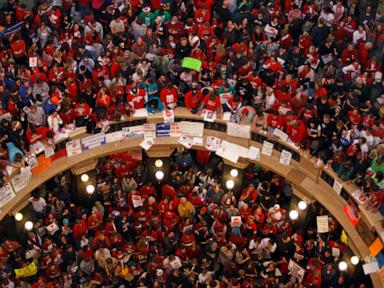
The legal scaffolding holding together Wisconsin Act 10 remains standing for now, but the ground beneath it is shifting toward an inevitable final reckoning at the state supreme court.
A mid-level appellate panel voted 2-1 to reverse a lower court decision that had briefly dismantled the 2011 statute, restoring the sweeping restrictions on public sector collective bargaining that originally transformed Wisconsin into the epicenter of American labor politics. Yet this appellate victory for legislative defenders of the law is merely a temporary stay of execution. The litigation is hurtling directly toward the Wisconsin Supreme Court, where the ideological balance of power guarantees a turbulent final chapter for a statute that has polarized the state for a decade and a half.
Anatomy of the Reversal
Writing for the majority, the appellate panel concluded that the lower court possessed no valid legal grounding when it struck down major sections of the statute in late 2024. The core of the legal challenge, brought by a coalition of public employee unions, centered on the equal protection clause of the state constitution. Plaintiffs argued that Act 10 created an arbitrary, unconstitutional divide by stripping collective bargaining power from general municipal and school employees while entirely exempting public safety workers such as police officers and firefighters.
The appellate majority rejected that argument, ruling that the legislature maintained a rational basis for distinguishing between public safety personnel and general civil servants when enacting fiscal stabilization policies.
Judge Shelley Grogan added a sharp concurring opinion targeting the timing of the lawsuit itself. Filed in late 2023, the challenge arrived precisely three months after a shift in the ideological majority of the state supreme court. Grogan cautioned that the constitutional integrity of a statute cannot be allowed to fluctuate depending on the political composition of the bench.
In dissent, Judge Lisa Neubauer countered that the legislative carve-outs remained fundamentally arbitrary, siding with the original trial court determination that the selective enforcement of labor restrictions violated basic constitutional guarantees.
The Fifteen-Year Economic Realpolitik
To understand the tenacity of this legal combat, one must examine the fiscal architecture built by former Governor Scott Walker’s administration in 2011. Act 10 did more than restrict bargaining over workplace conditions; it fundamentally altered the municipal balance sheet across Wisconsin. By capping wage increases at the rate of inflation unless voters approved higher caps, prohibiting automatic union dues collection, and mandating that public employees shoulder significantly higher percentages of their health insurance and pension costs, the law delivered immediate budget relief to cash-strapped local governments and school districts.
Supporters, including business associations and legislative leaders, argue that dismantling the framework would trigger widespread fiscal insolvency for local municipalities. Without the employee contribution adjustments authorized under the statute, local leaders maintain they would face immediate structural deficits.
Conversely, labor organizations point to a hollowed-out public workforce. Membership numbers plummeted in the wake of the law's passage, annual recertification hurdles crippled administrative operations inside unions, and educators argue that the loss of collective voice directly impacts classroom stability and professional retention.
The Ultimate Judicial Arena
Because the 2024 circuit court ruling invalidating the law had been stayed pending appeal, Wednesday's appellate reversal leaves the immediate operational status quo undisturbed. Public employers and unions operate under the exact same statutory constraints that have governed them for fifteen years.
That stability is superficial. Legal teams representing the coalition of unions are preparing their escalation to the Wisconsin Supreme Court. When the case arrives at the state's highest tribunal, the legal landscape will be defined by an expanded liberal majority and known recusals that could narrow the participating bench.
The structural survival of Act 10 no longer rests on legislative compromises or economic theories of municipal recovery. It rests entirely on how a newly configured supreme court interprets the boundaries of legislative classification and equal protection under the state constitution.