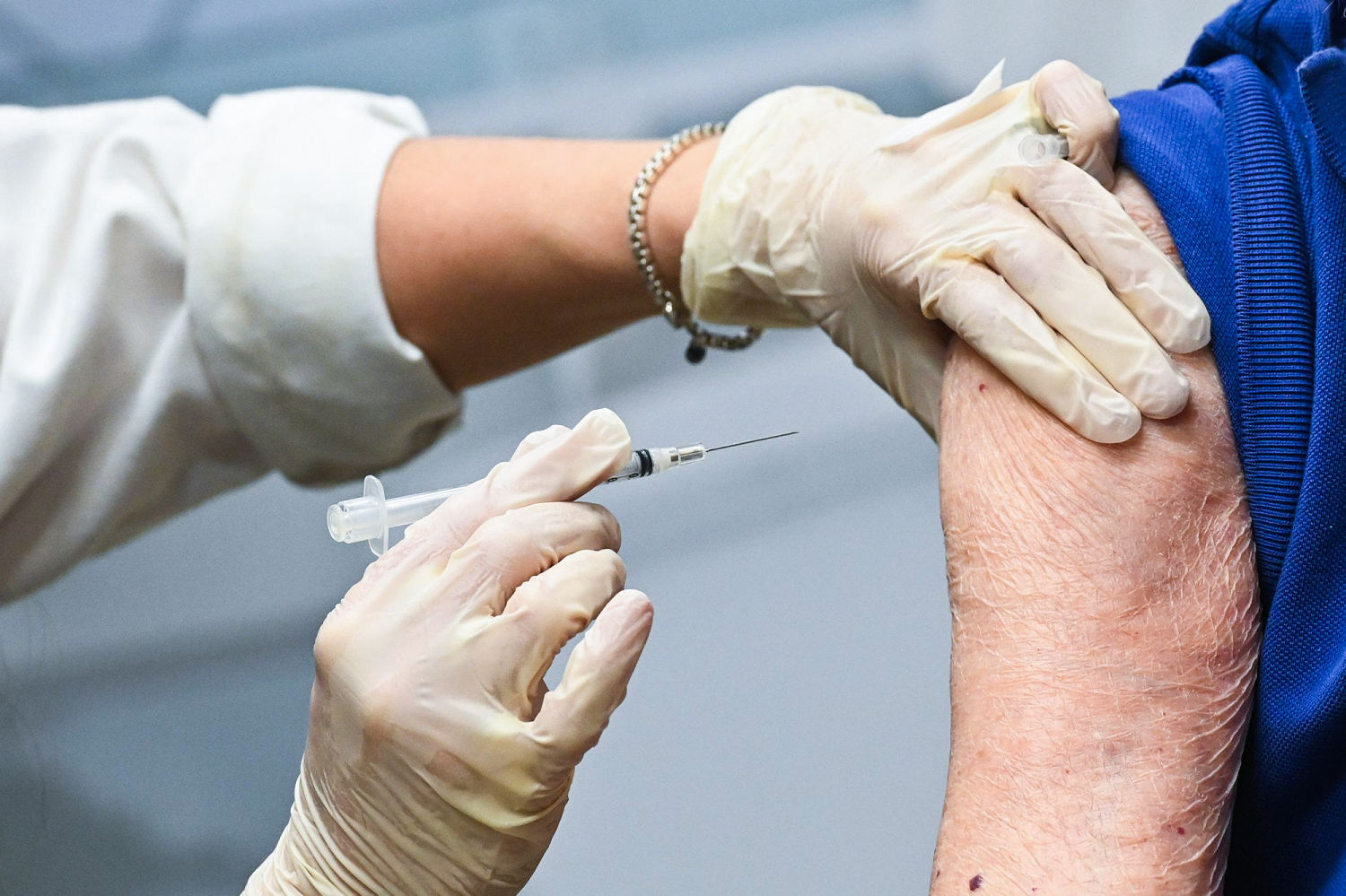
Every autumn, the air changes its weight. You feel it in the sharp bite against your cheek, the way the light fades before five o'clock, and the unmistakable scratch in the throat that signals the arrival of an old, uninvited guest.
We have lived alongside the influenza virus for as long as human history has been recorded. It is an ancient predator, lightweight and invisible, hitching a ride on moisture droplets through crowded subways, noisy classrooms, and quiet family dinners. We treat it like an inevitability. Like rain, or taxes, or getting older. You stock up on ginger tea, you clear your schedule for three miserable days, and you hope your immune system remembers how to fight.
For most of us, it is a week of misery. For others, it is a catastrophe.
Consider a hypothetical seventy-two-year-old grandfather named Arthur. Arthur still gardens in the spring, but by November, he watches the weather reports with a quiet wariness. To Arthur, the flu is not a bad week in bed. It is a loaded dice roll. Every winter, the medical community enters a high-stakes guessing game to anticipate which strain of the influenza virus will mutate and dominate the upcoming months. Scientists look at historical data, track mutations across hemispheres, and brew a vaccine based on prediction.
Sometimes, they miss.
That miss costs lives. It costs emergency room beds. It costs the quiet, devastating erosion of public trust in modern medicine. For decades, our primary weapon against the flu has been the egg-based vaccine. It is a triumph of twentieth-century science, growing viral strains inside chicken eggs to teach our bodies what the enemy looks like. But manufacturing takes months. By the time the shots reach the pharmacy shelves, the virus has already started playing a different game, shifting its shape just enough to slip past our defenses.
Then came a shift in the chemistry of survival.
The approval of the first mRNA influenza shot, developed by Moderna, marks a turning point in how we face this seasonal adversary. To understand why this matters, we have to look past the bureaucratic announcements and examine the machinery of the human body.
Imagine your immune system as a medieval fortress. For generations, guards stood at the gate holding drawn portraits of wanted criminals—the traditional vaccine approach. They showed the body a killed or weakened version of the virus, or a specific protein fragment, hoping the guards would recognize it later. But what happens when the criminal changes their cloak? The guards hesitate. The virus slips inside.
Messenger RNA technology changes the instructions given to the fortress guards. Instead of handing them a portrait, scientists figured out how to hand the body a temporary memo. This genetic instruction tells your own cells to manufacture a harmless piece of the viral surface—just enough for your immune system to study it, hate it, and build specialized antibodies against it.
The genius of this approach is speed and adaptability. Traditional vaccine manufacturing requires millions of biological incubators. Messenger RNA manufacturing is synthetic. It can be written, scaled, and updated with the digital precision of software. When a new strain of influenza begins making its rounds in the southern hemisphere, scientists do not need to wait months for biological cultures to mature. They can rewrite the code.
Of course, introducing a new medical tool into the collective bloodstream of society always brings anxiety. Questions linger. Will it hurt? Will the side effects knock me out for a day? Is it safe? These are not irrational fears; they are the natural hesitation of people who have watched medical promises fall short before. The clinical trials for this new shot show a robust immune response, often outperforming traditional formulations, particularly in older populations whose immune systems tend to grow tired and slow to react.
Yet, the true value of this approval is not just about a single season or a single product launch. It is about a fundamental rewrite of our relationship with infectious disease.
For years, we accepted the annual toll of influenza as an unalterable fact of life. We accepted that hospitals would strain at the seams every January. We accepted that thousands of vulnerable people would not make it to spring. We accepted the limitations of our tools because we had nothing better.
Technology does not always arrive with a loud explosion. Sometimes it arrives quietly, approved by regulators on an ordinary afternoon, buried beneath the noise of daily news cycles.
Arthur does not care about the biotechnology behind messenger RNA. He does not know the intricate choreography of lipid nanoparticles protecting fragile genetic code as it enters a muscle cell. All Arthur knows is that next November, he wants to rake the leaves in his yard without calculating his own mortality.
The winter will still come. The wind will still strip the trees bare. But as the first doses of this new vaccine begin moving through distribution networks, the code of human defense has fundamentally evolved. We are no longer just guessing where the virus is going.
We are finally learning how to speak its language before it speaks ours.