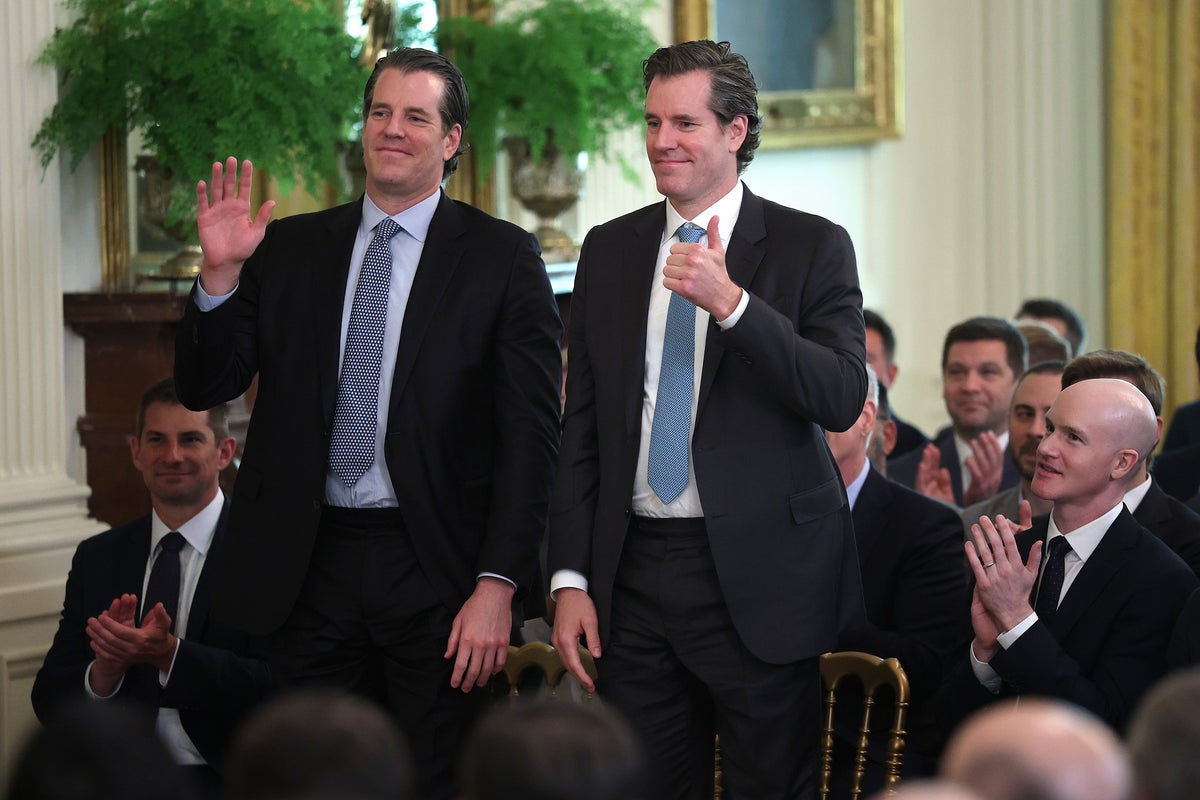
When Cameron and Tyler Winklevoss cut a $2 million check to Donald Trump's presidential campaign, they weren't just participating in American democracy. They were executing a highly strategic, calculated business move. For years, the founders of the Gemini cryptocurrency exchange found themselves trapped in a grueling regulatory chokehold, trading blows with federal agencies determined to make an example out of tech billionaires.
Then came the election, a massive shift in executive branch leadership, and a sudden wave of institutional amnesia at the highest levels of financial regulation.
If you think federal law enforcement and multi-million-dollar corporate penalties are set in stone, you don't understand how Washington actually works. The timeline of events surrounding Gemini, the Commodity Futures Trading Commission (CFTC), and the Securities and Exchange Commission (SEC) reveals a masterclass in how political access can quietly dismantle years of aggressive federal prosecution.
The High Cost of Misleading the Feds
To understand how a $5 million penalty vanishes into thin air, you have to look at what got the Winklevoss twins into trouble in the first place. Back in 2022, the CFTC filed a massive lawsuit against Gemini. The allegations were serious. The regulator claimed that Gemini executives made false and misleading statements during an aggressive push to secure approval for the first US-regulated Bitcoin futures contract.
The CFTC argued that Gemini hid crucial facts about how its trading platform operated, specifically regarding measures to prevent market manipulation. For nearly three years, Gemini fought the charges tooth and nail. They tried to get the case thrown out, but US District Judge Alvin Hellerstein flatly rejected their arguments, ruling that a jury would have to decide whether 32 separate statements made by Gemini executives to federal regulators were intentionally misleading.
With a high-profile trial scheduled to kick off on January 21—literally the day after the presidential inauguration—the twins faced a catastrophic public relations and financial disaster.
A Convenient Settlement and a Sudden Dismissal
Facing a hostile jury and mounting legal fees, Gemini suddenly capitulated. In early January, the company agreed to pay a $5 million civil penalty to settle the CFTC case without admitting or denying the allegations. It looked like a definitive, costly loss for the crypto moguls.
But things were moving fast behind the scenes. During the 2024 election cycle, the Winklevoss brothers each maxed out their political contributions, pouring $2 million into the Trump campaign and aligned committees. They didn't stop there. Follow-up donations flowed freely to key congressional leaders and political action committees, including hundreds of thousands of dollars to House Majority Whip Tom Emmer’s PAC.
The return on that political investment materialised with astonishing speed. While the $5 million CFTC settlement was already inked, the broader regulatory assault on Gemini began to completely unravel. The SEC had been pursuing its own aggressive civil enforcement action against Gemini over its "Gemini Earn" program, alleging the company illegally raised billions of dollars from retail investors through an unregistered lending scheme.
By January 2026, the newly reorganized SEC completely dismissed the enforcement action against Gemini. The official rationale cited Gemini’s previous settlements with state regulators and the return of investor assets. But seasoned financial lawyers and watchdog groups saw it for what it was. A total capitulation by a federal agency that had previously promised to hold crypto firms accountable.
The Pay to Play Reality of Crypto Regulation
The sudden relief enjoyed by the Winklevoss twins isn't an isolated incident. It's part of a sweeping, systematic dismantling of crypto oversight. Democratic lawmakers on the House Oversight Committee have heavily criticized this pattern, documenting dozens of instances where major political donors saw serious regulatory headaches vanish almost overnight.
Consider what happened across the broader digital asset space immediately following the political transition:
- Ripple Labs dropped a massive $5 million donation into the inaugural fund, and shortly after, the SEC dropped a major case involving a potential $125 million fine.
- Coinbase contributed $1 million to the inauguration, resulting in the SEC abandoning a long-running, highly publicized lawsuit against the platform.
- Kraken saw its civil enforcement actions quietly dismissed after contributing $1 million to political funds.
The Winklevoss twins didn't just get their own legal slate wiped clean; they actively bought their way into the rooms where the new rules are being written. They have been key fixtures at exclusive high-dollar dinners, rubbing shoulders with top administration officials while pushing for a new framework that allows crypto firms to police themselves via private associations.
Why Fines Mean Nothing to Billionaire Founders
For an ordinary investor, a federal fraud investigation is a life-altering catastrophe. For institutional crypto founders, it's a line-item expense. When you're worth billions, a $5 million regulatory fine is just the cost of doing business. If a $2 million political donation can neutralize hundreds of millions in potential liabilities and dismiss active fraud investigations, the math makes perfect sense.
The strategy is simple. Fight the regulators until the political calendar shifts, fund the opposition, and wait for the leadership at the SEC and CFTC to swap out. It's a highly effective playbook that completely undermines the idea of independent market regulation.
If you want to protect your digital asset portfolio in this environment, stop looking at regulatory headlines as permanent indicators of a company's health. Watch the political capital instead. The firms that are actively buying access are the ones that will survive the regulatory gauntlet, not because their products are inherently safer, but because they have successfully purchased immunity from the consequences of their actions. Focus your investments on platforms that show institutional resilience, but never underestimate the power of a perfectly timed political donation to rewrite the rules of the game.