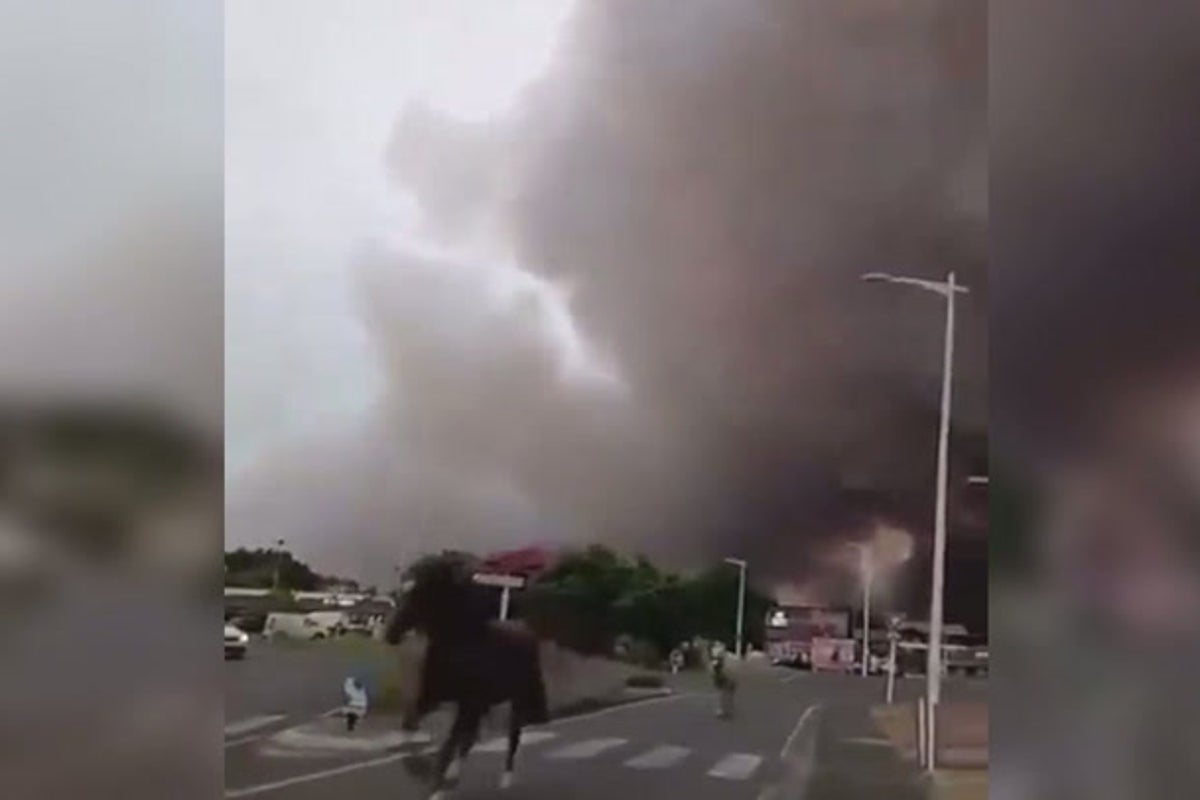
Panic. That is the only word for it when you see horses galloping through thick, acrid smoke as flames consume the French countryside. It is a terrifying sight that has become far too common in recent years. We aren't just talking about a minor brush fire that gets cleared up in an afternoon. These are massive, landscape-altering events that threaten livelihoods, wildlife, and the very soul of the rural regions people flock to for peace.
The reality of these French wildfires is harsh. They don't just stay in the forest anymore. They push into pastures, tear through historic farms, and force farmers into impossible choices. When you see footage of livestock fleeing, you're witnessing the breakdown of a traditional way of life. It’s not just about losing property. It is about the complete disruption of an ecosystem that has existed for centuries.
The Changing Climate of Southern France
Many people still think of France as a lush, green vacation spot where the sun always shines in moderation. That is a dangerous misconception. The climate in regions like Occitanie and Provence has shifted dramatically. Summers are hotter. Droughts are longer. The soil turns to dust by mid-July. This creates a perfect scenario for rapid fire spread, and the winds in these regions don't help.
When a spark lands in dry, stressed vegetation, it behaves like a blowtorch. I have spoken with local farmers who describe the fire moving faster than they can hitch a trailer. They don't have hours to evacuate their animals. They have minutes. This is why you see horses running wild. It’s not because they were abandoned. It’s because the situation changed before the gates could even be opened.
Protecting Livestock During Fire Season
If you own land or manage animals in high-risk areas, you need a plan that you’ve actually tested. Most people think a plan exists because they have a vague idea of where they would take their horses. That isn't a plan. It is a wish. You need to treat this with the same seriousness as a major business operation.
- Pre-identify evacuation sites. You need three locations. One nearby, one mid-range, and one far away. Do not rely on one facility. It might be in the path of the fire too.
- Microchip and tag everything. If your horses get loose in a panic, they are gone. Static tags on halters are fine, but permanent identification is the only way to prove ownership when the smoke clears.
- Keep a go-bag packed. Have water, feed, medical supplies, and copies of veterinary records in a place that is accessible even if the power is out.
- Clear defensible space. You must clear brush and dry grass away from structures. If you think you’ve cleared enough, clear another fifty feet. It is never enough.
The Reality of Wildfire Response
The French government and local fire services, known as the sapeurs-pompiers, are elite. They are among the best in the world at forest firefighting. However, they are also overwhelmed. When hundreds of fires ignite across a region, they cannot be everywhere. You cannot count on a fire truck arriving at your driveway the moment a blaze starts. The burden of initial response falls on the property owner.
It is frustrating to watch people wait for instructions. If you smell smoke or see an orange glow on the horizon, move. Don't wait for an official evacuation order. By the time that alert hits your phone, the road might already be compromised.
Beyond the Immediate Threat
The economic impact of these fires is staggering. It isn't just the loss of a barn or a fence. It is the cost of feed because the grazing land is scorched for seasons to come. It is the veterinary bills for horses suffering from smoke inhalation. Many small farms in France operate on thin margins. A single fire can be the difference between staying in business or selling the land to developers.
We also have to look at how we manage land. Some experts argue for more prescribed burns to clear the fuel load. Others point to the need for better water management systems in remote areas. Whatever the solution, it requires a complete shift in how we approach living in rural areas that are clearly becoming more flammable.
If you are traveling through or living in these areas, stay informed. Use apps that track fire activity in real-time. Respect the fire bans—they aren't there to ruin your vacation, they are there to stop a catastrophe. We are living in a time where the landscape is essentially a tinderbox for three months of the year. Act like it. Don't be the person who starts a fire because you thought a cigarette butt was fully extinguished or a camp stove was safe in high wind. The responsibility is on you. If you see smoke, don't stand there filming it. Get out and help others do the same.