The frost in the trench does not care about geopolitics. It settles on the frozen knuckles of eighteen-year-olds who cannot remember what silence sounds like, painting the churned mud of the eastern European plains in uniform shades of gray. Out here, history is measured not in treaties or parliamentary debates, but in the distance between one heartbeat and the next.
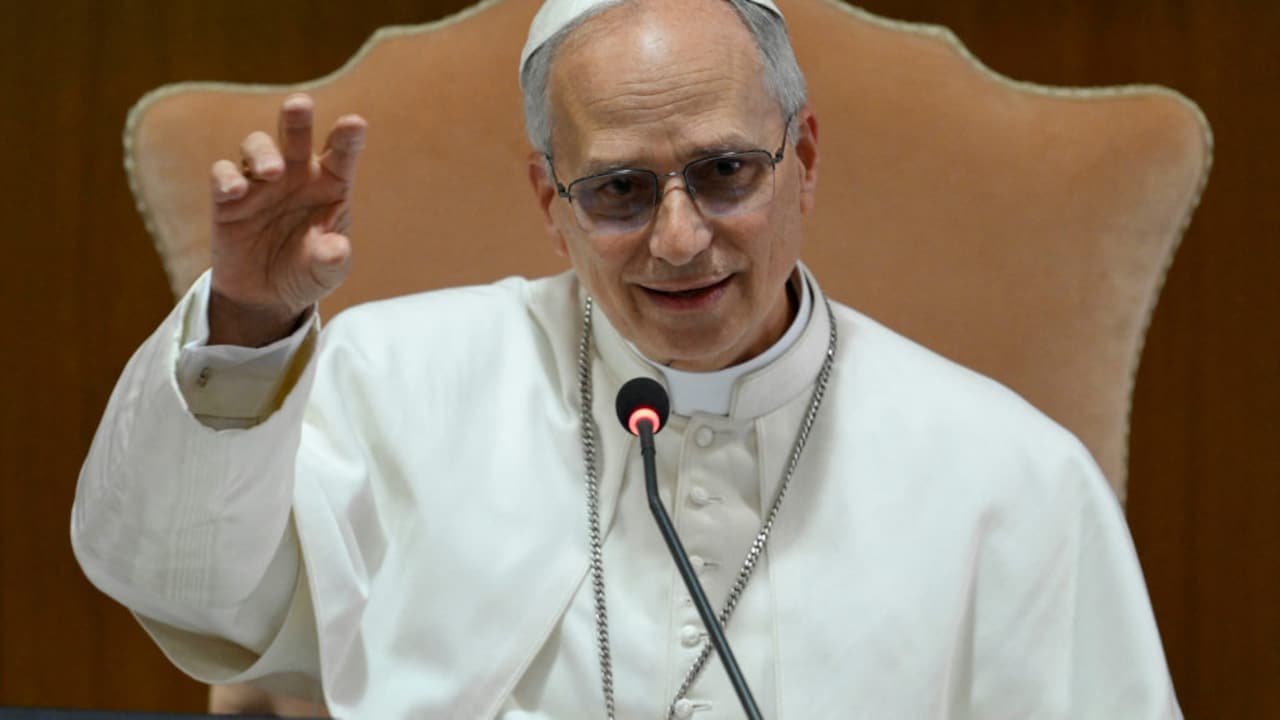
Far away from the whistle of shrapnel, inside the austere chambers of the Vatican, an old man in white robes has been looking at maps for months. Pope Francis, whose lungs bear the weight of eighty-seven years and whose office has traditionally functioned as the conscience of a fractured world, recently broke through the diplomatic fog with a blunt challenge. In an interview with Swiss broadcaster RSI, recorded ahead of publication, he used a phrase that sent tremors through capitals from Kyiv to Brussels: the courage of the white flag.
To negotiate, he argued, is not to surrender. It is a recognition of reality. It is the courage to stop the bleeding before the patient ceases to exist entirely.
The reaction was swift and fierce. Diplomats reached for their standard lexicon of deterrence and resolve. Spokespersons reminded the world that aggression cannot be rewarded. In Kyiv, leaders pointed to the smoking ruins of apartment blocks and the unmarked graves stretching across meadows, asking how one negotiates with a shadow that wants your total erasure. These are not unreasonable questions. When an invader stands in your doorway with a drawn blade, the suggestion to talk over tea feels less like wisdom and more like an invitation to suicide.
Yet beneath the immediate storm of political outrage lies a more grueling truth, one that neither side wants to whisper in the daylight.
Wars do not usually end because one side achieves absolute moral purity or total military annihilation. They end when the math of destruction finally outweighs the myth of victory. They end when the cost of tomorrow's advance becomes too heavy for the living to bear.
Consider what happens inside a single brigade holding a treeline under artillery bombardment. The soldiers are not thinking about sovereign borders or geopolitical spheres of influence in those moments. They are thinking about ammunition counts, tourniquets, and whether the next shell will land on the dugout. They are living in a compressed universe of pain and exhaustion. When a conflict drags past its second year into its third, the initial wave of volunteers is long gone. In their place stand mobilized civilians, exhausted professionals, and teenagers who learned to load rifles before they learned to vote.
The tragedy of modern industrialized combat is that it consumes its own justifications. Every month of fighting creates new grievances, deeper hatreds, and more ruined infrastructure, making the eventual peace table harder to reach. Each retaliatory strike hardens the resolve of the survivor who lost a child, a spouse, a home. Hatred becomes self-sustaining. It requires no fuel other than the memory of yesterday's funeral.
When Pope Francis spoke of the white flag, he was appealing to a concept that modern political culture has nearly discarded: prudence. In classical philosophy, prudence is not cowardice; it is the practical wisdom to discern what is achievable and what is madness. It is the courage to look at a ledger of mounting corpses and say, Enough.
History is littered with tables where enemies sat down only after millions more had perished for no additional gain. The First World War ground on for years after every general knew it was a stalemate, simply because no leader possessed the political courage to admit that the objective was not worth the price. Millions of young men died in the mud of the Somme and Verdun for patches of ground smaller than a city park, all because compromise was treated as a dirty word.
We are flirting with that same ghost today.
The argument against negotiation rests on an absolute moral foundation: right is right, and wrong must be defeated. No nation should be forced to cede its territory to an invader. That principle is the bedrock of international law. If borders can be redrawn by artillery, then no small nation is safe anywhere on earth.
But abstract principles, when unmoored from human reality, become idols that demand human sacrifice.
What happens if the war continues for another five years? What does victory look like when the demographic spine of a nation has been broken, its youth buried beneath the sod, its economy tethered to foreign aid indefinitely, and its soil saturated with unexploded ordnance and heavy metals? Even if every lost kilometer is eventually reclaimed, what is the value of a garden where no one is left alive to plant the seeds?
This is the tension that the Vatican's intervention exposed. It dragged the conversation out of the sterile rooms of strategic analysis and dropped it squarely into the mud of human cost.
Negotiation is messy. It is humiliating. It requires sitting across the table from someone whose hands are stained with the blood of your friends. It means accepting compromises that feel like injustice. But the alternative is the slow, grinding extinction of a generation.
In every protracted conflict, there comes a moment when the continuation of war ceases to be an act of defense and becomes an act of collective suicide. Recognizing that moment does not require cowardice. It requires a radical, terrifying clarity.
The frost on the eastern plains will eventually melt, giving way to spring mud, then dust, then another cycle of seasons. The trees shattered by shrapnel will either heal or rot. The only question left for the living is how many more winters must pass before the diplomats find the courage that the soldiers on the ground already possess: the courage to admit that no victory is worth an endless funeral.