The rain in Belgrade had that particular weight to it, the kind that smells of wet asphalt and ancient brick, driving every sensible soul indoors. You pull your collar high. You duck under a weathered canvas awning, hunting for shelter, for warmth, for the simple salvation of a hot cup of roasted beans.
You push open a heavy wooden door.
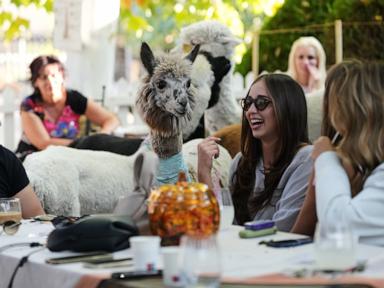
The bell above your head gives a dry, metallic chime. And then, before the aroma of cardamom and espresso hits your senses, something entirely impossible happens. A creature with eyelashes like a silent-film star and a neck like a question mark turns its head from across the room and stares directly into your soul.
It is chewing. Methodically. It holds a tuft of golden fleece that catches the dim cafe light, and for one fraction of a second, your urban reality shatters completely.
Welcome to Serbia. Not the Serbia of bustling highway interchanges or concrete socialist brutalism, but a secret pocket where time slows down to the cadence of a cud-chewing mammal from the high Andes.
Consider what happens next.
You do not order your macchiato at a sterile counter while staring impatiently at a glowing smartphone screen. Instead, you hesitate. You look down, and there is a soft, padded hoof standing three inches from your muddy sneakers. You look up, and the barista is smiling, unfazed, wiping down a porcelain saucer while an alpaca named Barnaby investigates the fringe of your scarf.
Travel today is mostly an exercise in optimization. We download apps. We curate itineraries down to the micro-second. We collect Instagram pins like digital scalps, rushing from one monument to the next because some algorithm told us we must. We are efficient. We are exhausted. We are profoundly lonely.
And then we stumble into a cafe in Serbia where the primary operating metric is the softness of a South American camelid’s wool.
Let us be honest about why this exists. Nobody strictly needs an alpaca in their coffee shop. Economically speaking, livestock indoors represents a logistical nightmare of health regulations, specialized flooring, and specialized hay storage. Yet, entrepreneurs across Eastern Europe are leaning hard into the surreal, the tactile, and the wildly unexpected. Why? Because the modern human mind is fraying at the edges. We are drowning in virtual inputs. We crave weight. We crave warmth. We crave anything that forces us to look away from our glowing rectangles and touch something that is stubbornly, irreducibly alive.
Picture a hypothetical traveler named Mark. Mark is thirty-two, works remotely as a software architect for a firm in Berlin, and has spent the last six months staring at Jira boards until his eyes feel like dry sandpaper. He arrives in Belgrade on a Tuesday, carrying a backpack full of anxiety and an inbox overflowing with unread threads. He wanders into this specific cafe because it started pouring rain.
He sits at a corner table, orders a Turkish coffee, and tries to open his laptop.
Within ninety seconds, a gentle weight rests against his knee. It is not a notification. It is an alpaca leaning its chest against his chair because it likes the metallic zipper on his jacket. Mark tries to type. The alpaca lets out a low, humming vibration—a sound somewhere between a purr and a distant cello string.
Mark puts the laptop away.
That is the entire point. That is the invisible design of the space. It isn't a gimmick; it is an intervention.
Biologists and psychologists have spent decades quantifying what pet owners have known since the dawn of domestication. The presence of animals lowers cortisol. It regulates heart rates. But there is something distinct about an alpaca. They lack the frantic, needy desperation of a high-strung dog. They lack the aloof contempt of a domestic cat. Alpacas possess an ancient, serene indifference that is deeply calming. They look at you as if they possess ancient secrets of the universe, and honestly, given the way they carry themselves, you are inclined to believe them.
When you sit across from an alpaca while nursing a cortado, your internal monologue changes. The frantic drumbeat of productivity slows down. You start noticing the way the steam curls off the rim of your mug. You notice the deep, liquid brown of the animal's eyes, fringed with lashes that women pay hundreds of dollars to approximate.
The locals treat it with a charming, matter-of-fact nonchalance. A grandmother in a knitted sweater sits at the next table, reading a paperback thriller while an alpaca rests its chin on her shoulder, occasionally blowing warm, grassy breath onto her hair. Nobody makes a fuss. In Serbia, where history has often been loud, violent, and painfully complicated, finding a pocket of absolute, absurd tranquility feels like a quiet act of rebellion.
We spend so much of our lives building walls between nature and commerce. We pave over the earth, seal ourselves in climate-controlled glass towers, and wonder why our nerves feel permanently fried. This cafe tears those walls down with a gentle, woolly bulldozer.
You might wonder about the logistics. Do they smell? Surprisingly, no. Alpacas are remarkably clean animals that use communal dung piles and lack the pungent lanolin oils found in sheep. Are they aggressive? Rarely, though they will spit if severely provoked—a fate usually reserved for visitors who try to feed them inappropriate snacks or pull too hard on their fleece. The staff keep strict boundaries, watching the room with the practiced eye of zookeepers combined with the hospitality of master baristas.
The coffee, by the way, is exceptional. This is not a novelty act where the beverage is an afterthought. Serbia has a deep, rich coffee culture, inherited from Ottoman traditions and refined through modern European espresso artistry. You get dark, velvety brews served in traditional copper cezves alongside small glasses of cold water and sugar cubes, or silky flat whites crafted with precision milk texturing. Combining that level of artisanal craft with a soft-footed mammal hovering near your elbow creates a sensory juxtaposition that sticks in your memory for years.
Think about the trips you took five years ago. What do you actually remember? You probably don't remember the exact hotel lobby. You likely forgot the third-best museum you rushed through because it was on the map.
You remember the moments where the script broke. You remember the unexpected detour, the rainstorm that forced you off the beaten path, the strange local custom that made you laugh out loud in public.
That is what this place offers. It is a glitch in the simulation of modern tourism.
As the afternoon light begins to slant across the cobblestones outside, the rain finally stops. The streets glisten like spilled ink. Inside, the cafe hums with a low, contented murmur. The alpacas begin to settle down for their evening rest, folding their slender legs beneath their bodies like soft, fleece-covered loaves of bread.
You finish the last drop of your coffee. The bitterness is gone, replaced by a lingering warmth of cardamom and roasted chicory. You zip up your jacket. You step back out onto the street, ready to face the city, the noise, the emails, the endless march of the modern world.
Only now, your shoulders are an inch lower. Your stride is a little easier. And somewhere deep in your mind, you can still feel the ghost of a soft, inquiring nudge against your knee, reminding you that the world is still full of beautiful, inexplicable things waiting just around the corner.