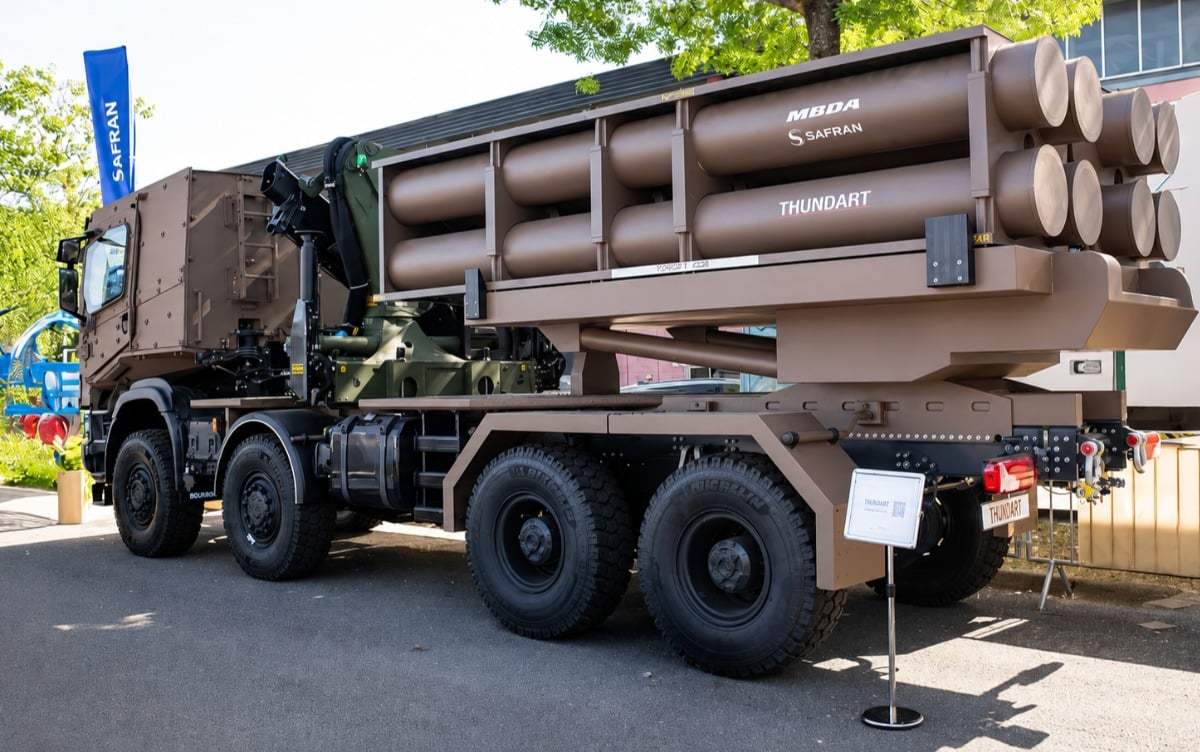
The Fantasy of the Game-Changing Missile
defence analysts and mainstream commentators are obsessed with the idea of a single long-range weapon system turning the tide in Eastern Europe. The latest focal point is France’s developing deep-strike capability, specifically long-range cruise missiles like the planned successor to the SCALP-EG/Storm Shadow family, or hypersonic developments meant to penetrate dense air defences. The media narrative is predictable: integrate a high-precision French deep-strike missile, hand it over to Ukrainian forces, and watch the logistics hubs of the opponent crumble, forcing a strategic retreat.
It is a comfortable narrative. It is also fundamentally flawed.
I have spent decades watching defence procurements, military logistics, and weapon integration programs up close. Every few years, Western media singles out a new system as a silver bullet. We saw it with heavy armor, then with HIMARS, then with Western tactical fighters. While these systems undoubtedly increase operational strain on enemy forces, they do not fundamentally alter the tactical geometry of a peer-to-peer war of attrition.
The idea that France’s next-generation deep-strike weapon will be a decisive factor in Ukraine misunderstands three basic realities of modern high-intensity warfare: industrial capacity, target density, and integrated air defence networks.
Escalation Superiority and the Math of Attrition
To understand why a foreign deep-strike missile will not reshape the front line, you have to look at the cold, unyielding mathematics of war.
A high-end, stealthy, long-range cruise missile is an engineering marvel. It uses sophisticated terrain contour matching, inertial navigation shielded by anti-jamming GPS, and thermal imaging terminal seekers to hit targets with meter-level precision. But engineering marvels come at a specific cost: time and money.
The Production Bottleneck
Western defence industrial bases are structured around peacetime efficiency, not wartime consumption rates.
- Unit Cost: Advanced deep-strike missiles typically cost anywhere from $1.5 million to $3 million per unit.
- Manufacturing Lead Times: Producing a complex cruise missile takes months, requiring delicate supply chains for microelectronics, solid-fuel rocket boosters, and specialized low-observable coatings.
- Inventory Depth: Western arsenals are intentionally lean. No European nation possesses thousands of deep-strike missiles sitting in reserve waiting for export.
When a nation delivers 20 or 50 long-range missiles, media outlets treat it as a massive strategic shift. In a full-scale artillery and drone war where thousands of munitions are expended daily across a 1,000-kilometer front, dozens of missiles—no matter how precise—are a operational luxury, not a operational foundation.
[Image of hydrogen fuel cell]
The Air Defence Problem
Ukraine operates in one of the most heavily contested airspace environments in modern history. Russia’s layered air defence network—combining long-range systems like the S-400 with point-defence assets like the Pantsir-S1 and Buk-M3—is designed specifically to counter Western standoff weapons.
While weapons like SCALP-EG or France's future long-range strike weapons employ stealth geometries to reduce their radar cross-section, they are not invisible. Layered integrated air defence systems (IADS) operate using networked radars across multiple spectrums. An incoming missile might evade early-warning radars operating on C-band, only to be picked up by low-frequency VHF surveillance radars or thermal acquisition tracking systems.
To punch through these defences, militaries must deploy complex strike packages:
- Decoys: Flying alongside real missiles to saturate radar channels.
- SEAD/DEAD: Suppressing or destroying enemy air defences using anti-radiation missiles.
- Electronic Warfare: Jamming command links and tracking systems.
Without an integrated, multi-domain air campaign executed at scale, deep-strike missiles are forced to fly solo or in small clusters. When fired in isolation, interception rates rise, further eroding the return on investment for an already scarce munition.
Dismantling the "Logistics Collapse" Premise
The core argument for long-range strike weapons is simple: strike the enemy’s ammunition dumps, command posts, and bridges far behind the line of contact, and their front line will starve.
This premise assumes the enemy is static and incapable of adaptation.
Early in the conflict, the introduction of precision satellite-guided rockets disrupted concentrated supply hubs near the front. The response, however, was predictable: adaptation. The opponent dispersed ammunition stockpiles into smaller, fortified nodes, shifted major logistics railheads further back beyond the reach of standard artillery, and heavily fortified critical transit routes.
+-------------------------------------------------------------------+
|                        THE LOGISTICS PARADOX                      |
+-------------------------------------------------------------------+
| High-Value Strike Target (Fixed)  ---> Enemy Dispersal & Hardening|
| Scarce $2M Stealth Missile         ---> Depleted Western Stockpile |
| Result: Tactical Disruption, NOT Strategic Collapse               |
+-------------------------------------------------------------------+
Imagine a scenario where Ukraine receives 100 prototype or next-generation French deep-strike weapons. What actually happens when they are launched?
- Target Selection: Intelligence, surveillance, and reconnaissance (ISR) platforms identify high-value targets: a hardened command bunker, a major bridge, and a troop concentration area.
- Execution: Missiles are launched. Sixty percent reach their target; forty percent are intercepted or jammed by dense electronic warfare environments.
- Damage Assessment: Three command posts are destroyed, and a key bridge suffers structural damage.
- Enemy Adaptation: Command structures shift to secondary mobile communications posts. Logistics are rerouted through pontoon crossings or alternative rail networks within 48 to 72 hours.
The strikes cause real damage. They inflict severe localized pain. But they do not stop the relentless, grinding infantry and artillery pushes along the main axis of advance. A missile strike destroys a single point in space; a war of attrition is won by sustaining volume across time.
Platform Limitations and the Integration Reality
There is another operational barrier that military analysts rarely highlight: launch platforms.
France’s current and future deep-strike assets—such as air-launched cruise missiles or hypersonic concepts—are engineered primarily for integration with Western aircraft platforms like the Rafale or Typhoon.
Ukraine's primary tactical aviation fleet consists of Soviet-era airframes, heavily modified with custom pylons and improvised avionics interfaces to fire Western munitions. While engineers have done impressive work rigging Western missiles onto MiG-29s and Su-24s, these improvisations come with severe tactical costs:
- No Dynamic In-Flight Targeting: Improvised integrations mean targeting data must often be programmed into the missile on the ground prior to takeoff. Pilots cannot alter the target coordinates in real-time based on shifting battlefield intelligence.
- Flight Profile Constraints: To maximize missile range, aircraft must launch at high altitudes and high speeds. In a heavily contested radar environment, flying high makes the launch platform vulnerable to long-range surface-to-air missiles long before it reaches its launch basket.
- Maintenance and Airframe Stress: Older airframes subject to heavy payloads and high-stress maneuvers face rapid mechanical fatigue, restricting operational availability.
Handing over a high-tech missile without the organic, networked architecture designed to support it—including real-time satellite data feeds, specialized EW aircraft, and native launch platforms—is like putting a high-performance racing engine inside a commuter sedan. It will run, but you won't get the performance promised on the spec sheet.
What Actually Wins Attritional Wars
Focusing on exotic, long-range boutique weapons diverts focus from the unglamorous, high-volume hardware that actually decides major continental conflicts.
If Western nations genuinely want to change the strategic dynamics on the ground, the priority should not be sending limited quantities of high-cost deep-strike missiles. It should be scaling up the basic elements of industrial military output:
- Mass Artillery Production: Standardized 155mm shells produced by the millions, not the thousands.
- Layered Air Defence: Short-range, gun-based air defence systems to counter cheap strike drones, saving high-end missiles for incoming threats.
- Electronic Warfare Equipment: Tactical jammers and spectrum dominance tools distributed at the squad and platoon level.
- Heavy Combat Engineering Platforms: Mine-clearing vehicles, armored bridging units, and mass fortifications.
Boutique strike weapons offer compelling headlines. They make for striking video footage when they hit a target. But headlines do not hold trenches, and missile strikes do not secure territory without massed, sustained ground force capacity behind them.
Relying on France's future deep-strike arsenal—or any single weapon system—to alter the fundamental outcome in Ukraine is a distraction from the uncomfortable reality of modern industrial warfare. High-tech precision is a force multiplier, but you must first have the mass on the ground for that multiplication to matter.

/https://i.s3.glbimg.com/v1/AUTH_e84042ef78cb4708aeebdf1c68c6cbd6/internal_photos/bs/2026/g/B/3vpkvHQKizRKAfzDxjXA/vini-jr-antes-e-depois.jpg)