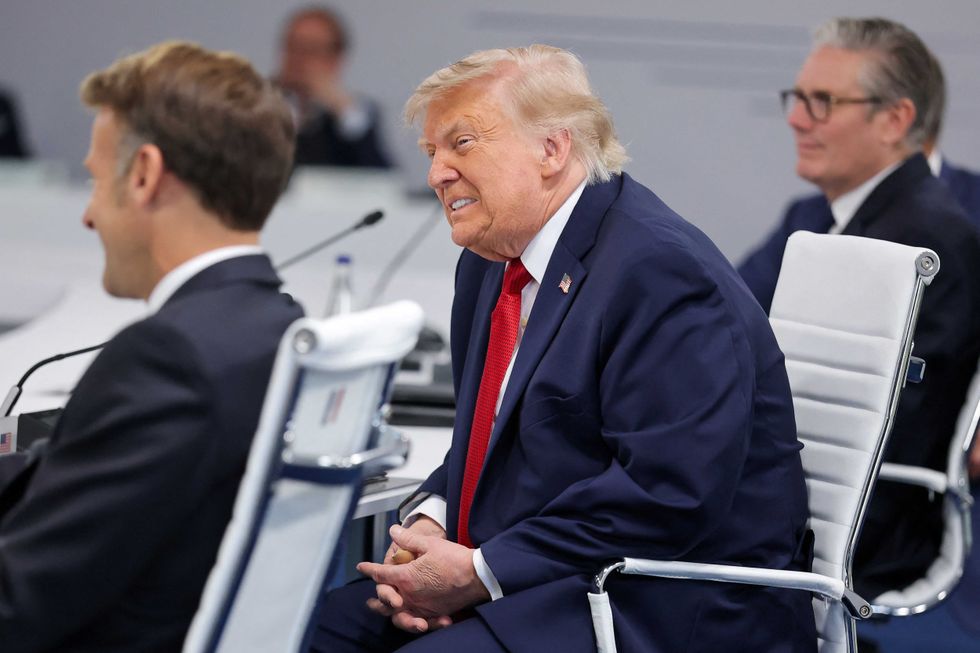
The traditional global order is cracking right before our eyes, and the recent G7 summit in Evian-les-Bains, France, put the fracture on full display. For decades, Western nations looked to Washington as the steady, predictable anchor of global stability. That era is over. What we saw in France wasn't just a routine disagreement over trade or defense spending; it was a deeper, more permanent shift. Longtime allies are realizing they can no longer rely on the United States, regardless of who occupies the White House.
This isn't an overnight development, but the recent diplomatic friction has accelerated things. When you watch Canadian Prime Minister Mark Carney snapping at Donald Trump during a working lunch over electric vehicle tariffs—an exchange caught on a hot mic where Carney visibly irritated said, "I thought you'd actually like it"—you see the raw frustration boiling over. The polite veneer of diplomacy is gone. The underlying message from America’s closest partners is clear: dealing with Washington has become an exhausting exercise in unpredictability.
The Cost of Unilateral Choices
Allies aren't just annoyed by personal styles; they're reacting to major policy decisions made without them. A prime example is the recent conflict involving Iran and Israel, launched with U.S. involvement but without consulting key European partners. France, Britain, and Germany were left to manage the immediate fallout, including spiking energy prices and massive security anxieties, completely in the dark.
When Washington acts entirely on its own and expects everyone else to clean up the mess, trust erodes fast. Even with Vice President JD Vance announcing a digitally signed interim agreement to reopen the Strait of Hormuz, the skepticism from the international community remains incredibly high. Allies are tired of being treated like regional managers who only get brought in after the corporate headquarters makes a disastrous decision. French President Emmanuel Macron and British Prime Minister Keir Starmer have had to spend the summit pushing for basic transparency on a deal that directly impacts their own economic survival.
A Growing Reliance on Domestic Priorities
The shift in how America views its global role isn't temporary. It represents a deeper structural change in American politics. The current foreign policy strategy focuses heavily on immediate transactional gains rather than long-term alliances. We see this in the ongoing friction over the U.S.-Mexico-Canada Agreement (USMCA) review, where the U.S. has threatened non-renewal unless it gets exactly what it wants.
For a country like Canada, where 70% of exports go south of the border, this isn't just politics—it's an existential economic threat. Middle powers are learning the hard way that historical loyalty doesn't guarantee security or fair treatment. The focus has shifted inward toward safeguarding domestic borders and targeting international drug trafficking with unilateral military actions, leaving traditional geopolitical commitments out in the cold.
Europe Steps Into the Leadership Vacuum
Nowhere is this loss of faith more obvious than in Ukraine. As the U.S. scaled back its direct financial and military aid over the past year, Europe had to step up. France and its continental neighbors are now the primary providers of support to Kyiv.
During the summit, European leaders had to actively lobby the U.S. delegation to maintain pressure on Russia. When the American response to a brutal continental war is to downplay its global impact and call the situation "ridiculous," it forces European capitals to realize they are completely on their own. They can no longer outsource their security to Washington. This realization is driving a quiet but frantic push for European strategic autonomy, particularly in defense production and energy security.
The Pivot to Alternative Coalitions
Because Washington has become so unpredictable, traditional allies are quietly building alternative diplomatic networks that bypass the U.S. entirely. We see this in the way France and the U.K. are organizing an international maritime mission to secure the Strait of Hormuz, coordinating directly with regional powers like Egypt, Qatar, and the UAE to build alternative supply routes.
They're also changing how they handle economic competition with China. Instead of blindly following Washington’s aggressive tariff strategies, countries are trying to protect their own industries while keeping lines of communication open. They want to avoid getting dragged into a wider economic conflict they didn't start and cannot control.
If you are a business leader, policy analyst, or just someone trying to understand where the global economy is heading, you need to adapt to this new reality immediately. Stop assuming that old treaties and historical friendships will dictate trade flows or security alliances.
Start diversifyng your international supply chains away from single-point dependencies, particularly those heavily reliant on shifting U.S. trade policies. Watch how mid-tier powers like Canada, France, and Germany form smaller, more flexible coalitions to protect their interests. The smart play right now isn't waiting for Washington to stabilize; it's learning how to operate in a world where America is just another player on the board, rather than the one running the game.