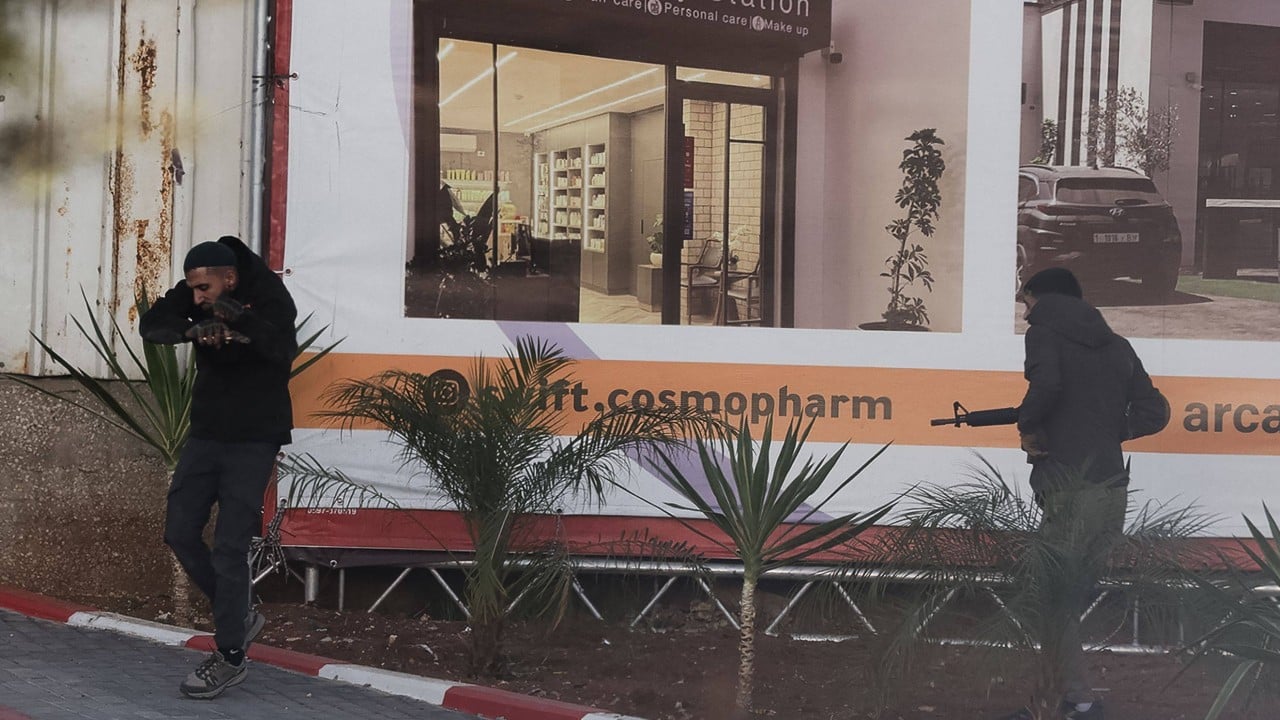
Locking down the West Bank after a shooting feels decisive. It looks tough on television. It buys a prime minister twenty-four hours of political breathing room.
It also rarely stops the next attack.
When an assault on Israelis ends in a gun battle and Benjamin Netanyahu orders a closure, the standard headline coverage writes itself. A leader responds to violence. Security forces tighten movement. Checkpoints go up, flying patrols multiply, permits freeze, and the public gets a visible display of state power. That is the lazy consensus: closure equals security, and the only real debate is whether the clampdown went far enough.
That framing misses the most important variable in the room. A closure is a blunt instrument applied to a hyper-local, porous, and deeply grievance-driven environment. Calling it a security cure mistakes motion for control.
The Wrong Question Everyone Keeps Asking
Most coverage after a West Bank shooting asks a narrow, reactive question: Did the closure catch the assailants and deter copycats?
Ask that question and you get trapped in a cycle of short-term tactical theater. A better question—and the one policymakers and analysts routinely dodge—is what does collective friction actually change on the ground over the next ninety days?
A closure alters daily life for hundreds of thousands of people who had nothing to do with the gunfire. Commutes stretch from twenty minutes to four hours. Day laborers lose wages. Ambulances wait. Shopkeepers sit in empty stalls. When an entire population experiences sudden economic shock and physical restriction right after a violent incident, anger does not evaporate. It concentrates.
In counterinsurgency and conflict analysis—from classic works on urban counter-guerrilla campaigns by figures like David Galula and Robert Thompson to modern assessments of Israeli-Palestinian security coordination—one principle shows up again and again: tactical denial without a political or economic off-ramp often manufactures the very recruits security forces spend the next six months hunting.
I have watched conflict analysts and political commentators treat every checkpoint surge as proof of momentum, even as the underlying friction rises. They count arrests and roadblocks the way corporate executives count busywork when a product strategy is failing. High activity is not high effectiveness. Sometimes it is just noise with sirens attached.
"People Also Ask" — Dismantled
Does a West Bank closure actually prevent future attacks?
Not reliably, and often not for long. A tight lockdown can disrupt immediate escape routes, block certain transit corridors, and slow down a cell that relies on routine movement. Yet lone actors and small, decentralized cells rarely need open highways to strike. Many incidents involve local actors, improvised weapons, or movement along secondary routes and agricultural tracks that rigid closures cannot seal completely without turning the entire territory into a permanent siege.
If closures worked as a standalone solution, you would see a clean curve: shooting happens, closure goes on, quiet follows. Instead, spikes often come in clusters—a raid or attack triggers restrictions, restrictions harden tempers, friction sparks another clash, and the cycle repeats.
Why do governments keep ordering closures if they have clear limits?
Because doing nothing looks like weakness, and nuanced policy takes months to show results. A closure is fast, visible, and reversible. Politically, it signals resolve to an anxious domestic audience right after Israelis are killed or wounded in a gun battle. Administratively, it gives commanders immediate leverage to search vehicles, verify identities, and press local actors.
Calling that a master plan overstates it. Often, it is crisis management dressed up as strategy.
Is the alternative just opening everything up?
No—and pretending the choice is between total lockdown and naive openness is lazy binary thinking. Security forces have a real duty to protect lives, pursue shooters, and dismantle active threats. Pretending threats do not exist is malpractice.
The real divide is between indiscriminate collective friction and precision containment paired with de-escalation. One punishes everyone and hopes fear holds the line. The other targets actual networks while minimizing collateral damage that feeds the next wave.
Precision vs. Blanket Friction
To see why blanket closures carry such steep hidden costs, look at how security measures interact with local incentives.
| Approach | Primary Mechanism | Short-Term Effect | Medium-Term Risk |
|---|---|---|---|
| Blanket Closure | Broad movement restrictions, checkpoint surges, permit freezes | High visibility; temporary disruption to routine travel and some plots | Economic strain, broad resentment, weakened local cooperation |
| Targeted Interdiction | Intelligence-led raids, specific arrests, focused route control | Disrupts active operatives with lower daily toll on civilians | Requires sharp intelligence and restraint to avoid escalation |
| Economic & Civic Relief | Predictable permit rules, commercial corridors, de-escalatory channels | Lowers everyday desperation and gives local leaders leverage | Can be criticized politically as "soft" right after an attack |
Notice what happens when a government leans almost exclusively on the top row. Every routine grievance gets fused to the central conflict. A nurse delayed at a junction or a truck driver watching produce rot does not separate high politics from daily humiliation.
Imagine a scenario where a small armed group carries out an attack near a major junction, and within hours authorities seal off surrounding towns for two weeks. The first three days bring heavy searches and intense media coverage. By day ten, local businesses are hemorrhaging cash, families cannot reach hospitals or workplaces easily, and moderate community figures who argue against armed escalation lose credibility because their restraint bought zero relief. Even if no second attack happens during day ten, the pressure cooker is hotter than it was on day one.
That is the trap of reactionary closures. They treat symptoms loudly while fertilizing the root causes quietly.
The Security Coordination Paradox
Here is the part that makes the ground reality even trickier: security operations in the West Bank do not happen in a vacuum. They sit atop a fragile web of intelligence sharing, local policing, and administrative coordination.
When broad closures squeeze the Palestinian economy and humiliate local institutions, the space for quiet cooperation shrinks. Security officials know this—many veteran practitioners across defense and diplomatic circles have pointed out for years that tactical pressure and institutional stability pull in opposite directions if pushed too far.
Yet in the heat of an immediate crisis, tactical impulse usually wins. Political pressure demands a hammer. A hammer is easy to see. Quiet diplomacy and calibrated policing are harder to explain on a nightly news broadcast.
Where This Contrarian View Can Go Wrong
Honesty requires naming the blind spots in pushing back against closures.
First, intelligence is never complete. When a gun battle breaks out and attackers might be on the move or linked to a wider cell, waiting for surgical certainty can cost lives. Sometimes rapid containment buys crucial hours before a second strike happens.
Second, deterrence is notoriously hard to measure. You rarely get a neat ledger showing the attacks that didn't happen because a checkpoint was manned or a suspect hesitated. Critics who dismiss closures entirely can underestimate how chaotic an uncontained flare-up can become.
Third, political constraints are real. Governments operate under intense public trauma after attacks on their citizens. A leader who ignores immediate public demand for visible protection risks losing authority altogether, which can usher in even harsher or less disciplined responses.
Admitting those limits does not overturn the main point. It sharpens it. A policy can be necessary in a narrow tactical window and still be counterproductive as a default habit.
What Actually Works Better
If you want fewer shootings and less recurring chaos rather than just dramatic headlines, stop treating closures as a cure-all and treat them as a brief, tightly bounded emergency tool.
- Set hard expiration clocks on broad restrictions. Open-ended closures drift into routine punishment. Any wide movement restriction should carry strict review points and narrow geographic scope tied directly to active operational leads.
- Protect economic lifelines and essential transit. Keep commercial arteries, medical access, and basic livelihood channels moving as fast as security allows. Desperation is fuel; stability—even imperfect stability—is a brake.
- Pair defense with clear political horizons. Security measures without a credible political path only manage decline. You cannot police your way out of an unresolved conflict forever without paying an ever-higher price.
- Measure calm over months, not hours. Judge any response by whether violence is lower and institutional stability is stronger three months later—not by how tough the press release sounded that night.
Closures make leaders look busy. Real strategy makes people safer.



