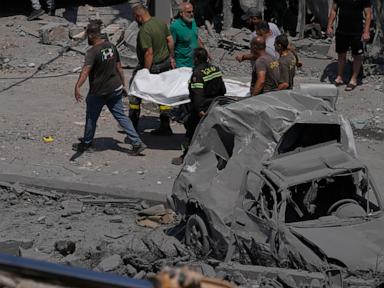
Dawn in Beirut does not arrive with the gentle painting of light across an eastern sky. It arrives with a concussive thud.
The air tastes of salt and sulfur, a bitter marriage of the Mediterranean breeze and the lingering debris of the night before. Eleven lives ended here before the sun had even managed to clear the jagged ridges of the mountains. Eleven stories, cut short by steel falling from the clouds. To the wire services thousands of miles away, this is a statistic. A line item on a ticker tape of perpetual grief. But to stand in the quiet rubble of a neighborhood where a kitchen wall now opens directly into an empty street is to understand that statistics are just human beings stripped of their names.
Maps make the Middle East look like a chessboard. Neatly drawn lines. Color-coded territories. Strategic choke points. But chess is played by people sitting quietly in air-conditioned rooms, moving carved pieces of wood across a felt surface. Down here, the wood is flesh. The board is someone's living room rug, covered in plaster dust and shattered glass.
Consider the ripple effect of a single explosion. It is never just the impact. It is the sudden silence that follows the smoke clearing. It is the frantic dialing of a phone number that rings into an empty void because the tower across town has just been turned to ash.
Hundreds of miles away, across the flat, sun-baked expanse of the Gulf, a different kind of tension hangs thick in the air. In Doha, diplomats pace behind tinted glass, checking watches, waiting for words that refuse to come. Reports surface through quiet diplomatic channels that pilots are held, their fates suspended in the delicate, precarious balance of regional leverage. Qatar plays its familiar role as the indispensable mediator, the bridge between worlds that refuse to speak directly to one another. Yet even bridges tremble when the weight upon them becomes too great.
Imagine sitting in a high-stakes negotiation room where the air conditioning hums softly, masking the sound of a region unraveling. The men and women across the mahogany table do not raise their voices. They do not need to. They speak in the cool, measured cadence of ultimatums and demands. They talk about airspace, sovereignty, and detained aviators as if these were abstract variables in a calculus equation.
Yet, somewhere out on a lonely stretch of tarmac under the blinding desert sun, a parked aircraft waits. Inside its locked cockpit, dials remain dark. The pilots are absent, existing for now only as bargaining chips in a game they never asked to play. Their families, thousands of miles away, stare at television screens, watching the same silent loops of footage, gripping the edges of their kitchen counters until their knuckles turn white.
This is the hidden cost of geopolitics. It is measured in the agonizing stretch between heartbeats.
We talk about escalation as if it were a weather pattern. A storm front moving in from the north. A seasonal shift. But storms have no malice. Wars are built by human choices, one calculated risk stacked haphazardly on top of another until the tower becomes too top-heavy to stand.
When intelligence briefings speak of targeted strikes and retaliatory postures, they sanitize the chaos. They talk about neutralizing assets. They do not talk about the baker who woke up at four in the morning to fire his ovens, only to have the roof cave in before his first loaf of bread could rise. They do not talk about the young co-pilot who kissed his daughter goodbye before a routine transit flight, believing he would be home in time for dinner.
Uncertainty is a corrosive thing. It eats away at the edges of daily life until routine feels like an absurd performance. In Beirut, people walk past bombed-out facades with a practiced, resigned indifference, their eyes fixed firmly on the pavement ahead. To look up is to invite despair. To look down is to pretend that life still follows a predictable path.
That is the profound tragedy of living in the crosshairs. You learn to measure time not by hours or minutes, but by the intervals between sirens.
Meanwhile, the diplomatic machinery grinds forward. Statements are drafted, polished, and released to the press. Condemnations are issued with standard, rehearsed severity. Calls for restraint echo through international halls, bouncing off marble walls and vanishing into the ether. Words, it turns out, are remarkably weightless when matched against the sheer kinetic force of a missile.
Yet, diplomacy remains the only thin wire keeping the entire structure from plunging into the abyss.
When mediators step into the breach, they carry the impossible burden of translating rage into reason. They must convince adversaries who view compromise as weakness that survival requires stepping back from the ledge. It is delicate, exhausting work. It happens in whispers behind closed doors, away from the cameras, driven by the desperate hope that someone, somewhere, will blink first.
The pilots in Qatar, the grieving families in Lebanon, the strategists in regional capitals, and the diplomats caught in the middle are all characters in the same sprawling, tragic drama. None of them chose this script. They are actors on a stage that has been set by decades of history, grievance, and ambition.
The sun begins to dip below the horizon in Beirut, casting long, bruised shadows across the broken concrete. The evening air brings no relief, only the quiet dread of what the dark hours might conceal. Somewhere across the sea, a phone rings once, twice, and goes unanswered. The silence that follows is deafening.