The air on the 45th floor of a Central District skyscraper in Hong Kong has a specific, expensive silence. Outside the floor-to-ceiling glass, Victoria Harbour looks less like an ocean and more like a liquid highway, crowded with container ships drifting toward the South China Sea. Inside, the only sound is the rhythmic, aggressive clicking of mechanical keyboards.
David sits at the end of a trading desk that stretches forty feet across the room. He has grey hairs at his temples that weren't there when the first yuan-denominated bonds launched here. In those early days, around 2010, the entire game was about permission. It was about scratching and clawing just to get a foot through a door that had been locked for decades.
Back then, if a global pension fund wanted to hold Chinese currency or invest in mainland assets, it felt like trying to breathe through a straw. You celebrated the mere existence of a channel. You didn't care if the transaction took days or if the fees were high. You just wanted access.
But access is yesterday's story.
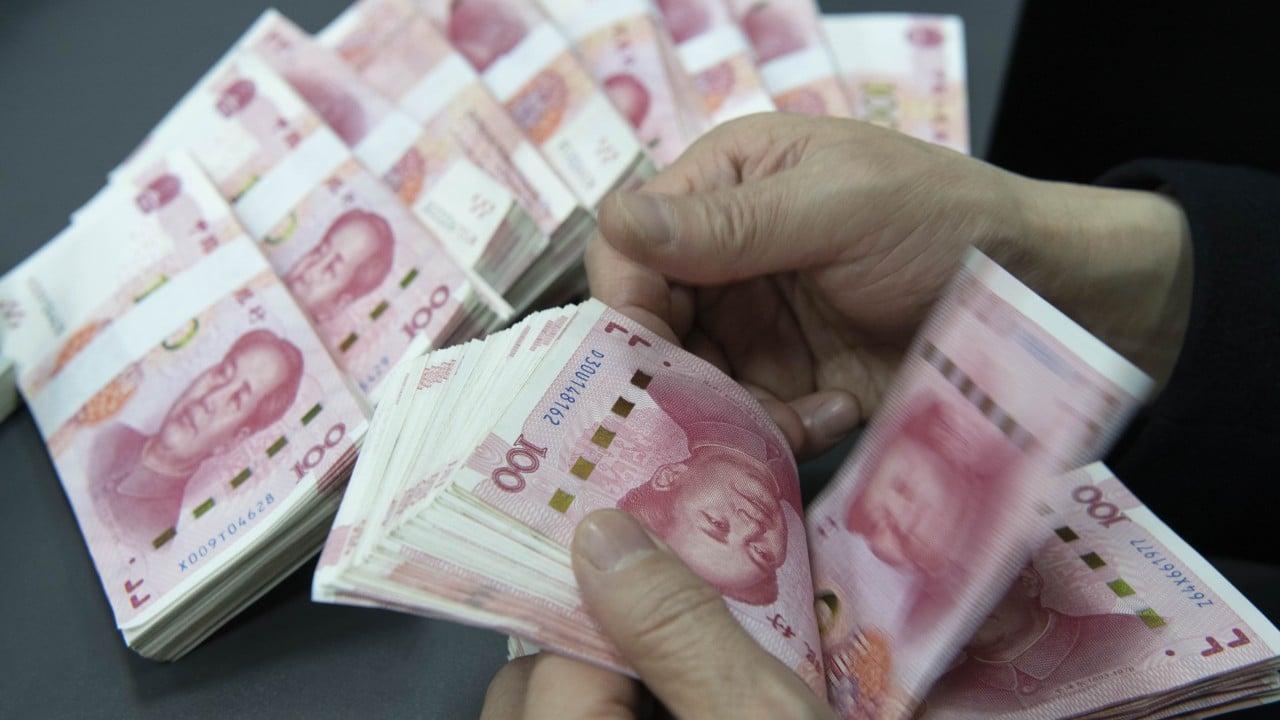
Today, David isn't looking through a straw. He is staring at a firehose. His screen flashes with an order from a sovereign wealth fund based in Europe. They don't want a token slice of Chinese sovereign debt to show off to their board. They want to reallocate four percent of their entire global portfolio into RMB-denominated assets by the end of the fiscal quarter.
That is not a knock at the door. That is a demolition crew.
The Illusion of the Open Door
For years, the global financial commentary focused entirely on plumbing. Analysts wrote endless reports about Connect programs. Stock Connect, Bond Connect, Swap Connect. Each one was hailed as a milestone, a new pipe laid between the mainland and the rest of the financial world.
The narrative was simple: build the infrastructure, and they will come.
They did come. But the financial commentary missed the psychological shift that happens when a market matures. When you enter a new room, you look for the door. Once you are inside the room, you stop looking at the door. You start looking at the floorboards to see if they can support your weight.
Global investors have moved past the novelty phase of Chinese markets. The question is no longer, "How do we get renminbi?" The question is, "How do we manage ten billion dollars of it without causing a market tremor that ruins our yield?"
Consider the mechanics of a massive fund. If an asset manager wants to deploy serious capital, they need more than a green light from a regulator. They need deep pools of liquidity. They need an ecosystem of market makers who can take the opposite side of a massive trade at a moment's notice. Most importantly, they need sophisticated tools to hedge their risk.
Without those elements, entering a market is easy, but leaving it is impossible. It becomes a financial hotel room where you can check in anytime you like, but you can never sell your assets without taking a massive haircut.
The Secret Geometry of Liquidity
To understand why this shift from access to scale changes everything, you have to look at how money behaves when it grows. Small amounts of money are highly mobile. They slip through cracks, exploit tiny inefficiencies, and exit before anyone notices.
Large amounts of money behave like glaciers. They move slowly, and their sheer mass alters the terrain around them.
When David tries to execute a massive trade for an international client, he faces a fundamental mathematical reality. If the pool of available currency in Hong Kong—the offshore yuan pool—is too shallow, his single order will distort prices. If he buys, he drives the price up too fast. If he sells, he tanks the market.
This is where the city itself becomes the anchor.
Hong Kong handles roughly 75 percent of the world’s offshore yuan payments. It is an economic anomaly: a city that operates under a different legal and financial framework than the mainland, yet possesses a direct, umbilical connection to Beijing’s financial heart. It functions as a decompression chamber. It allows the massive, heavily regulated financial system of mainland China to interact with the freewheeling, hyper-capitalist global markets without causing an explosive pressure differential.
The old model assumed that as China's economy grew, international investors would gradually move their operations directly to Shanghai or Beijing. The thinking went that Hong Kong was merely a temporary stepping stone, a historical middleman destined to be bypassed once the mainland fully opened its capital accounts.
That thesis turned out to be wrong.
International institutions do not just want proximity to Chinese assets; they want proximity to international law. They want western-style courts, familiar regulatory predictability, and English-language documentation. They want to trade Chinese risk using the same master agreements they use in New York or London.
By anchoring their scaled-up yuan operations in Hong Kong, global banks can treat Chinese debt and equity like any other global asset class. They can use mainland assets as collateral for international loans. They can net their exposures against other currencies. They can sleep at night.
The Risk Manager’s Nightmare
The true test of scale does not happen during a bull market. It happens at two o'clock on a Tuesday afternoon when inflation data catches the market completely off guard.
Imagine a macro hedge fund that holds fifty billion yuan in Chinese government bonds. Suddenly, global interest rates spike. The fund needs to hedge its currency exposure immediately to prevent millions of dollars in losses. In the early days of the offshore yuan market, doing this was an absolute nightmare. The derivatives market was thin, spreads were wide, and finding a counterparty willing to take the other side of a massive currency swap felt like searching for water in a desert.
If you cannot hedge, you cannot scale.
This is why the recent introduction of programs like Swap Connect matters so much more to institutional investors than the flashy stock listings of the past. Swap Connect allows foreign investors to participate in the mainland’s interbank interest rate swap market through Hong Kong.
It sounds incredibly dry. It reads like a footnote in an annual report. But to a risk manager sitting in Chicago or Zurich, it is the difference between an investment being a calculated risk or a reckless gamble. It provides the tool to manage interest rate risk directly, at scale, without leaving the legal protection of the Hong Kong ecosystem.
David watches these risk management trades execute on his terminal. They are massive, quiet, and frequent. They do not make the front page of the financial newspapers, but they represent the true institutionalization of the currency. The yuan is transforming from a speculative tool used by hedge funds chasing quick yields into a core foundational asset held by conservative, long-term allocators of global wealth.
The Transition of Power
The numbers tell a story of accumulation, but the human behavior tells a story of survival.
Talk to the head of any major global investment bank in Asia, and they will tell you that their hiring priorities have shifted completely over the past three years. They are no longer looking for "relationship managers" whose primary skill is navigating bureaucratic hurdles or securing rare investment quotas from regulators. Those quotas are largely gone, rendered obsolete by the open access channels.
Instead, they are hiring quantitative analysts, liquidity specialists, and derivative architects. They are building desks that look exactly like their US dollar or Euro operations.
The focus has shifted from the political to the technical.
This evolution brings its own set of anxieties. Many international investors remain deeply cautious about geopolitical tensions and the long-term direction of Chinese economic policy. They question whether the boundaries between the two financial systems will remain intact. They worry about sudden regulatory shifts that could freeze capital or change the rules of the game mid-match.
These doubts are real. They are discussed in whispered tones over coffee in the IFC mall and debated fiercely in late-night conference calls with risk committees in Manhattan.
But finance is rarely driven by absolute certainty; it is driven by the relative cost of doing nothing. When global investors look at the sheer size of the Chinese domestic bond market—the second-largest in the world—they realize that completely ignoring it creates an existential tracking error for their funds. If they want to beat their benchmarks over the next two decades, they have to be there.
And if they have to be there, they want to be there with maximum efficiency and minimum friction.
A Quiet Transformation
The afternoon sun begins to drop behind the peaks of Hong Kong island, casting long, dark shadows across the harbor. On David’s screen, the European market is fully open now, and the London desks are waking up. The volume of orders shifts again, a steady pulse of capital moving across time zones.
The internationalization of the yuan was once envisioned as a dramatic, sudden event—a single moment where the curtains would be pulled back and the currency would instantly rival the dollar on the global stage.
Real economic history rarely works that way.
Instead, the transformation is happening through this quiet, industrial buildup of scale. It is happening because thousands of institutional investors have decided that it is no longer enough to just have a small, experimental desk dedicated to China. They are integrating these assets into their main infrastructure. They are building the capacity to trade hundreds of billions of yuan as naturally as they trade euros or yen.
The door is wide open now, and the crowd has moved inside. The noise of people pushing through the entrance has faded. In its place is the steady, heavy hum of a massive machine running at full capacity, anchored to a piece of granite at the edge of the Asian continent, turning a local currency into a permanent pillar of global capital.