The air in Baghdad doesn't just sit; it presses. It carries the scent of exhaust, eucalyptus, and the heavy, metallic tang of history being forged in closed rooms. Inside the Al-Salam Palace, the marble floors are polished to a mirror shine, reflecting the flickering shadows of men who hold the fate of forty-four million people in their shirt pockets. This week, President Abdul Latif Rashid picked up a pen. It was a simple gesture, a few strokes of ink on parchment, but it set a clock ticking that echoes from the ancient alleys of Najaf to the glass towers of Erbil.
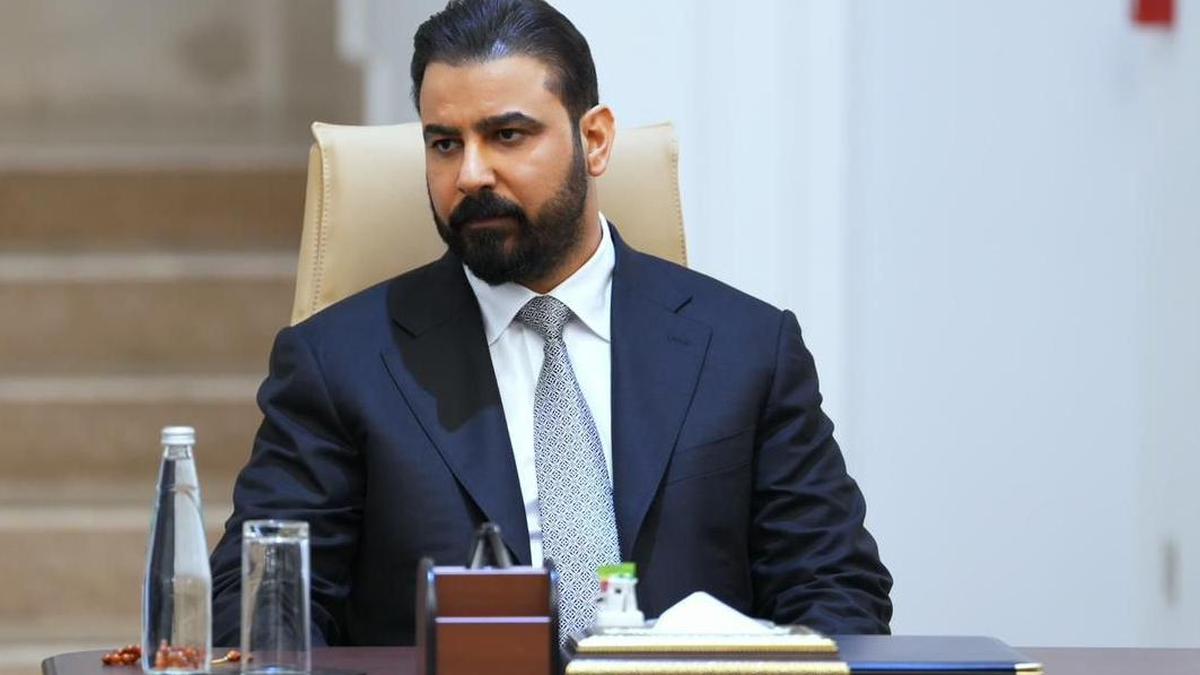
Ali al-Zaidi is now the name on everyone’s lips. To the international press, he is a "PM-designate," a formal title for a man stepping into a regional hurricane. To the shopkeeper in Sadr City trying to price a bag of sugar against a fluctuating dinar, he is something else: a gamble.
Iraq has spent decades trapped in a cycle of "muhasasa"—the sectarian quota system that carves the government into slices like a birthday cake. Every ministry is a prize; every civil service job is a chip to be traded. When the President nominated al-Zaidi, he wasn't just filling a vacancy left by political deadlock. He was throwing a stone into a very deep, very dark pond.
The Thirty-Day Shadow
Imagine you are handed the keys to a house that is simultaneously on fire and under construction. You have exactly thirty days to find a crew of plumbers, electricians, and carpenters who all hate each other, convince them to work for free, and ensure the roof doesn't cave in before the first frost.
That is the constitutional reality facing Ali al-Zaidi. According to the Iraqi constitution, he has a narrow window to present his cabinet to the Council of Representatives. If he fails to balance the demands of the Kurds in the north, the Sunni blocs in the west, and the fractured Shia factions in the south, the nomination withers. The pen stroke becomes a ghost.
The stakes are not abstract. They are measured in megawatts and liters. Iraq sits on some of the world's largest oil reserves, yet the national grid remains a patchwork quilt of outages and humming private generators. The youth—over 60% of the population—are tired of waiting for the "peace dividend" promised twenty years ago. They don't want rhetoric. They want high-speed internet, reliable cooling in 50°C summers, and a reason to stay in the country instead of trekking toward the Mediterranean.
The Architect of Compromise
Al-Zaidi enters this arena not as a revolutionary, but as a technician of the possible. His background suggests a man comfortable with the granular details of governance, but the Prime Minister's office requires a different set of skills. It requires the soul of a tightrope walker.
To understand the difficulty of his task, consider the "Coordination Framework," the powerful bloc that pushed his candidacy. They are not a monolith. They are a collection of interests, some leaning toward regional neighbors, others focused on domestic patronage. Al-Zaidi must satisfy them while signaling to the Western world—and the markets—that Iraq is open for business and moving toward sovereign stability.
One cannot discuss Iraqi politics without addressing the silent participant at every table: the street. In 2019, the Tishreen protests proved that the Iraqi public has a breaking point. Thousands of young people risked everything to demand an end to corruption. While the squares are quieter now, the anger hasn't evaporated; it has merely gone underground, waiting to see if this new government will be a vehicle for reform or just another coat of paint on a crumbling wall.
The Regional Chessboard
Baghdad is the fulcrum of the Middle East. If it tips, the balance of power from Tehran to Riyadh shifts. Al-Zaidi’s nomination comes at a moment when the region is a tinderbox. Iraq has spent the last few years trying to reposition itself as a mediator—a place where rivals can meet in the neutral shade of the palm trees to talk instead of fight.
Maintaining this neutrality is an exhausting labor. It requires a Prime Minister who can speak the language of diplomacy while keeping his boots firmly planted in Iraqi soil. The "PM-designate" tag is a heavy one. It carries the expectations of global energy markets and the anxieties of neighbors who fear a spillover of instability.
The logistical hurdles are immense. Al-Zaidi must navigate a parliament where every vote has a price. He must negotiate with the Kurdistan Regional Government over oil revenues and budget allocations—a dispute that has outlasted multiple administrations. He must address the environmental crisis of the marshes, where the Tigris and Euphrates are thinning to ribbons of dust, threatening the very cradle of civilization.
The Human Cost of Delay
While the politicians argue over cabinet positions, life in the provinces continues with a rugged, weary persistence. In Basra, the water is often too salty to drink. In Mosul, the scars of the war against ISIS are still visible in the jagged skylines of the Old City. For the people living there, the nomination of Ali al-Zaidi is a headline on a television screen in a cafe. It is distant.
They have seen names come and go. They have heard the promises of "national unity" and "economic revitalization" until the words have lost their edges. The real test for al-Zaidi won't be the day he is sworn in; it will be the day he has to say "no" to a powerful party boss in order to say "yes" to a public project.
Success in Baghdad is rarely measured in grand leaps. It is measured in inches. It is an extra hour of electricity in July. It is a paved road that stays paved after the rain. It is a sense that the law applies to the man in the motorcade as much as the man on the motorbike.
The Ink is Still Wet
As the sun sets over the Tigris, casting long, orange shadows across the bridges, the city of Baghdad prepares for another night of whispered negotiations. The tea is hot, the sugar is plenty, and the stakes could not be higher. Ali al-Zaidi is no longer just a man; he is a symbol of a system trying to prove it can still function.
The clock is ticking on those thirty days. Every hour that passes without a cabinet list is an hour of uncertainty. The world watches the "PM-designate," but the Iraqis are watching the clock. They know better than anyone that in this part of the world, a nomination is not a victory—it is an invitation to a fight.
The President has put down the pen. The parchment is signed. Now comes the hard part: making the ink mean something more than a stain on a page. The silence in the palace corridors is deceptive. Outside, the city is loud, vibrant, and desperately impatient for a future that has been delayed for far too long.