The Mediterranean Sea in the deep hours of the night does not look like water. It looks like polished slate, cold and heavy, stretching out until it swallows the horizon. On a map, it is a blue ribbon separating continents, a vacation destination, a historic trade route. But for those standing on the edge of a Libyan beach, looking north into the dark, it represents something entirely different. It is a gamble where the buy-in is everything a person owns, and the payout is simply the right to begin again.
We often talk about migration in the language of physics. We use words like flows, surges, and pressures, as if human beings were water filling a vacuum. But columns of data cannot capture the specific weight of a wooden hull slipping into the surf under the cover of a moonless sky. They do not record the sound of sixty people breathing in unison, tightly packed into a space designed for twenty, holding their breath every time the engine sputters.
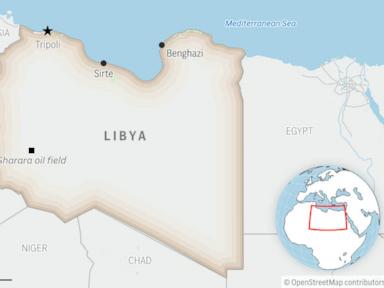
A few days ago, north of the Libyan coast, one of these vessels stopped moving. It did not make headlines immediately. It rarely does. When a overcrowded boat capsizes in the open sea, there is no sudden explosion, no dramatic flare. There is only the sudden, catastrophic shift of weight, the rush of cold water, and then, silence. Fifty-one people disappeared into the shadow of the sea, joining a ledger of the missing that grows longer every year.
To understand why fifty-one lives dissolve into a statistic on an ordinary Tuesday, one has to look past the coastlines and into the quiet calculations made months, sometimes years, before anyone ever boards a boat.
The Calculus of Risk
Imagine, for a moment, a young man named Tariq. This is a composite portrait, a way to understand the thousands who make this journey every season. Tariq is twenty-four. He possesses a degree in biology that has earned him nothing but a spot on a crumbling concrete bench in a city where inflation outpaces daylight. His younger sister needs medication that costs more than his father’s monthly pension. Every morning, he watches the horizon. He knows the risks. He has a smartphone; he has seen the news reports. He knows the Mediterranean is a graveyard.
But risk is entirely relative.
When the present offers nothing but a slow, grinding erasure of dignity, the danger of the sea ceases to look like a threat. It begins to look like a door. The decision to leave is rarely born of ignorance; it is born of a clear-eyed, desperate math. If the chance of dying on the water is ten percent, but the certainty of a wasted life at home is absolute, the boat becomes the only logical choice.
The journey begins long before the shore. It starts in dusty border towns, in negotiations with men who sell passage the way others sell cellular data or bags of grain. Money changes hands—thousands of dollars scraped together by extended families who view one young traveler as a collective investment, a human lottery ticket sent toward the global north. Then comes the waiting. Days or weeks spent in safe houses along the North African coast, places where time loses its shape and the air smells of exhaust and salt.
When the call comes, it is always sudden. A midnight march to the dunes. A rubber dinghy or a patched-wooden fishing trawler waiting in the shallows. The smugglers do not provide life jackets; those cost extra. They do not provide navigators; they point to a star or a flashing light on a digital map and tell the teenager at the tiller to keep driving north.
The Architecture of an Ordinary Tragedy
The boat that foundered north of Libya was like hundreds of others that depart weekly. It carried people from across Sub-Saharan Africa, the Middle East, and South Asia—a micro-cosmos of human geography bound by a singular destination.
When a vessel like this enters international waters, it enters a legal and moral twilight zone. Under maritime law, any ship nearby is obligated to assist a boat in distress. But the reality on the water is governed by a different set of rules. Commercial cargo ships, carrying tons of freight on tight schedules, often hesitate to log a sighting, knowing that taking dozens of rescued migrants aboard can mean days of bureaucratic delays at European ports. NGO rescue ships patrol the zones, but their numbers are small, their movements constantly restricted by shifting political tides and port detentions.
Consider what happens when the engine fails.
At first, there is a collective effort to maintain calm. Someone tries to restart the motor. The smell of gasoline fills the air, thick and nauseating. The waves, which seemed manageable while the boat was moving, suddenly feel much larger. Without forward momentum, the craft begins to roll, taking on water over the gunwales.
Panic is the real enemy in these moments. A sudden movement by a few passengers to avoid a splashing wave can alter the center of gravity instantly. In the dark, without landmarks, the sky and the sea blur into a single, suffocating entity. When the hull finally rolls over, it happens in seconds. The water is around sixty degrees—not cold enough to freeze a person instantly, but cold enough to steal their breath, to exhaust their muscles within minutes as they try to stay afloat in heavy clothing.
When the rescue coordination centers finally receive the distress call, the clock has already run out for most. By the time an aircraft spots the white overturn of the hull or a passing vessel arrives, the sea has largely cleared its surface. Fifty-one people. Each with a name, a favorite meal, a mother waiting for a WhatsApp message that will never show a second checkmark.
The Distance of the Viewer
The true tragedy of modern migration is not just that people die; it is that we have learned to expect it. The numbers have lost their ability to shock. Ten dead off the coast of Tunisia. Forty missing near Spain. Fifty-one north of Libya. The geography changes slightly, but the cadence of the reporting remains identical.
We look at these events through a glass screen, protected by the immense privilege of documentation. A passport is a strange piece of paper—a birthright lottery that dictates whether a person can buy a commercial airline ticket for a few hundred dollars or whether they must risk their life savings and their survival on a leaking raft. To have a passport from a stable, wealthy nation is to walk through the world invisibly, crossing borders with a nod and a stamp. To lack one is to find the world transformed into a series of walls, fences, and hostile waters.
The debate surrounding these crossings often centers on deterrence. The argument goes that if the journey is made difficult enough, if the borders are made secure enough, people will stop coming. But this view misunderstands the nature of the pressure behind the movement. You cannot deter a person who is running from a burning house by telling them the window is high. They will still jump.
The fifty-one who vanished this week were not a wave, nor a surge, nor an economic problem to be managed. They were individuals who looked at the map of the world and decided that the small possibility of a future was worth the immense probability of disaster. They lost their gamble. But as long as the conditions that drove them to the beach remain unchanged, the next boat is already being loaded in the dark, its passengers climbing aboard, eyes fixed on the empty north.