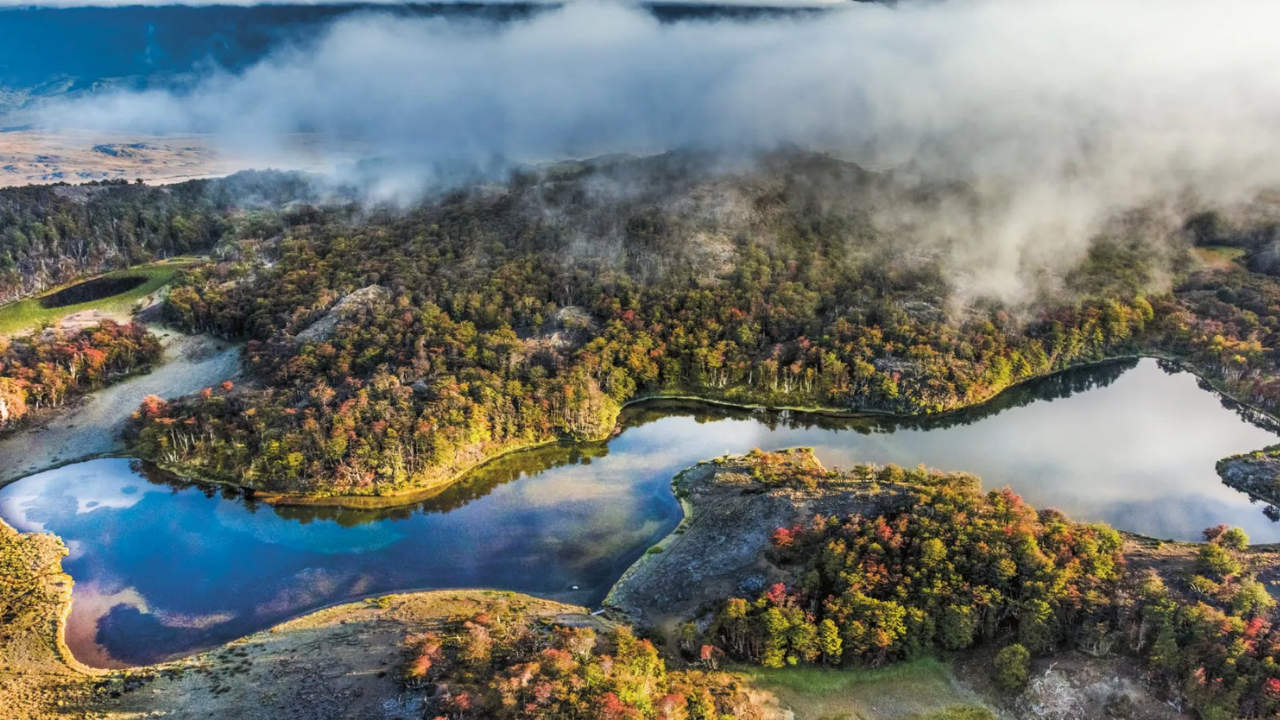
The mist does not lift from the Sorgue so much as it dissolves into it, a slow blurring of the edges between the moss-slick stones of Provence and the pale air of early morning. Before the antique stalls unlatch their heavy oak shutters, before the first heavy-tired delivery van rumbles over the footbridges, L’Isle-sur-la-Sorgue belongs entirely to the current.
It rushes. It churns. It pushes ancient wooden waterwheels through their hypnotic, mossy revolutions, splashing diamond spray against walls that have stood since the counts of Toulouse held sway over these marshy islands.
To arrive here expecting a quiet French village is to misunderstand the peculiar gravitational pull of the place. They call it the Venice of the Comtat Venaissin, but that shorthand does it a disservice. Venice is stone and salt and grand decay. L’Isle is green and rushing, cradled by a cold, clear river split into a dozen braided veins that loop through the streets like silver ribbons. And beneath that rushing water lies the quiet obsession that draws people from across continents: the hunt for things that have already lived a life.
Consider what happens when you step off the gravel path and into one of the town’s massive permanent antique villages.
The air changes. It drops five degrees. It smells of beeswax, dry parchment, oxidized silver, and the damp, cedar-heavy musk of old attics opened to the Mediterranean light for the first time in decades.
Dust motes drift lazily in shafts of sunlight cutting through high windows. Here is a stack of heavy linen sheets, monogrammed in faded blue thread by a girl whose name was forgotten a hundred years ago. There is a stack of seventeenth-century apothecary jars, their glass bubbled and warped by human breath. Nothing is pristine. Everything carries the glorious, stubborn weight of having survived.
Most travelers make the mistake of coming only on Sundays.
Sunday is the great circus. On the final day of the week, the brocanteurs spill out of their permanent warehouses and line the shaded quays along the canals. Forklift trucks rumble past with stacks of wrought-iron garden gates. Dealers from Paris and London sip pastis at corner zinc bars, arguing loudly over the provenance of a walnut armoire. It is brilliant, chaotic, and exhausting.
Yet the true soul of L’Isle-sur-la-Sorgue is found on a Tuesday morning when the rain is slicking the cobblestones and the town belongs only to the locals and the river.
Walk down the Rue de la République when the shutters are just beginning to click open. Stop at a boulangerie where the scent of warm butter and caramelized sugar cuts through the damp air. Buy a chousson aux pommes that is still hot enough to burn your thumb. Watch an old man in a frayed wool cardigan hose down the pavement outside his tiny shop, where three seventeenth-century wooden saints look out onto the street with expressions of mild, eternal bewilderment.
This is where the real work of the town happens. It is not about accumulation; it is about rescue.
Every piece of furniture, every tarnished copper saucepan, every cracked porcelain chocolate cup has a rescue story. A dealer named Marcel, whose shop smells perpetually of linseed oil and strong tobacco, once explained it while polishing the brass handle of an Empire-style commode.
"People think we sell old things," he said, not looking up from his cloth. "We don't. We sell continuity. When a young couple buys a table from 1820, they aren't buying wood. They are buying the reassurance that things can last longer than a human lifetime. They are anchoring themselves."
He paused, testing the smoothness of the wood with the calloused side of his thumb.
"Everything else is just noise."
The geography of the town itself forces this kind of reflection. You cannot walk thirty paces without crossing a bridge. The river is an inescapable presence, its green depths so transparent you can watch trout darting between weed beds right beneath the foundations of centuries-old houses. The water comes straight from Fontaine-de-Vaucluse, a subterranean abyss a few miles upstream where a massive volume of melted Alpine snow and rain erupts from the earth in a turquoise fury. It feeds the Sorgue, and the Sorgue feeds the town, turning it into an island fortress of commerce and quiet contemplation.
Navigating this maze of canals requires a deliberate slowing down.
If you rush, you miss the small, quiet miracles tucked away in side alleys. You miss the courtyard where a massive stone basin has been turned into a goldfish pond overhung by weeping fig branches. You miss the tiny bookshop where leather-bound volumes of poetry are sold by weight rather than title.
To do L’Isle-sur-la-Sorgue justice, you must surrender to its rhythms.
Spend your first morning wandering the permanent markets near the railway station. These are not weekend stalls; they are sprawling complexes of individual boutiques where dealers curate miniature museums. Here you will find wrought-iron olive presses, copper cauldrons big enough to bathe a child in, and stacks of faded zinc numbers once nailed to the doors of French provincial hotel rooms.
Do not ask how much things cost immediately. Talk about where they came from. The dealers here are historians without degrees, fiercely protective of the provenance of their wares. They can tell you which chateau in the Luberon a pair of Louis XVI shutters was salvaged from before the bulldozers arrived. They know the difference between the pale oak of the north and the dense, dark walnut of the south.
By afternoon, hunger will pull you toward the riverbanks.
Find a table at one of the bistros shaded by plane trees whose leaves are just beginning to turn the pale gold of autumn. Order a glass of chilled white Ventoux and a plate of local trout served simply with almonds and browned butter. Sit back and watch the green water rush past your feet. The current is fast, relentless, indifferent to the centuries of human ambition piled up along its banks.
That indifference is precisely what makes the antiques so poignant.
The river keeps moving. The objects stay behind, held in amber by people who refuse to let them wash away.
As the sun begins to dip behind the Vaucluse mountains, the light turns the pale stone of the town into something resembling old gold. The day-trippers have long since caught the train back to Avignon or Marseille. The antique shops are bolted shut behind heavy bars.
Walk back down to the water’s edge. The noise of commerce has vanished, replaced entirely by the rush of the river and the sudden, sharp call of a swift banking low over the canals. In the deepening twilight, the town feels less like a destination and more like a secret shared between the water and the stone, waiting quietly for whoever is willing to listen to what the past has to say.