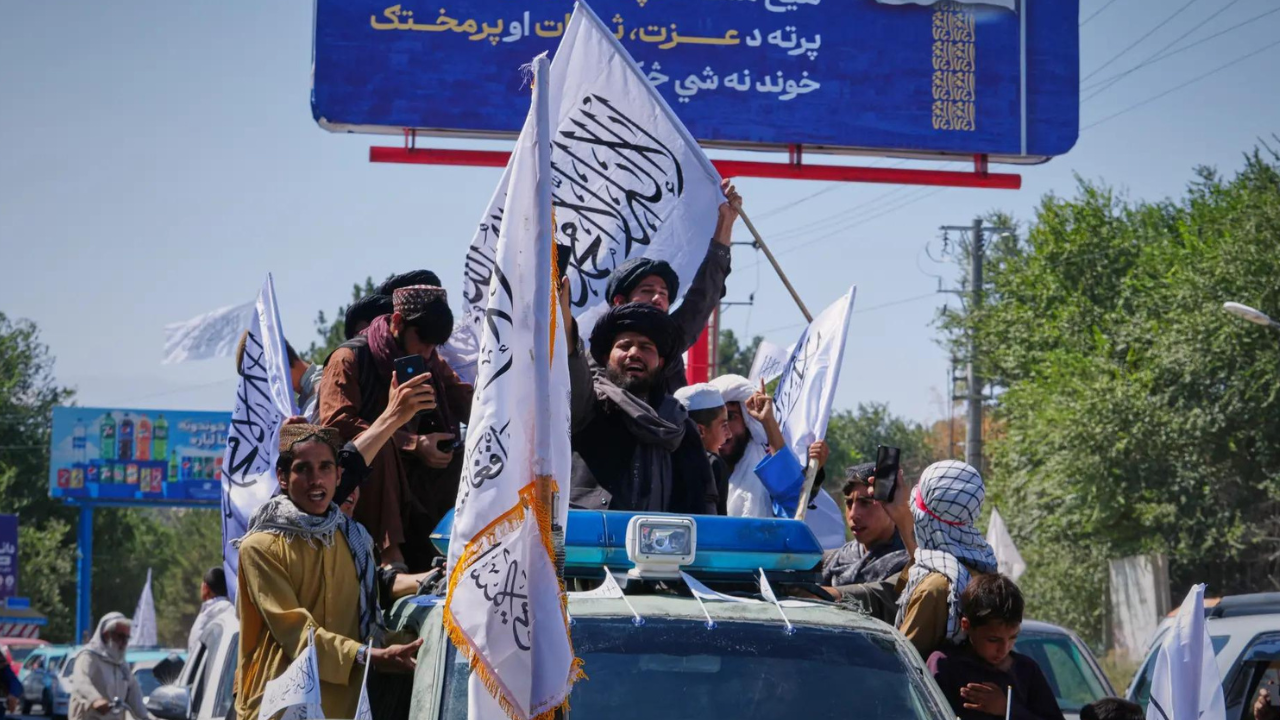
When the Taliban publicly demands that the United States "act responsibly" toward deported Afghan immigrants, the irony is thick enough to choke a diplomat. Yet behind Kabul’s sudden posture as a defender of human rights lies a cold, calculated geopolitical play. Washington’s push to strip Temporary Protected Status and expedite the deportation of thousands of Afghans has inadvertently handed the Islamic Emirate its greatest diplomatic tool since the 2021 withdrawal, transforming vulnerable refugees into bargaining chips for international legitimacy.
The surface story is simple. Facing domestic pressure over immigration numbers and expiring humanitarian parole authorizations, U.S. officials have moved to remove Afghans who lack permanent legal status or who have triggered criminal bars to asylum. In response, Taliban spokespeople issued statements urging Washington to uphold international norms and avoid sending people back into economic and humanitarian distress.
That narrative misses the entire machinery operating beneath the headlines. A regime that bars girls from secondary school and systematically erases women from public life does not suddenly develop a conscience regarding due process in American immigration courts. Kabul’s statements are not aimed at protecting returnees. They are aimed at forcing Washington to talk to them.
The Mechanics of Forced Return
You cannot simply put a deportee on a commercial flight and hope for the best. International aviation law and standard deportation protocols require coordination with the receiving country. The destination government must verify the identity of the individual, issue travel documents, and grant landing clearances for charter flights.
Washington does not recognize the Taliban as the legitimate government of Afghanistan. Since August 2021, the United States has maintained a strict policy of non-recognition, keeping embassy operations shuttered in Kabul and conducting limited discussions through diplomatic channels in Doha.
This creates an immediate operational wall for Immigration and Customs Enforcement.
To deport an Afghan national directly to Kabul, the U.S. government must obtain travel documents from consular offices controlled by the Taliban, or rely on third-country transit agreements that eventually terminate in Taliban-controlled airspace. Every request for a travel document is a de facto acknowledgment of Kabul’s administrative authority. Every coordinated flight requires technical communication between American agencies and officials currently under U.S. and United Nations sanctions.
Kabul understands this dynamic intimately. By publicly telling Washington to "act responsibly," Taliban officials are signaling two distinct messages to entirely different audiences. To the international community, they project the image of a reasonable, state-like actor concerned with orderly migration. To Washington, they are laying down a marker: if you want to empty your detention centers of Afghan nationals, you have to deal with us as a sovereign government.
The Leverage Trap in Doha
For nearly four years, the diplomatic standoff between Washington and Kabul has been defined by what the Taliban wants versus what the U.S. refuses to give. Kabul wants unfettered access to roughly $7 billion in frozen central bank reserves, the lifting of travel bans on senior leaders, the reopening of embassies, and formal diplomatic recognition. Washington wants verifiable counterterrorism guarantees, an inclusive government, and the restoration of basic rights for women and minorities.
Until recently, the United States held most of the structural cards, even if it struggled to compel behavioral change inside Afghanistan. Sanctions kept the Taliban isolated from the global financial system. Aid remained channeled through non-governmental organizations rather than state ministries.
The domestic American shift toward aggressive deportation changes that equation.
When an administration prioritizes removal metrics, it creates a self-inflicted vulnerability. Suddenly, American negotiators need something tangible and immediate from Kabul: cooperation on repatriation. In the zero-sum world of bilateral negotiations, need equals weakness.
Consider a hypothetical example of how this plays out in a closed-door diplomatic session. An American envoy raises concerns about the closure of women-led aid organizations in Herat. The Taliban representative pivots immediately to the three hundred Afghan nationals sitting in ICE detention facilities in Louisiana and Texas. If Washington wants those flights cleared by the end of the quarter, the Taliban envoy suggests, perhaps the U.S. Treasury could ease certain banking restrictions or allow Kabul to reopen consular missions in American cities to process the paperwork.
The United States has placed itself in a position where enforcing its own domestic immigration laws requires softening its foreign policy stance toward an unrecognized regime.
Who Actually Gets Caught in the Net
Public rhetoric around deportations almost always relies on the comforting fiction that only violent criminals are targeted for removal. The reality of the post-2021 Afghan diaspora in the United States is far messier, largely because the evacuation itself was a chaotic emergency operation.
Over 70,000 Afghans arrived in the United States during Operation Allies Welcome. Because the airlift prioritized speed over bureaucratic perfection, tens of thousands were admitted under humanitarian parole, a temporary legal status that lasts two years and offers no direct path to permanent residency.
To stay legally, parolees had to navigate a labyrinthine asylum system or apply for Special Immigrant Visas while the U.S. Citizenship and Immigration Services drowned in a historic backlog of millions of cases. Many lacked legal representation. Others struggled with shifting filing deadlines, lost paperwork, or language barriers.
A distinct subset of this population consists of individuals who worked alongside the former Afghan National Defense and Security Forces, local contractors, and relatives of U.S. allies who missed the narrow eligibility windows for Special Immigrant Visas. When their parole expires without an approved asylum application, they fall out of status. Technically, they become deportable.
There is also the complication of the material support for terrorism bar under U.S. immigration law. This statute is notoriously broad. Under strict interpretations, an Afghan shopkeeper who was forced at gunpoint to pay a tax to the Taliban in 2018, or a farmer coerced into providing food to insurgents, can be flagged as having provided material support to a terrorist organization. While waivers exist, they are slow and inconsistently applied. Consequently, individuals who fled Taliban extortion can find themselves denied asylum in the U.S. and scheduled for removal back into the hands of the very group that extorted them.
The Consular Vacuum
Even if Washington decides to push forward with removals regardless of diplomatic blowback, it faces a massive logistical hurdle that has nothing to do with politics and everything to do with bureaucracy.
Who issues the passports?
Following the collapse of the Islamic Republic in August 2021, Afghan embassies and consulates around the world—including the embassy in Washington and consulates in New York and Los Angeles—were left in diplomatic limbo. The diplomats staffing those missions were loyal to the fallen republic. In early 2022, the Afghan embassy in Washington effectively shut down, handing over custody of its properties to the U.S. State Department because it had run out of funds and legal standing.
Today, there is no functioning Afghan diplomatic mission on American soil authorized to issue valid travel documents.
The Taliban has gradually taken control of several Afghan diplomatic missions in neighboring countries, including Pakistan, Iran, and China, as well as a handful of missions in Europe. In Germany and the United Kingdom, governments have wrestled with whether to allow Taliban-appointed officials to handle basic consular services like passport renewals and birth certificates, precisely because they need a mechanism to deport Afghan nationals convicted of crimes.
For the United States, utilizing Taliban-run consulates in third countries like Qatar or the United Arab Emirates to process deportees introduces severe legal and security risks. It hands personal biometric data, current addresses, and family details of vulnerable Afghans directly to the Taliban’s intelligence apparatus, the General Directorate of Intelligence.
The Security Risk of Returning the Vetted
The geopolitical irony deepens when you examine the profile of the people being returned. Many Afghans in the U.S. hold deep institutional knowledge of American military tactics, intelligence gathering methods, and biometric databases.
During the twenty-year war, the U.S. military and intelligence agencies trained thousands of Afghan commandos, interpreters, and analysts. Even low-level contractors learned how American forward operating bases functioned, how convoys were structured, and who the local informants were in specific provinces.
When the Taliban took power, they seized abandoned U.S. biometric devices, though the backend databases remained largely secure. Returning individuals who worked within that ecosystem—even those who are being deported for minor infractions or expired paperwork in the U.S.—provides the Taliban with an intelligence windfall.
Upon arrival at Kabul International Airport, deportees are routinely screened by Taliban intelligence officers. Without international monitors on the ground to track what happens after a returnee clears customs, there is zero guarantee of safety. Amnesty promises issued by Taliban leadership in 2021 have repeatedly been violated at the provincial level, where local commanders settle personal scores with former republic personnel through arbitrary detention, torture, and extrajudicial killings.
By framing its warning as a plea for Washington to "act responsibly," the Taliban achieves a brilliant rhetorical inversion. If deportees disappear or face persecution upon return, Kabul can claim it warned the Americans that the country was not ready to absorb them. The moral burden shifts entirely onto Washington.
Europe Already Walked Into This Trap
Washington is not the first Western government to discover that domestic deportation politics collide violently with non-recognition policies. European nations, particularly Germany and Austria, have been wrestling with this exact contradiction for two years.
Facing surges in right-wing populism and high-profile violent crimes committed by asylum seekers, Berlin resumed deportation flights to Afghanistan in August 2024 after a three-year moratorium. To make that single flight happen, German officials had to rely on Qatari mediators to negotiate directly with Kabul.
The price was immediate. The Taliban used the flight to showcase its functional governance to domestic media, portraying European powers as quietly crawling back to Kabul to ask for favors. Shortly after, Taliban officials began pressing European capitals to accredit their diplomats to manage future flights smoothly.
European intelligence services quickly noted the pattern. Once a Western nation establishes a pipeline for deportations, the receiving regime gains the power to turn the tap on and off at will. If Berlin criticizes a new morality law in Kabul, the landing clearances for the next charter flight suddenly experience "technical delays." Deportation agreements transform human beings into a dial that authoritarian regimes can turn to punish Western criticism.
The Illusion of Third-Country Solutions
To bypass direct engagement with Kabul, policymakers in Washington frequently float the idea of third-country deportation agreements. The concept relies on paying a neighboring nation—such as Pakistan, Tajikistan, or Uzbekistan—to accept deported Afghans, or negotiating transit arrangements through Gulf states.
On paper, this keeps American hands clean of direct Taliban contact. In practice, it is a diplomatic mirage.
Pakistan is currently in the middle of its own massive, brutal campaign to expel over a million undocumented Afghans back across the Torkham and Chaman border crossings. Islamabad has zero appetite for absorbing deportees flown in from the United States, especially when its own relationship with Kabul is deteriorating over cross-border attacks by the Tehrik-i-Taliban Pakistan.
Central Asian states like Uzbekistan and Tajikistan view the Afghan diaspora with extreme security paranoia, fearing the infiltration of militant groups like ISIS-Khorasan. They will not serve as a holding pen for American deportees.
Even if a third country agrees to act as a transit hub for a substantial financial package, the final leg of the journey still ends in Kabul. The third country merely becomes the intermediary conducting the exact consular negotiations with the Taliban that Washington claims to avoid. The leverage still flows straight to the Islamic Emirate.
A Self-Inflicted Strategic Wound
For twenty years, American foreign policy in South Asia was anchored—at least rhetorically—to the idea of standing by local allies and upholding international humanitarian standards. The chaotic collapse of Kabul in 2021 severely damaged that credibility, leaving thousands of vetted partners stranded behind enemy lines.
Deporting the ones who actually made it to American soil, while simultaneously handing the Taliban the diplomatic recognition they have spent years trying to extort, compounds that strategic failure.
When a superpower allows its domestic immigration enforcement targets to dictate its diplomatic posture toward a sanctioned regime, it surrenders control of the chessboard. Kabul does not need to defeat American diplomacy at the negotiating table when Washington is willing to buy landing rights with the very legitimacy the Taliban craves.