The Centers for Disease Control and Prevention is ringing the alarm bells again. Nearly 7,000 cases of cyclosporiasis are confirmed or under investigation. The media has dusted off its standard outbreak playbook: run terrifying B-roll of spinach fields, quote a somber public health official, and tell consumers to "wash their produce thoroughly."
It is a comforting, dangerous lie.
Let us be completely blunt. Scrubbing your romaine, soaking your cilantro in veggie wash, or buying organic will not save you from Cyclospora cayetanensis. The belief that you can clean your way out of a parasitic foodborne illness is a myth manufactured by an industry eager to shift the blame from the supply chain to your kitchen sink.
The standard advice is worse than useless—it is a distraction from the structural rot of our globalized food supply.
The Biological Lie of Triple-Washing
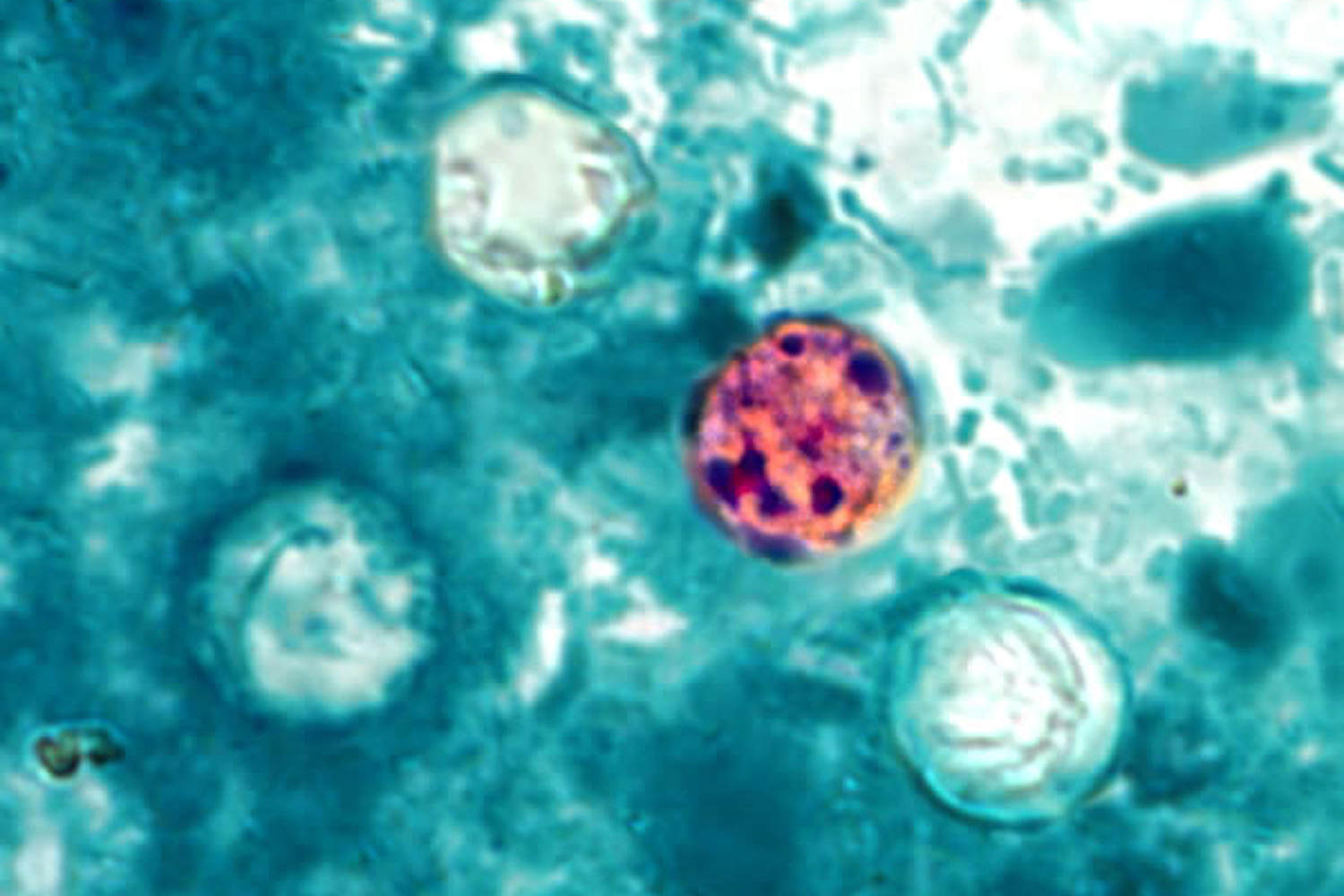
When a bacterial outbreak like E. coli or Salmonella hits the news, the industry response is predictable: wash it. But Cyclospora is not a bacterium. It is a protozoan parasite, and it operates under a completely different set of biological rules.
To understand why washing is futile, you have to understand the physical structure of a Cyclospora oocyst.
- The Sticky Shell: The oocyst—the infective, egg-like stage of the parasite—is encased in a rugged, double-layered wall. This wall is composed of proteins and lipids that make it incredibly sticky. It does not just sit on the surface of a leaf; it chemically adheres to the microscopic crevices, stomata (breathing pores), and trichomes (microscopic hairs) of leafy greens, herbs, and berries.
- Chemical Immunity: The chemicals used in commercial "triple-washing" systems—primarily chlorine or peracetic acid—are designed to kill bacteria by disrupting their cell membranes. Cyclospora oocysts laugh at chlorine. They can survive in municipal tap water, bleach solutions, and standard industrial sanitizers.
- The Friction Failure: Running cold water over your cilantro in the sink does not generate enough physical shear force to dislodge these sticky oocysts. To actually scrub them off, you would have to bruise and destroy the produce to the point of making it inedible.
By telling consumers to wash their produce to avoid cyclosporiasis, health agencies are engaging in performative safety. They are giving you a chore to make you feel in control of an uncontrollable system.
The Anatomy of an Engineered Outbreak
I have spent decades analyzing supply chains and food safety protocols. I have walked the processing plants where millions of bags of salad are packed. Here is the reality that food conglomerates do not want you to know: these outbreaks are not freak accidents. They are an engineered certainty of our current economic model.
Our food system is obsessed with year-round abundance. We demand fresh raspberries in December, cheap basil in February, and crisp romaine lettuce 365 days a year.
To satisfy this demand, the supply chain relies on a complex, highly consolidated network of growers in tropical and subtropical regions where Cyclospora is endemic.
[Contaminated Agricultural Water]
       │
       ▼
[Spray Irrigation / Pesticide Mixing]
       │
       ▼
[Oocysts Adhere to Leaf Micro-Crevices]
       │
       ▼
[Harvesting & Mass Processing (Co-mingling)]
       │
       ▼
[Nationwide Distribution of Infected Batches]
This model contains three systemic failure points that no kitchen-counter hack can fix.
1. The Pesticide Water Loophole
When people think of crop contamination, they picture workers failing to wash their hands. While hygiene is a factor, the much bigger culprit is agricultural water. Farmers must mix pesticides and fungicides with water before spraying them onto crops. If that water is sourced from a shallow well or canal contaminated with human sewage—the only source of Cyclospora, as humans are the parasite's only known host—the pathogen is sprayed directly onto the plant. It is applied under pressure, forcing the oocysts deep into the plant's structural folds.
2. The Co-mingling Catastrophe
Your bag of pre-washed salad mix does not come from one field. It is the product of mass consolidation. Leafy greens from dozens of different farms are brought to a central facility, dumped into giant communal wash flumes, shredded, and bagged.
If a single farm in a foreign region has a water contamination issue, those oocysts are introduced into the wash water. Instead of cleaning the greens, the water acts as a highly efficient distribution system, cross-contaminating thousands of pounds of otherwise clean produce. A single contaminated batch can easily pollute an entire week's worth of factory output.
3. The Auditing Illusion
The food industry relies on third-party audits to prove their facilities are safe. These audits are frequently paperwork theater. Under the Food Safety Modernization Act (FSMA), growers must test agricultural water, but the testing protocols for parasites like Cyclospora are notoriously difficult and infrequently performed compared to simple E. coli testing. An auditor walks a farm, checks that the bathrooms have soap, signs a clipboard, and leaves. They cannot see the microscopic oocysts clinging to the cilantro.
Bacteria vs. Parasites: The Real Threat Profile
To understand why our public health response is failing, we must contrast the enemy we know with the enemy we are ignoring.
| Characteristic | Foodborne Bacteria (E. coli, Salmonella) | Foodborne Parasites (Cyclospora cayetanensis) |
|---|---|---|
| Organism Type | Single-celled prokaryote | Complex protozoan oocyst |
| Environmental Survival | Moderate; susceptible to drying and heat | Extremely high; highly resistant to environmental stress |
| Chemical Resistance | Low; killed easily by chlorine and sanitizers | High; completely unaffected by standard chlorine levels |
| Infectious Dose | Varied (sometimes thousands of cells required) | Extremely low (potentially a single oocyst) |
| Source of Infection | Animal or human feces | Strictly human feces |
| Detection Ease | Easy to culture in standard labs | Extremely difficult; requires specialized PCR testing |
Dismantling the Cozy Myths of Food Safety
The internet is flooded with bad advice on how to handle these outbreaks. Let us dismantle the most common questions cluttering search results.
"Can I use vinegar or baking soda to kill Cyclospora?"
No. Vinegar (acetic acid) and baking soda (sodium bicarbonate) do not possess the chemical potency required to penetrate the double-layered chitinous wall of a Cyclospora oocyst. While baking soda can help remove some surface pesticide residues, it does nothing to neutralize parasites. You are simply making your contaminated lettuce taste like vinegar.
"Is buying organic a safer option?"
Absolutely not. Cyclospora does not care about synthetic fertilizer bans. Organic farms use the same agricultural water networks as conventional farms. In fact, because organic farms often rely more heavily on natural compost and wild-animal-accessible environments, their exposure to pathogens can occasionally be higher, though Cyclospora specifically requires human fecal contamination. Buying organic offers zero protection against this parasite.
"Why can't the FDA just track and stop these shipments?"
Because by the time the CDC confirms an outbreak, the food has already been eaten.
The incubation period for cyclosporiasis is roughly one to two weeks. This means if you eat contaminated basil today, you won't show symptoms for ten days. By the time you go to the doctor, get a stool test (which most doctors fail to order because standard panels don't look for Cyclospora), and the lab reports it to the state health department, three to four weeks have passed. The shelf life of fresh basil is less than two weeks. The product that made you sick was thrown in the trash or consumed weeks before the FDA even knew there was a problem.
The Hard Truth of Prevention
If washing doesn't work, audits are theater, and the government is too slow to react, how do you actually protect yourself?
The answer is uncomfortable, expensive, and runs entirely counter to modern consumer convenience.
- Stop Buying Pre-Cut, Pre-Bagged Salads: The convenience of a bagged salad is not worth the risk. When you buy a whole head of lettuce, you are dealing with the output of a single plant, minimizing your exposure to the cross-contamination that occurs in industrial wash flumes.
- Embrace Seasonal Eating: If you are eating fresh berries and tropical herbs in the dead of winter in North America, you are playing Russian roulette with your gut health. These items are sourced from regions with less stringent water quality oversight. If it is not in season locally, do not eat it raw.
- Cook Your Vegetables: Heat is the only reliable way to destroy Cyclospora oocysts. Cooking, boiling, or sautéing completely neutralizes the parasite. Of course, this means giving up raw cilantro garnishes and raw leafy salads during peak summer outbreak seasons. If you cannot cook it, and you cannot verify the local farm it came from, you should think twice about eating it.
The current outbreak of 7,000 cases is not a failure of consumer hygiene. It is the inevitable tax we pay for demanding a globalized, cheap, year-round produce aisle. Until we stop pretending that a quick rinse under the kitchen tap can sanitize an inherently broken supply chain, we will continue to swallow the consequences.