The morning shift starts in the dark. For Javier, a veteran sanitation driver navigating the sprawling suburban grid just outside Sacramento, California, the soundtrack of a Tuesday at 5:30 AM is entirely predictable. It is the rhythmic hiss of air brakes. The mechanical groan of the hydraulic lift. The dull, heavy thud of plastic bins hitting the steel hopper of his 30-ton rear-loader.
You sit high up in the cab, insulated from the chilly Northern California morning, nursing lukewarm coffee from a thermos. You think about the mortgage. You think about your daughter’s upcoming soccer tournament. You do not think about chemical thermal runaway.
But it thinks about you.
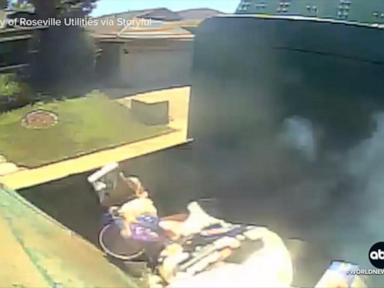
It happened in a flash. One moment, Javier was checking his side mirrors, preparing to pull away from a curb lined with manicured lawns. The next, a violent, popping hiss cut through the diesel rumble. In the rearview mirror, the hopper wasn't just smoking; it was breathing orange fire. Within seconds, thick, toxic plumes of black smoke began pouring from the belly of the truck, smelling heavily of burnt plastic and copper.
Javier did exactly what his training dictated, though his hands shook on the steering wheel. He drove the burning rig away from the overhanging trees and wooden fences of the residential street, pulling into an open, empty asphalt lot. There, he engaged the hydraulics and ejected tons of blazing, smoldering garbage onto the pavement—a desperate, ugly tactic meant to save a $300,000 vehicle from turning into a massive rolling bomb.
By the time the fire department arrived to douse the heap with foam, the culprit was easy to spot among the charred remains of egg cartons and coffee grounds. It was a melted, ruptured plastic casing with a tangled nest of fried copper wiring.
A discarded rechargeable vacuum cleaner battery.
We live our lives surrounded by these tiny, sleeping giants. They are tucked inside our pockets, taped to our wrists, buried inside our children’s singing toys, and humming within our cordless tools. They make modern life seamless, wireless, and undeniably convenient.
They are also becoming the most dangerous thing we throw away.
The Anatomy of a Modern Micro-Bomb
To understand why a routine garbage route near Sacramento turned into an emergency scene, we have to look at what we are actually putting into our devices.
For decades, standard household batteries were alkaline. If you threw a dead AA battery into the trash in 1995, it was bad for the environment due to heavy metals, but it wasn't going to explode. Alkaline batteries release their energy through a slow, chemically stable reaction. They die quietly.
Lithium-ion batteries are entirely different beasts. They are built for density. They pack an immense amount of electrical energy into a microscopic space by using highly volatile liquid electrolytes.
To visualize how they work without getting bogged down in chemical jargon, imagine a packed nightclub. The lithium ions are the guests. When the battery is fully charged, all the guests are crammed onto the balcony on one side of the club. When you use your device, the guests rush across the dance floor to the bar on the other side.
As long as the dance floor remains clear, everything works perfectly.
But a lithium-ion battery requires an incredibly thin, fragile plastic separator to keep those two sides from touching directly. Think of it as a flimsy velvet rope in that crowded club. If that separator is damaged—if it is punctured, crushed, or exposed to high heat—the velvet rope tears.
The guests don't just walk across the floor anymore. They stampede.
When the internal components touch directly, it creates a massive short circuit. All that stored electrical energy releases instantly. The temperature inside the battery skyrockets to over 1,000 degrees Fahrenheit in a fraction of a second. This is thermal runaway. It is a self-sustaining fire that generates its own oxygen. You cannot smother it. You cannot easily extinguish it with a standard household fire extinguisher. It burns until its fuel is utterly consumed.
Now, take that fragile, volatile glass-and-chemical sandwich and drop it into a heavy plastic rolling bin.
The Invisible Crucible
Consider what happens next on an ordinary block.
The homeowner, let’s call him Mark, bought a cheap, generic replacement battery online for his cordless drill. It died after six months. Annoyed, Mark tossed the entire plastic brick into his kitchen trash can. He didn’t do it out of malice. He did it because he didn’t know any better, and because the symbols stamped on the back of the battery were too small to read without reading glasses.
The battery travels from the kitchen bag to the outdoor bin. Then Javier’s truck arrives.
The mechanical arm lifts the bin and dumps it into the hopper. Inside the truck is a massive, hydraulic packer blade. This steel plate exerts thousands of pounds of pressure per square inch, crushing sofas, breaking wooden pallets, and flattening cardboard boxes to maximize space.
It is a giant, unseeing vice.
When that steel blade meets Mark’s discarded drill battery, the plastic casing cracks. The internal velvet rope tears. The stampede begins. Surrounded by dry cardboard, aerosol cans, leftover paint thinners, and plastic packaging, that tiny spark finds a palace of fuel.
The Sacramento incident is not an isolated anomaly. It is a statistical certainty happening weekly across the globe. According to data collected by environmental groups and waste management coalitions, hundreds of fires are reported every year at recycling centers and waste management facilities, almost all traced back to lithium-ion batteries.
The people who handle our waste are facing a quiet crisis. They are essentially sorting through live ammunition disguised as household trash.
The Illusion of "Away"
The core problem lies in a deeply ingrained human habit: the illusion of the trash can.
We have been conditioned to believe that once an object passes the threshold of that plastic lid, it ceases to exist. It goes "away." We pay our municipal fees, the trucks rumble by while we sleep, and the remnants of our consumer lives vanish into the horizon.
But there is no "away." There is only another place, and usually, another human being who has to deal with what we discarded.
When we throw a lithium-ion battery into a standard trash or recycling bin, we are outsourcing our risk to people like Javier. We are asking municipal workers, who are already performing one of the most hazardous jobs in the country, to play Russian roulette with chemical fires.
The confusion is compounded by the recycling symbol itself. Many well-meaning people see the chasing-arrows triangle on a device or a battery pack and think, Great, this goes in the blue bin.
It does not.
Putting a lithium-ion battery into a standard recycling bin is arguably worse than putting it in the trash. Recycling facilities are filled with fast-moving conveyor belts, massive mechanical sorting rotating drums, and optical sorters. The friction and mechanical stress inside a recycling plant are even higher than inside a garbage truck. When a battery ignites on a conveyor belt buried under tons of highly flammable dry paper and cardboard, the entire facility can burn to the ground in minutes, putting dozens of workers at immediate risk and costing taxpayers millions of dollars.
Mapping the Way Out
Fixing this isn't a matter of inventing new technology; it is a matter of changing human friction. The logistics of disposal must match the convenience of purchasing.
Right now, buying a lithium-ion battery is incredibly easy. One click on a smartphone and a replacement battery arrives at your doorstep tomorrow. Disposing of that same battery safely, however, requires research, a car trip to a designated household hazardous waste facility, or finding a retail store participating in a specialized take-back program.
We have made it effortless to bring the hazard into our homes, but tedious to remove it.
Until that asymmetry is solved, the fires will continue to burn. Some states are beginning to fight back with extended producer responsibility laws, forcing electronics manufacturers to fund and manage accessible recycling infrastructure. But policy moves at a glacial pace compared to the speed of the consumer tech market.
The immediate solution sits on the kitchen counter. It requires a pause. It requires looking at an old smartphone, a dead vape pen, or a bloated laptop battery not as garbage, but as a small, pressurized vessel of energy that demands respect.
Javier survived his Tuesday morning shift near Sacramento. His truck was scarred by soot and foam, but it was salvageable. The heap of charred garbage was eventually scraped off the asphalt, re-loaded, and hauled to the landfill under watchful eyes. He went home to his family that evening, a little more hyper-vigilant, checking his mirrors a little more often.
But tomorrow is Wednesday. The trucks will roll out again into the dark. Thousands of arms will lift thousands of bins, tipping the contents into the crushing steel jaws of the hoppers, hoping that whatever is hiding inside stays asleep.