Silence.
That is the first thing you notice when a nation’s financial system collapses, not the shouting in the streets or the sirens wailing down Avenida Mariscal López, but the sudden, suffocating quiet of a bank teller sliding a brass gate shut at ten in the morning.
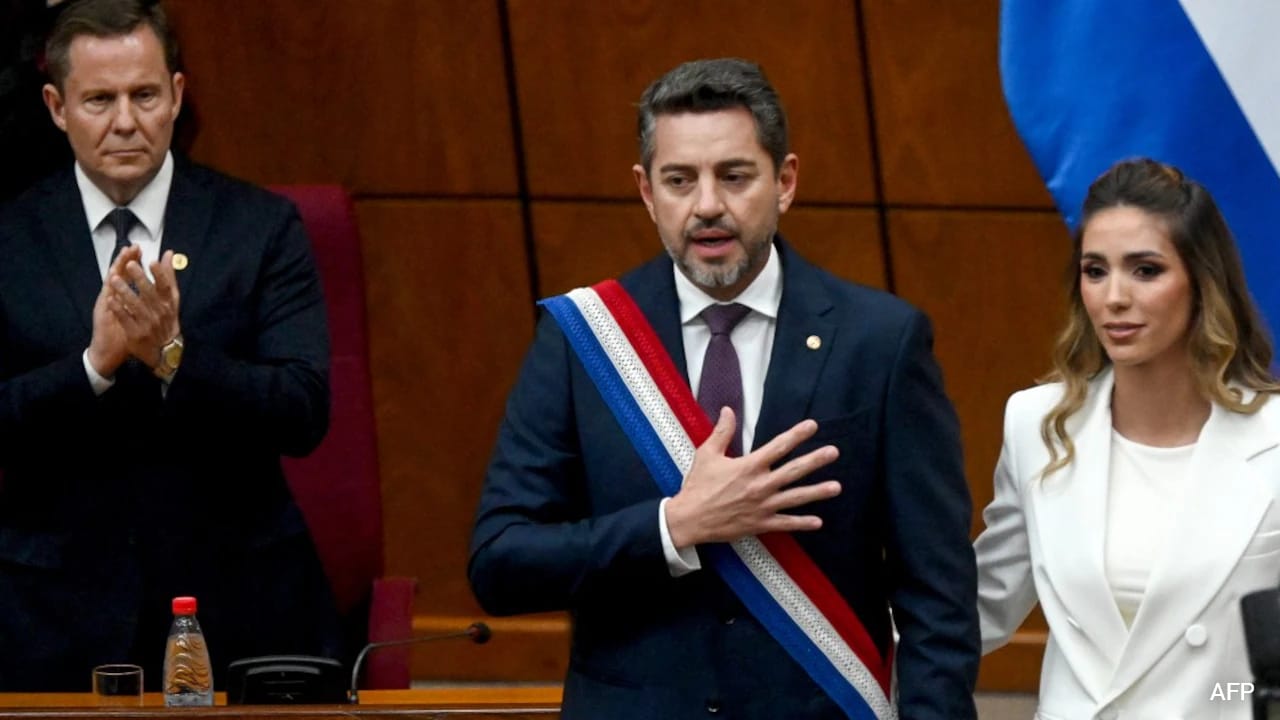
On a humid day in Asunción, the air smells of diesel exhaust, wet red earth, and bitter yerba mate cooling in a thermos nobody feels like drinking anymore. Outside the marble facades of financial institutions that promised safety for decades, thousands of ordinary citizens stand holding laminated passbooks that have overnight become worthless paper. Inside the Legislative Palace, far removed from the sweat and panic of the pavement, a vice president places his hand on a bible, raises his right arm, and swears an oath to rescue them.
Most headlines reduce this moment to political choreography. A vice president takes the presidential sash following a sudden resignation, stepping into the highest office in Paraguay while pledging immediate relief to the victims of a catastrophic banking crisis. It reads like standard institutional maintenance. A transfer of power. A routine promise.
Yet behind those sterile wire-service dispatches lies a visceral human reckoning, a story about what happens when the invisible architecture of trust disintegrates beneath an entire country, and one leader inherits the rubble.
The Architecture of an Invisible Collapse
To understand the weight pressing down on the new president’s shoulders, you first have to understand what a bank actually is. Strip away the mahogany desks, the armed guards, and the embossed stationery, and a bank is nothing more than a collective agreement to pretend that everyone will not ask for their money on the same Tuesday.
When that agreement fractures, the damage spreads like ink dropped into clear water.
Consider a hypothetical family living in Luque, a bustling suburb just outside the capital—let us call them the Benítez family, a composite drawn from the thousands of real households caught in Paraguay’s financial crossfire. For twenty-two years, Mateo Benítez repaired diesel engines in a corrugated-iron garage while his wife, Clara, sold chipa and empanadas near the bus terminal. Every Friday, they walked three blocks to their local savings bank and deposited a modest stack of guaraníes. They did not understand liquidity ratios, reserve requirements, or offshore shell transfers. They understood two things: hard work goes into the slot, and security stays behind the steel door.
Then came the rumors. Whispers in the market that executives had been funneling depositor funds into speculative real estate ventures and unbacked loans to political insiders. Within forty-eight hours, whispers hardened into terror.
Clara arrived at the bank before dawn on a Wednesday, joining a line that wrapped twice around the block. By noon, the ATM screens went black. By one o'clock, armed police stood shoulder-to-shoulder across the entrance, holding back retirees who had worked forty years for pensions that had evaporated into accounting entries.
The Benítez family did not lose luxury yachts or speculative stock portfolios. They lost the money earmarked for their daughter’s university tuition, the emergency fund for Mateo’s mother’s heart medication, and the quiet dignity of knowing that tomorrow would resemble today.
A Presidency Born in the Rubble
This is the exact terrain the newly sworn-in president stepped onto when he assumed office. In Paraguay, political transitions rarely happen in a vacuum; they occur inside a pressure cooker shaped by decades of fragile democratic consolidation, deep economic inequality, and a lingering public suspicion that the state exists primarily to protect its own elite.
When the former president stepped down amid mounting political turmoil and economic paralysis, the constitutional line of succession pushed the vice president directly into the eye of the storm. There was no honeymoon period. There was no celebratory parade down Calle Palma. Before the ink on the inauguration decree had even dried, protesters were banging empty pots outside the Palacio de los López, demanding to know who would pay for the missing millions.
In his inaugural address, the new president struck directly at the raw nerve of the crisis. He vowed unwavering state support for the victims of the banking collapse, promising legal accountability for the executives who hollowed out the institutions and financial mechanisms to compensate stranded depositors.
Those words landed in a deeply skeptical room.
Paraguayans have a long memory when it comes to financial meltdowns. Anyone old enough to remember the catastrophic banking crises of the mid-1990s—when a third of the nation’s financial system imploded, wiping out life savings and triggering years of economic stagnation—knows that presidential promises made under the glare of television cameras often dissolve once the cameras pack up.
I remember watching those earlier crises unfold across the Southern Cone, seeing middle-class neighbors suddenly selling wedding rings and family dining tables on sidewalks just to buy groceries. Once you watch a grown man weep outside a shuttered bank branch because he cannot pay for his child’s hospital discharge, you never look at macroeconomic statistics the same way again. A three-percent contraction in GDP is not a chart; it is a closed bakery, an abandoned construction site, a family packing cardboard boxes to migrate north in search of wages that do not vanish overnight.
Why This Crisis Cuts Deeper Than Numbers
To grasp why the new administration’s pledge matters so urgently, you have to look at how Paraguay’s economy actually functions beneath the surface.
Unlike neighbors with massive industrial bases or deep capital markets, Paraguay’s economic engine runs heavily on agriculture, hydroelectric power exports, and a vast network of small, family-run enterprises. Credit is the oxygen of this ecosystem. Farmers need short-term loans to buy seed and fertilizer before the soy harvest; shopkeepers need working capital to stock shelves; transport operators need financing to keep trucks moving along the muddy corridors connecting the interior to Asunción.
When major financial institutions freeze up, that oxygen vanishes instantly.
The ripple effects travel through three distinct layers of society:
- The Silent Wipeout of Savers: Elderly pensioners and salaried workers who trusted regulated domestic banks suddenly find their accounts frozen under judicial intervention. Even when deposit guarantee funds exist on paper, payouts are often capped at amounts far below what families spent decades accumulating, and bureaucratic delays can stretch for years.
- The Paralysis of Small Business: Local merchants who kept their operating cash in affected banks cannot pay suppliers or meet Friday payrolls. Within weeks, perfectly healthy businesses go bankrupt simply because their own cash is locked behind regulatory tape.
- The Erosion of Institutional Faith: Perhaps the most dangerous casualty is psychological. If citizens conclude that regulated banks are no safer than stuffing cash inside a mattress, money flees the formal system entirely. Cash goes underground, investment dries up, and the informal economy swells, starving the government of the tax revenue it desperately needs to fund schools, hospitals, and infrastructure.
Think of a banking crisis like a structural crack in a hydroelectric dam—a fitting metaphor in a nation powered by the massive Itaipú and Yacyretá turbines. You do not need the entire concrete wall to crumble for disaster to strike. If people merely believe the wall is leaking, panic alone will empty the valley downstream.
The Tightrope Walk Ahead
Vowing support for victims is the easy part of statecraft. Delivering it without bankrupting the treasury is where presidencies live or die.
The newly inaugurated leader faces a brutal mathematical reality. Every guaraní the state uses to bail out depositors must come from somewhere—either from existing tax revenues, which are already stretched thin in a country with urgent public health and education needs, or from issuing sovereign debt, which risks driving up interest rates and weakening the national currency.
If the government moves too slowly, social unrest will paralyze the capital, turning peaceful vigils into violent confrontations and destroying investor confidence. If the government moves too recklessly, printing money or absorbing toxic private bank losses onto the public balance sheet without strict limits, it risks triggering inflation that punishes the very poor who never had bank accounts in the first place.
To navigate this minefield, the administration has to execute three simultaneous maneuvers, each fraught with political peril:
- Ring-fencing the Contagion: The central bank and financial regulators must decisively separate solvent, healthy banks from the rotten ones. Depositors need crystal-clear transparency about which institutions are safe, preventing a blind panic that drags down the entire sector.
- Targeted Restitution Over Blanket Bailouts: Compensating ordinary savers—families like our hypothetical Benítez household—is both a moral imperative and an economic necessity, because working people immediately spend recovered money back into the local economy. Covering the speculative bets of wealthy insiders or reckless shareholders, however, would be political suicide.
- Visible, Unforgiving Justice: Nothing infuriates a defrauded public more than watching bank directors walk free on technicalities while ordinary citizens lose their homes. Prosecutors and courts must freeze the personal assets of culpable executives and pursue criminal convictions aggressively, proving that financial theft carries the same consequences as street robbery.
There is an uncomfortable truth that rarely makes it into official speeches: governments cannot magic vanished wealth back into existence. When reckless lending or outright fraud destroys capital, someone absorbs the loss. The true test of leadership is deciding who bears that burden—the well-connected architects of the failure, or the working families who simply trusted the rules.
The Weight of the Sash
Inside the presidential palace, the ceremonial blue-and-white sash looks pristine under the chandeliers. Outside, the dust of Asunción settles on the windshields of parked cars, and the lines outside the courts where depositors file their claims grow longer every morning.
History tends to judge sudden presidencies not by the grandeur of their inaugural rhetoric, but by the quiet, unglamorous persistence of their follow-through six months later. Nobody in Luque or Encarnación or Ciudad del Este cares about constitutional succession theories or macroeconomic jargon. They care about whether the lock on the bank door will open, whether the tuition bill can be paid before the semester starts, and whether the country they built with their own hands still honors a basic promise.
Late in the afternoon, as the sun drops low over the Paraguay River, turning the muddy water the color of hammered copper, a woman stands across the street from a shuttered bank branch in downtown Asunción. She holds a worn plastic folder pressed tightly against her ribs, inside it a stack of stamped deposit slips dated over fifteen years. She does not shout at the guards. She does not wave a sign. She simply looks up at the second-floor windows of the building, waiting to see if a light will turn on.