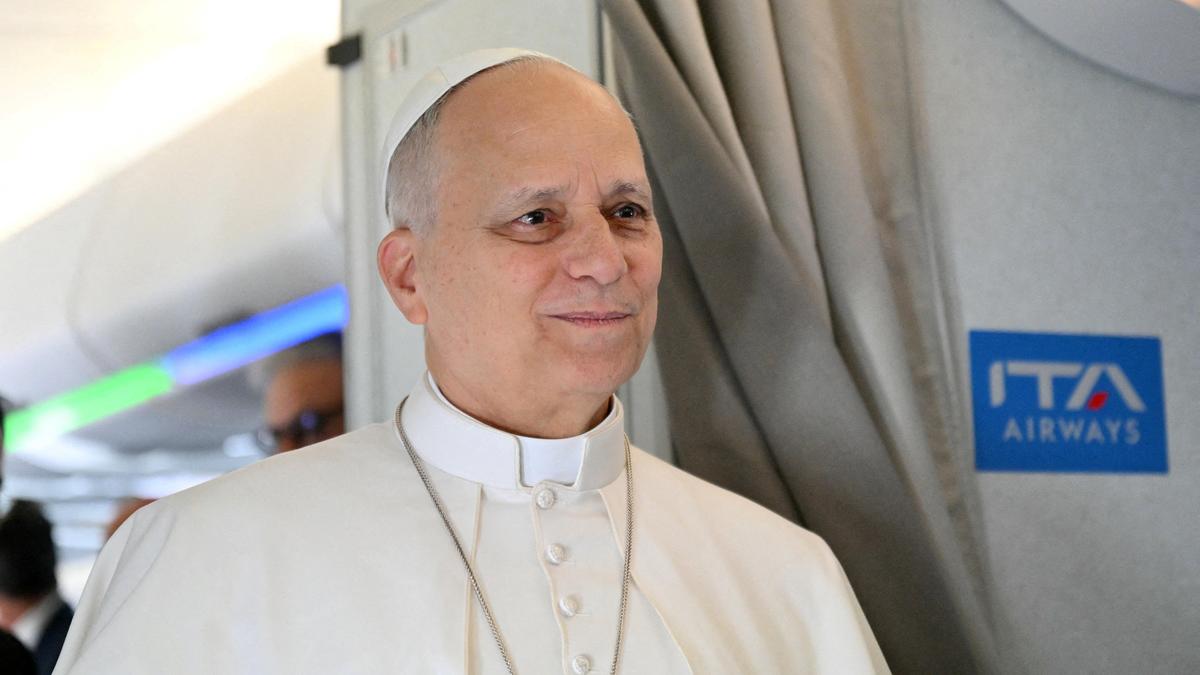
Pope Leo XIV is not backing down. Following a weekend of vitriolic digital broadsides from President Donald Trump, the first American-born pontiff used the takeoff of his eleven-day African tour to reinforce a stance that has brought the Holy See into its most direct confrontation with the United States in a generation. This is no longer a matter of quiet backroom diplomacy or carefully worded encyclicals; it is a public, high-stakes brawl over the moral legitimacy of modern warfare and the very structure of international order.
The friction reached a boiling point after Trump used social media to label the Pope "weak on crime" and "terrible for foreign policy," specifically targeting Leo XIV’s criticism of the escalating conflict in Iran. The President’s rhetoric, which included an AI-generated image of himself as a messianic figure, underscores a fundamental shift in how power is brokered. While Washington pivots toward a policy of "unconditional surrender" and unilateral military action, the Vatican is positioning itself as the last standing advocate for a multilateral system that the rest of the world seems ready to abandon.
A New Kind of Papal Resistance
For decades, the Vatican operated on the "Ostpolitik" model—a cautious, quiet engagement designed to keep channels open with difficult regimes. Leo XIV has discarded that playbook. By speaking directly to the human cost of the Iran blockade and the "thunderous sound of bombs" in the Middle East, he is bypassing the traditional diplomatic corps and appealing to a global audience that feels increasingly alienated by the "delusion of omnipotence" he attributes to current world leaders.
This isn't just about theology. It is about a structural disagreement on how the world should function. The Trump administration views international law as a hindrance to national interest—a sentiment echoed in the President’s recent assertions that he was elected to act without interference from "political" religious leaders. Conversely, the Vatican views the erosion of these laws as a slide into an "irreparable abyss." When Leo XIV speaks of a "better way," he isn't offering a vague spiritual hope; he is defending the post-World War II legal framework that is currently being reduced to ashes.
The Weaponization of the Digital Square
The escalation of this rift is being fueled by a medium that the Vatican is still struggling to master: the unfiltered, high-velocity world of social media and synthetic media. Trump’s use of AI-generated imagery to mock the Pope or elevate his own status is a tactic that the Holy See—a 2,000-year-old institution built on the sanctity of the Word—is fundamentally ill-equipped to counter on equal terms.
This digital divide creates a dangerous feedback loop. The Pope has correctly identified that "fake news" and "ideological colonization" are not just social nuisances but active agents of destabilization. By simplifying complex geopolitical realities into memes and "radical left" accusations, the current political climate makes the nuanced, long-term diplomacy favored by the Vatican almost impossible to sustain. The President's demand that the Pope use "Common Sense" is, in reality, a demand for the Church to stay within the confines of a private, devotional role and exit the public policy arena entirely.
The Iran Crisis as a Proxy War
The core of the current dispute lies in the Strait of Hormuz. As the U.S. executes a blockade strategy to corner Tehran, the Vatican sees a humanitarian catastrophe in the making.
- The Vatican Argument: Military escalation only sows "destruction, pain and death" and ignores the civilian population caught in the crossfire.
- The Washington Argument: Diplomacy has failed, and anything short of total dominance is a sign of weakness that invites further aggression.
Leo XIV’s American roots make this even more personal. Unlike his predecessors, he understands the nuances of the American psyche and the specific brand of populism that Trump represents. This makes him a more effective critic, but also a more direct target. When Trump claims credit for Leo becoming Pope because he is American, he is attempting to domesticate the papacy—to turn the Vicar of Christ into just another actor in the American domestic political drama.
The Strategy of Multilateralism
The appointment of Archbishop Gabriele Caccia as the new ambassador to the United States is a calculated move. Caccia is a veteran of the United Nations, a man who lives and breathes the multilateral systems that the Trump administration is currently dismantling. By placing a "multilateralist" in Washington, the Pope is signaling that the Vatican will continue to fight for a world where no single nation, no matter how powerful, dictates the moral terms of existence.
However, the Vatican faces a significant internal challenge. The U.S. Conference of Catholic Bishops remains deeply divided, with many leaders favoring the administration’s stance on domestic issues while remaining silent on the Pope’s foreign policy critiques. This internal friction weakens the Pope’s hand, allowing the White House to frame the dispute as a disagreement with a "political" Pope rather than a challenge to the moral standing of the Church itself.
The End of Neutrality
The Holy See has a long tradition of diplomatic neutrality, but Leo XIV is proving that neutrality does not mean silence. Whether it is the invasion of Ukraine, the devastation in Gaza, or the looming total war with Iran, the Vatican is increasingly willing to name names and assign blame. This shift from "mediator" to "moral protagonist" is a response to a world where the middle ground has been bombed out of existence.
The real danger here isn't just a spat between two world leaders. It is the total breakdown of a common language. If the "voice of the people" that the Pope calls for is drowned out by the "thunderous sound of bombs" and the roar of digital disinformation, then the space for dialogue—the very foundation of civilization—simply ceases to exist. Leo XIV is betting the moral authority of the Church on the idea that people still want a "better way." If he is wrong, the papacy may find itself an irrelevant spectator in a world governed solely by the logic of the loudest voice and the largest arsenal.
The African tour will serve as a litmus test for this new papal assertiveness. Far from the digital noise of Washington, Leo XIV will attempt to build a coalition of the "suffering" to demand a return to sanity. It is a desperate, necessary gamble in an age that has forgotten how to listen.