Every time a cluster of Legionnaires’ disease hits a wealthy enclave like New York’s Upper East Side, the public health apparatus rolls out the exact same predictable script.
The media hyperventilates. Health inspectors rush to the roofs to test giant cooling towers. Landlords face fines. Residents scramble for bottled water, imagining a toxic mist settling over Central Park.
It is a comforting piece of theater. It is also completely missing the point.
The hyper-focus on cooling towers as the primary villain in Legionnaires’ outbreaks is a legacy mindset that ignores how modern buildings actually sicken people. While city officials scramble to bleach the tops of skyscrapers, the real hazard quietly thrives inside the state-of-the-art, low-flow plumbing systems of the luxury apartments themselves.
We are fighting a 20th-century public health battle against a 21st-century infrastructure failure.
The Cooling Tower Obsession Is Public Health Theater
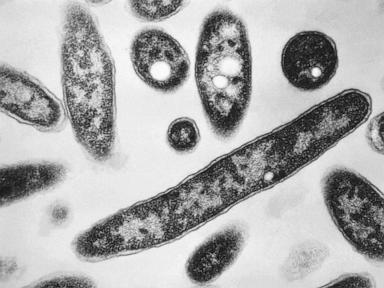
Legionnaires’ disease is caused by Legionella bacteria, which thrive in warm, stagnant water. When inhaled via aerosolized droplets, it causes a severe, sometimes fatal form of pneumonia.
Because the historic 1976 outbreak in Philadelphia was linked to an air conditioning system, public health policy became hardwired to look at cooling towers first. New York City even passed stringent regulations requiring regular testing and disinfection of these systems.
But here is what the breathless news coverage leaves out: scrubbing a cooling tower does nothing to protect you from the water coming out of your kitchen sink.
Data from the Centers for Disease Control and Prevention (CDC) repeatedly shows that a massive percentage of Legionnaires' cases are sporadic or linked to potable water systems—the pipes, showerheads, and faucets inside buildings. Yet, when an outbreak occurs, the public demand for a visible scapegoat ensures that inspectors look at the sky rather than the basement.
Imagine a scenario where a city spends millions tracking down air pollution from factories while completely ignoring the radon gas leaking into its citizens' basements. That is exactly what happens when we prioritize cooling tower maintenance over domestic water safety.
How Luxury Architecture Invites Legionella
There is a deep irony in where these outbreaks occur. The Upper East Side boasts some of the most expensive real estate on earth, featuring historic pre-war co-ops and sleek new developments.
Both architectural styles are perfectly engineered to breed Legionella.
The Pre-War Plumbing Trap
Older luxury buildings rely on massive, complex, and frequently altered plumbing networks. Over decades of renovations, these systems develop "dead legs"—sections of pipe that have been capped off or abandoned but remain filled with stagnant water.
This stagnant water sits at room temperature, losing its chlorine residual and turning into a literal incubator for bacteria. When water flows through the main line, it creates a venturi effect, drawing micro-colonies of Legionella out of the dead leg and straight to your showerhead.
The Green Building Paradox
Newer, LEED-certified luxury buildings are not safe either. In the push for sustainability, modern architecture mandated low-flow fixtures and highly insulated systems designed to reduce water use.
This creates a hidden crisis:
- Reduced Velocity: Low-flow faucets mean water moves incredibly slowly through massive building risers.
- Stagnation: Water sits inside internal piping for days instead of hours.
- Temperature Drops: Hot water systems designed to conserve energy often drop into the optimum growth range for Legionella (77°F to 113°F).
When you combine low flow with large-diameter pipes, you destroy the hydraulic shear stress needed to keep pipes clean. The result is biofilm—a slimy layer of microorganisms lining the inside of your pipes that acts as an impenetrable shield for Legionella against standard municipal chlorine.
The Flawed Premise of Municipal Water Safety
People look at public health notices and ask the wrong question: "Is the city water supply safe?"
The answer is yes, but it is irrelevant. The Department of Environmental Protection delivers perfectly fine water to the building's water meter. What happens to that water once it enters a private property is entirely out of their hands.
Municipalities treat water with chlorine or monochloramine to kill pathogens. However, this disinfectant has a shelf life. As water sits stagnant in a building's internal storage tanks or sprawling secondary distribution loops, the disinfectant dissipates. By the time that water reaches a showerhead on the 15th floor, the protective chemical barrier is completely gone.
[City Water Main] ---> [Building Meter] ---> [Storage Tank / Low-Flow Pipes] ---> [Biofilm & Stagnation] ---> [Infected Showerhead]
Standard water testing completely misses this localized decay. A building can show zero signs of bacteria at the main intake while harboring lethal concentrations in the penthouse master bath.
Dismantling the "Just Boil the Water" Fallacy
When health departments detect a cluster, they issue boilerplate warnings telling vulnerable populations—the elderly, the immunocompromised, heavy smokers—to take precautions.
The advice is often laughably inadequate. They suggest avoiding mist from fountains or using caution with tap water.
Let us be brutally honest: you cannot wash your way out of an internal plumbing failure.
Taking a hot shower in a building with a colonized potable water system is the exact functional equivalent of standing directly downwind from a contaminated cooling tower. The showerhead aerosolizes the water into micro-droplets perfect for deep inhalation into the lungs. Telling residents to avoid public fountains while they inhale contaminated steam every morning in their own bathrooms is a profound failure of risk communication.
The Real Fix Is Costly, Unpopular, and Urgent
Fixing this problem requires moving past superficial inspections and addressing the physical reality of building water management. Landlords do not want to do this because it is expensive, invasive, and exposes them to massive liability.
If we want to actually eradicate these recurring urban clusters, building management must implement aggressive, internal engineering controls:
1. Thermal Eradication and Constant Recirculation
Hot water must be stored at a minimum of 140°F (60°C) to kill bacteria, and circulated at no less than 122°F (50°C) all the way to the fixture. This requires precision balancing valves and continuous recirculation loops so water never sits still long enough to drop into the danger zone. To prevent scalding at the tap, thermostatic mixing valves must be installed directly at the point of use.
2. Secondary Disinfection Systems
Relying on the city's residual chlorine is a losing strategy for large complexes. Buildings need to invest in localized, secondary disinfection infrastructure—such as copper-silver ionization or chlorine dioxide injection systems—right at the point of entry.
3. Aggressive Pipe Remediation
Engineering teams must aggressively audit plumbing blueprints to identify and cut out every single dead leg accumulated over decades of building retrofits. If a bathroom was converted into a closet twenty years ago, that dead pipe is a ticking public health time bomb.
The Upper East Side outbreak is not an isolated environmental fluke caused by a single poorly maintained roof tower. It is a warning sign of structural decay and unintended architectural consequences. Until we stop looking at the sky and start ripping into the walls, the water we rely on to stay clean will continue to make us sick.